 Newsinc24 Team
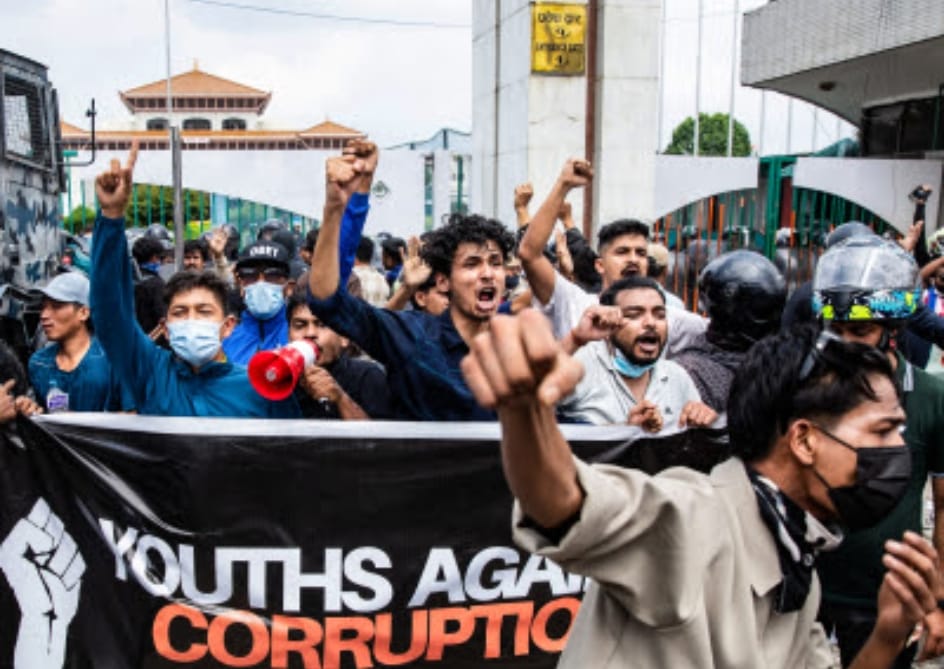
The Asia Society Policy Institute (ASPI) has released a new paper titled The Gen Z Movement and the Future of Nepal, authored by Rishi Gupta, Assistant Director at ASPI Delhi, offering a comprehensive assessment of Nepal’s unprecedented youth-led political upheaval and its long-term implications.Writing from a policy and geopolitical lens, Gupta argues that Nepal’s Gen Z movement is not merely a reaction to a single policy decision but a structural shift in the country’s political culture. The protests, triggered by a controversial social media ban in September 2025, quickly evolved into a wider expression of frustration among young Nepalese over entrenched nepotism, corruption, unemployment and chronic political instability.The demonstrations ultimately led to the resignation of then Prime Minister K. P. Sharma Oli, marking one of the most significant youth-driven political interventions in Nepal’s recent history.
A Digital Generation Reshaping Politics
Gupta underscores that the movement’s defining feature was its digital mobilisation strategy. Unlike previous political campaigns in Nepal, Gen Z activists leveraged social media platforms to build popular legitimacy and bypass traditional party hierarchies.“The use of social media to gain popular approval for a leader was unusual and marked a significant shift toward participatory, media-driven political engagement led by Gen Z,” Gupta writes, adding that this phenomenon reflects a broader global trend of digitally networked youth politics rather than an isolated national episode.He notes that Nepal’s September 2025 social media ban inadvertently amplified the political consciousness of young citizens. Instead of curbing dissent, the move exposed deeper grievances and accelerated mobilisation.
Beyond Generational Optics
Looking ahead to the March 5 general election, Gupta cautions against reducing the contest to a simple generational face-off. While younger leaders may enjoy initial appeal, electoral success will hinge on substantive policy commitments.“In terms of voter appeal, the Rastriya Swatantra Party (RSP), with 35-year-old Balendra Shah, and the Nepali Congress, led by Gagan Thapa, may gain an initial edge because of their relatively youthful leadership,” Gupta observes.However, he stresses that generational symbolism alone will not determine outcomes. “What ultimately matters is not how young a leader appears, but how convincingly they address employment, governance, stability, and national development for all generations,” he writes.
The paper outlines multiple post-election scenarios. One plausible outcome, according to Gupta, is a coalition between the Thapa-led Nepali Congress and the RSP under Balendra Shah. At the same time, he flags the possibility that Oli could challenge an unfavourable result through legal channels, potentially delaying government formation and prolonging political uncertainty.
Geopolitical Reverberations
Beyond domestic politics, Gupta evaluates the regional implications of Nepal’s Gen Z movement. India and China, Nepal’s two major neighbours, are closely monitoring developments in Kathmandu.India, Gupta notes, moved swiftly to engage with the interim administration led by former chief justice Sushila Karki, with Prime Minister Narendra Modi extending support soon after her appointment.China, by contrast, adopted a more cautious posture. According to Gupta, Beijing’s core interests in Nepal have historically centred on securing its Tibet frontier, limiting external influence particularly from India and the United States and integrating Nepal more firmly into the Belt and Road Initiative framework.“A Gen Z–driven movement in Nepal worries China because youth politics tend to be open, networked, and less controllable,” Gupta writes, suggesting that a more transparent and participatory political environment in Kathmandu could complicate Beijing’s traditional state-centric engagement strategy.
Four Key Challenges Ahead
As Nepal prepares for a new government, Gupta identifies four major challenges awaiting the next administration: restoring economic momentum, tackling unemployment, institutionalising governance reforms, and balancing external relations amid intensifying geopolitical competition.The Gen Z movement, he concludes, has fundamentally altered Nepal’s political trajectory. Whether this generational awakening translates into durable institutional change will depend not just on electoral outcomes but on the ability of the next government to convert youthful energy into policy-driven transformation.At this decisive moment, digital engagement, governance reforms and evolving regional alignments are set to determine Nepal’s political future.


Related Posts
France to preserve India’s manuscript heritage
India must lead in creating future technologies, says PM Modi
India pushes for BIOFIN, tech transfer & global cooperation