 Farwa Aamer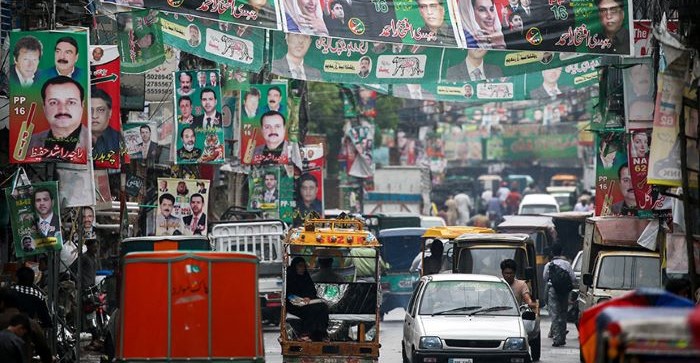
As Pakistan gets ready to vote on February 8th, the country stands at a critical juncture, grappling with multifaceted challenges ranging from economic distress to security concerns, all exacerbated by a tumultuous political landscape.
The prevailing economic crisis has plunged the country into dire straits, with its ramifications felt across all sectors of society. Simultaneously, the deteriorating security situation underscores the urgent need for stability and effective governance. Amidst these pressing issues, the political turmoil that has besieged the nation in recent years has only served to impede progress and development—leaving much dependent on the elections and the new leadership.
The incarceration of former Prime Minister Imran Khan, a polarizing yet influential figure, has dominated both domestic and international discourse. His multiple convictions, including the recent ruling declaring his marriage unlawful, have captivated global attention, in some ways overshadowing discussions on the democratic integrity of the upcoming elections.
The political landscape also remains fraught with allegations of early electoral rigging and crackdowns on Khan’s Pakistan Tehreek-e-Insaf (PTI) party as well as scuffles between other contesting parties. This casts a shadow of doubt over the fairness and transparency of the electoral process, raising concerns about the legitimacy of the eventual outcome.
As speculation mounts, former Prime Minister Nawaz Sharif emerges as a frontrunner, signaling a potential return to power for the seasoned politician. However, the specter of electoral malpractice looms large, and anticipating the aftermath, the prospect of widespread protests and civil unrest cannot be ruled out, presenting a formidable challenge to the country's fragile security apparatus. Moreover, the perennial instability in governance, marked by the inability of elected parties to complete full terms, means that the new leadership should recognize the need for institutional reform and political consolidation. However, achieving this goal presents a considerable challenge, given the significant influence wielded by the military in shaping the country's overall dynamics.
On the international stage, Pakistan's strategic significance faces mounting scrutiny, as its geopolitical relevance wanes amidst shifting alliances and global dynamics. With key stakeholders such as the United States, China, and Gulf states closely monitoring developments, the need for astute diplomatic leadership capable of navigating these intricate relationships becomes imperative. In light of these challenges, the forthcoming elections hold profound implications not only for Pakistan's domestic trajectory but also for its standing in the international arena."
(Farwa Aamer, Director of South Asia Initiatives, Asia Society Policy Institute, New York)
Disclaimer: Views are of the writer, not newsin24)










Related Items
Saudi's dilemma: Pakistan steps Back, US says no strikes on Houthis
India beat Pakistan 19-0 to reach Junior Women’s Asia Cup semi-finals
Trump promises $5,000 payout to US adults if Republicans win election