 Krishan Gopal Sharma
Trigger Warning / Prelude
This essay is a deliberate exercise in deceleration. It explores the corporate annexation of human interiority and the systematic commodification of our most intimate impulses. Read it as you would listen to an old vinyl record—unhurried, from beginning to end. Its purpose is not merely to inform, but to invite reflection.
1. The Sunday Afternoon Sanctuary
When I was a child, my grandfather observed a simple Sunday ritual. He would carefully dust an ageing wooden television set, tune in to the state broadcaster, and let our modest living room fill with the black-and-white melodies of the 1960s. One afternoon, the screen showed a lone man strolling along a deserted mountain road in Sikkim, his hands tucked casually into his pockets, whistling to the hills as though they were lifelong companions. It was Dev Anand singing "Yeh dil na hota bechara, kadam na hote aawara..." from the 1967 classic Jewel Thief.
As a boy, I simply found the scene pleasant. As a writer observing the digital fracture of 2026, I realise I was witnessing a fragment of a civilisation that has quietly slipped away.
That brief cinematic sequence now strikes me as a visual blueprint of what I call The Unmediated Interiority—a state of mind in which the human heart was allowed to wander without a digital destination.
The yearning for companionship expressed in the lyric—
"Jo khoobsurat koi apna humsafar hota..."
—unfolded not as an urgent demand but as a slow, almost childlike prayer. Vulnerability was released into the open air, free from any expectation of an immediate, data-driven response. There was sacredness in that empty space—a quiet foundation of selfhood born of pure, unadulterated solitude.
Today, those silent roads have been annexed by algorithmic capitalism.
We inhabit an unprecedented era in which technology companies have progressed far beyond monetising human attention. They increasingly intercept our deepest emotional impulses before they are fully formed. Love, grief, curiosity, longing and self-reflection are quietly redirected into commercial pathways.
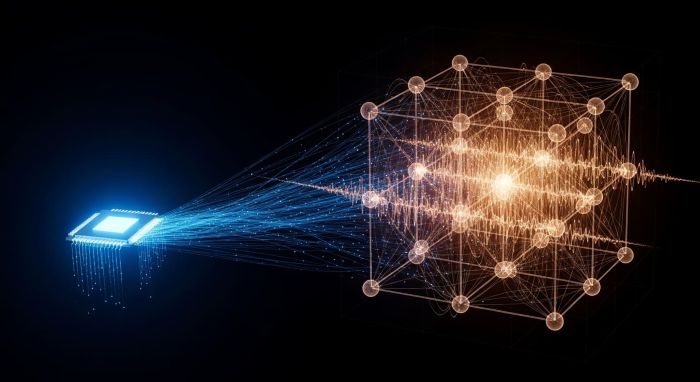
I call this phenomenon The Algorithmic Bypass of the Soul—a systemic process through which our most fundamental human instincts are intercepted, rerouted and financialised before they can settle into consciousness.
Natural Human Impulse
↓
Algorithmic Interception
↓
Monetised Digital Action
Loneliness becomes a premium subscription. Curiosity becomes targeted advertising.
Reflection becomes another opportunity for engagement.
The bypass is almost invisible precisely because it feels so effortless.
2. The Colonisation of the Void and the Death of the Slow Mind
To understand how this bypass functions, we must first consider what happens when the human brain is allowed to do absolutely nothing.
Neuroscientists describe a network known as the Default Mode Network (DMN). It becomes active during moments of unstructured quiet, supporting autobiographical memory, imagination, empathy, moral reflection and the gradual construction of identity.
In the era of Jewel Thief, this mental stillness was an ordinary birthright.
Walking to the neighbourhood market, sitting beneath a tree, waiting for a delayed bus or simply gazing through a window—all these moments invited the mind into conversation with itself.
Sahir Ludhianvi captured this beautifully:
"Main zindagi ka saath nibhata chala gaya, Har fikr ko dhuen mein udata chala gaya..."
"I journeyed with life, letting each worry drift away like smoke."
His words describe an existential acceptance of uncertainty. Anxiety is neither suppressed nor distracted away. It is acknowledged, given room to breathe, and allowed to dissolve naturally beneath an open sky.
That quiet mental landscape nurtured wisdom.
Today's digital economy sees it as inefficiency.
What previous generations experienced as reflective silence is now labelled "user friction"—empty seconds waiting to be filled with notifications, recommendations, advertisements and infinite scrolling.
Evidence suggests that the average smartphone user checks their device well over a hundred times each day. Each interruption appears insignificant; together they create an almost uninterrupted occupation of consciousness.
The consequence is profound.
Instead of entering the reflective state supported by the Default Mode Network, we remain trapped in continuous partial attention—always connected, never fully present.
The result is what might be called epistemic obesity.
We consume extraordinary quantities of informational calories—headlines, opinions, trends, outrage and commentary—without the cognitive leisure required to digest them into understanding.
Knowledge accumulates.
Wisdom does not.
Because algorithms intercept boredom within moments of its arrival, we no longer construct identity from within. Instead, we assemble a fragmented digital self from borrowed opinions, trending emotions and algorithmically curated anxieties.
Increasingly, we mistake the internet's emotional weather for our own inner climate.
3. The Financialised Humsafar: Love in the E-Commerce Matrix
Perhaps nowhere is The Algorithmic Bypass of the Soul more visible than in the commercialisation of intimacy.
The search for a life partner was once a deeply human journey shaped by families, friendships, shared communities and the gradual discovery of another person's character. It unfolded imperfectly, sometimes painfully, but always within the rhythms of lived experience.
Today, that journey has been compressed into an online marketplace.
Dating applications and matrimonial platforms increasingly resemble retail catalogues, where individuals are displayed alongside premium subscriptions, sponsored profiles and targeted advertising.
Human beings become searchable inventories.
Loneliness becomes a business model.
The economic logic is straightforward.
A platform earns only while users continue searching.
If two people immediately find lifelong companionship, they leave the platform. From a commercial perspective, successful relationships shorten customer lifetimes.
The incentive, therefore, is not necessarily to maximise lasting human connection but to maximise sustained engagement.
Expressed bluntly:
Platform Value = User Loneliness × Subscription Duration
Whether intentionally or not, the architecture rewards perpetual searching.
Psychologists have long recognised the phenomenon of choice overload. Presented with too many options, people frequently become less satisfied with the choices they ultimately make.
Digital matchmaking amplifies this tendency.
Instead of recognising kindness, humour, patience or emotional maturity, users are encouraged to optimise measurable variables.
Income brackets.
Exact locations.
Educational credentials.
Lifestyle preferences.
Height.
Astrological compatibility.
Premium visibility.
The search for a soulmate quietly becomes an exercise in filtering by metrics.
Three subtle psychological transformations follow.
The Catalogue Effect
When human beings appear beside advertisements and subscription upgrades, they begin to resemble consumer products rather than individuals with complex inner lives.
The Myth of Infinite Possibility
Because another profile is always one swipe away, many reject genuine compatibility while pursuing an ever more perfect statistical match.
Intermittent Dopamine Rewards
Like slot machines, these platforms deliver occasional emotional rewards just frequently enough to keep users returning. Searching itself gradually becomes more addictive than genuine connection.
The innocent prayer for a humsafar has thus been transformed into a commercial transaction.
Love is no longer merely sought.
It is processed, ranked, predicted and monetised.
The deepest longing of the human heart encounters an invisible algorithmic tollgate long before it reaches another soul.
4. Psychic Numbing and the Spectacle of Pain
When the human soul is bypassed for profit, empathy is often the next casualty.
The French philosopher Guy Debord, in The Society of the Spectacle, observed that "everything that was directly lived has moved away into a representation." More than half a century later, that observation has acquired a chilling new dimension. Representation itself has become algorithmically curated, personalised and monetised.
Our relationship with suffering illustrates this transformation with unsettling clarity.
Consider the devastation unfolding in Gaza or in any contemporary theatre of war. A modern social media feed may place the image of a grieving mother searching through the rubble of her home directly between a comic video, a celebrity endorsement and an advertisement for a luxury vehicle. Tragedy and entertainment arrive through precisely the same digital channel, demanding the same fleeting movement of the thumb.
The architecture of the platform quietly erodes the distinction between the profound and the trivial.
Gulzar captured the emotional world we are steadily losing:
"Dil dhoondta hai phir wahi fursat ke raat din..."
"The heart longs once more for those leisurely days and nights."
His longing is not for idleness. It is for fursat—that spacious emotional leisure in which human beings are able to absorb reality, grieve sincerely and allow experience to settle into wisdom.
Digital platforms permit no such leisure.
By presenting catastrophe and comedy in the same sensory register, they flatten emotional depth into a single metric: engagement.
The consequence is not merely distraction. It is desensitisation.
Cognitive scientists describe a phenomenon known as psychic numbing. Human beings evolved to respond powerfully to individual stories—a single child, a single grieving family, a single neighbour in distress. Yet our emotional faculties become overwhelmed by vast numbers. As casualties become statistics and suffering becomes a stream of charts, maps and geopolitical commentary, compassion gradually gives way to abstraction.
We know more than any generation before us.
Yet we often feel less.
Conflicts become online contests of ideology. Human lives become ammunition in digital arguments. Every tragedy risks becoming another opportunity for tribal affirmation rather than shared mourning.
The information reaches us instantly.
The humanity often does not.
5. Reclaiming the Human Scale
The innocence of an earlier age did not arise from ignorance.
It arose from attention.
It was the rare ability to inhabit one conversation fully, to walk one winding road without interruption, to love one person deeply and to mourn one loss completely, free from the incessant nudging of an economy built upon distraction.
Today's generation is neither colder nor less imaginative than those who came before.
If anything, the extraordinary resurgence of vinyl records, handwritten journals, film photography, lo-fi music, independent acoustic performances and slow-living movements reveals a quiet cultural rebellion. Beneath the endless notifications lies a widespread yearning for authenticity.
Young people are not searching merely for vintage aesthetics.
They are searching for experiences that cannot be optimised by algorithms.
The human heart has not disappeared.
It has simply been buried beneath layers of engineered stimulation.
Breaking free from The Algorithmic Bypass of the Soul therefore requires more than willpower. Our evolutionary instincts were never designed to compete with artificial intelligence systems refined by billions of behavioural observations and engineered by some of the wealthiest corporations in history.
The answer is not technological rejection but conscious resistance.
It begins with the quiet disciplines of digital hygiene: disabling unnecessary notifications, setting clear boundaries around communication, reclaiming uninterrupted time, reading without interruption, walking without headphones, allowing boredom to return, and protecting moments in which the mind is answerable only to itself.
These practices may appear insignificant.
In reality, they are acts of cultural defiance.
Every uninterrupted conversation weakens the attention economy.
Every hour spent reading rather than scrolling restores cognitive sovereignty.
Every moment of genuine silence reopens a doorway to the inner life.
The greatest act of resistance available to modern civilisation may no longer be political.
It may simply be learning how to pay undivided attention once again.
Conclusion: Stepping Off the Algorithmic Highway
Technology itself is not the enemy.
The true danger lies in surrendering our interior lives to systems whose commercial success depends upon keeping us perpetually distracted, emotionally reactive and psychologically predictable.
Civilisations are not sustained by information alone. They endure because people remember how to wonder, how to listen, how to wait and how to love without demanding instant gratification.
Whether it was Dev Anand whistling along a deserted Himalayan road in Jewel Thief, The Carpenters wistfully inviting us to relive Yesterday Once More, or Cliff Richard joyfully setting off on a Summer Holiday, popular music across cultures once carried a quiet confidence that solitude was not a defect to be corrected. Longing was allowed to breathe. Silence was not an error in the system. One could simply exist without the pressure to constantly signal one's existence.
Those songs continue to endure because they remind us of something technology cannot manufacture: an inner life that unfolds at its own pace. Different languages, different melodies, yet the same human longing—for time, companionship, reflection and freedom.
We cannot return to the world of the 1960s or 1970s, nor should we romanticise it. Yet we can reclaim something far more enduring: the human capacity for stillness.
Only by stepping off the high-speed algorithmic highway can we hear the faint but unmistakable voice that has patiently waited beneath the noise.
Only then can we rediscover the courage to love without calculation, to grieve without distraction, to think without prompts, and perhaps, like that solitary traveller on an empty road, whistle into the silence, knowing that not every beautiful moment needs to become content.
For perhaps the greatest freedom left in the digital age is not the freedom to choose between infinite options.
Perhaps civilisation is measured not by the speed of its machines, but by the amount of unclaimed time it leaves for the human soul.
It is the freedom to remain wholly, unmistakably and irreducibly human.
Author's Note
This essay was written while listening to the gentle crackle of an old Kishore Kumar recording on a rainy Sunday afternoon—a small, deliberate escape from the relentless rhythm of the digital feed. Before long, memory wandered further: to The Carpenters softly taking us back to Yesterday Once More, and to Cliff Richard's carefree Summer Holiday. Different cultures, different voices, yet all seemed to emerge from the same emotional landscape—a world in which time moved more gently and people were not perpetually performing for invisible audiences.
This is not an argument against technology, nor an attempt to romanticise a past that cannot be recovered. Rather, it is an invitation to ask a more fundamental question: What parts of ourselves have we quietly surrendered in exchange for convenience?
I write with deep sympathy for today's generation. Never before have young minds been exposed to such sustained psychological persuasion, delivered not through force but through design. Their struggle is not a failure of character; it is the consequence of living within systems engineered to compete for every spare moment of attention.
This essay is therefore my own modest act of resistance.
It is an intentional pause—a moment to silence the data streams, to look beyond the glowing screen, and to remember a truth that no algorithm can improve upon.
Whether carried in the wistful notes of Kishore Kumar, the nostalgic harmonies of The Carpenters, the carefree optimism of Cliff Richard, or countless other voices across the world, the songs that have endured remind us of a timeless truth: beneath our languages, cultures and technologies, the human heart has always yearned for the same things—to wonder without distraction, to wait without anxiety, to love without calculation, and simply to be.
<><><>
(Author: Freelance journalist Retired from Indian Information Services, Consultant with UNICEF Nigeria. Contributor to various publications.)