 Uday Kumar Varma
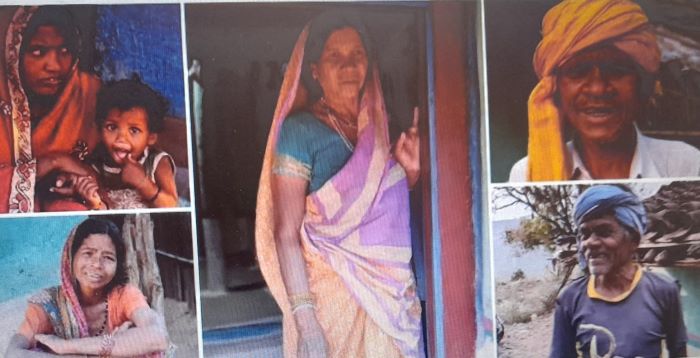
If Patalkot is unique and unusual, its denizens are as different and astonishing. With a population of just over 2000 spread over a score and two villages, which are more hamlets than a proper village, they remained unknown and went unnoticed for centuries.They confined themselves, by choice, to just a few square kilometres of this deep valley where sun round the year sets earlier than four in the afternoon. They chose a strange anonymity And they showed an indifference and ignorance of those who resided outside their sanctum sanctorum. Possibly they perceived them to possess a much inferior and contrived culture.Practically cut off from the outside world, more by choice than by compulsion, they preserved an exclusive culture and lived a life that may be full of want in physical sense, but aglow with a blessed contentment and joy.Learn about this tribe, Bharias, in part II of my exploration of Patalkot.
Imagine a realm where the ancient mountains encircle the land in a protective embrace, where legends come to life amidst misty valleys, and where a tribe, the Bharias, has stood as a bridge between myth and modernity. Welcome to the enigmatic world of the Bharia tribe in Madhya Pradesh, a tapestry woven with threads of history, culture, and evolution.
If Patalkot is blessed with a pristine, unusual and compelling natural beauty, the denizens of this hollowed valley are as different and astonishing. Their total population confined to a little over 2,000 and spread over a score and two villages, which are more hamlets than a proper village, they remained unknown and went unnoticed for centuries. Mostly by choice, they confined themselves to just a few square kilometres of this deep valley where sun round the year sets earlier than four in the afternoon if not sooner. They chose a strange anonymity and showed an indifference and ignorance of those who resided outside their sanctum sanctorum, possibly considering and perceiving them to possess a much inferior and contrived culture. Practically cut off from the outside world, more by choice than by compulsion, they preserved an exclusive culture and lived a life that may be full of want in physical sense, but aglow with a blessed contentment and joy.
Origins, Anthropological Significance and Migration
It is believed that around 600 years ago, the Bharia tribe embarked on a journey from their Dravidian roots in search of a utopian haven. Guided by destiny, they found themselves in the mystical embrace of Patalkot Valley, a hidden paradise sheltered by the towering Satpura mountains. Untouched by civilization, they nurtured this virgin territory with love and respect, laying the foundation of their unique culture.
Bharia tribe's precise historical movements are not extensively documented due to their largely oral tradition and limited written records. However, they are believed to have ancient roots in the forests of Madhya Pradesh, Chhattisgarh, and parts of Maharashtra. Over the centuries, they have likely experienced shifts in their settlement patterns, possibly due to factors such as changing climatic conditions, interactions with neighbouring communities, and broader socio-political changes in the region.
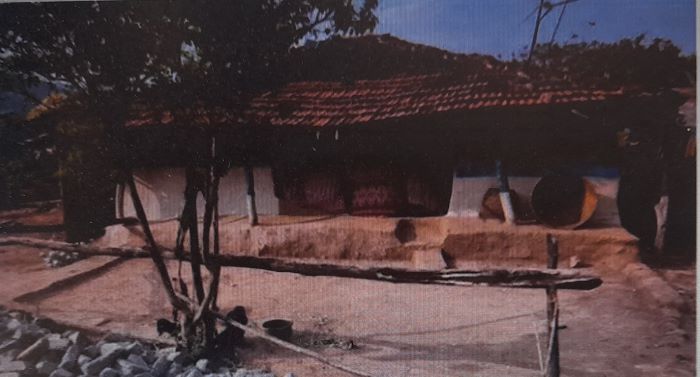
Migration for the Bharia tribe might have been driven by a combination of push and pull factors, including the need for resources, changes in land availability, conflicts with other groups, but unlikely for opportunities of trade and cultural exchange. These migrations, while contributing to their adaptation and survival, also influenced their cultural evolution, leading to the development of distinct regional variations within the tribe.
The Bharia tribe holds anthropological significance as a distinctive indigenous community with a unique cultural heritage and historical trajectory. The Bharia tribe is known for their intricate knowledge of forest ecosystems, traditional medicinal practices, and sustainable livelihoods cantered around agriculture, hunting,and gathering. Their practices and beliefs reflect an intimate understanding of their surroundings and an adaptive lifestyle that has allowed them to thrive in this secluded and inaccessible bowl of nature.
Legends and Myths
The Bharia tribe's roots intertwine with captivating myths. One legend weaves their creation into the story of Bhasmasura, a demon blessed with the power to turn all he touched into ashes. As Lord Shiva fled, the earth caved in, forming Patalkot Valley, where the Bharias found their sanctuary.In another tale, Bharia origin dances with the Mahabharata. Arjuna, seeking warriors, conjured them from Bharru grass. The warriors who emerged became the tribe's ancestors, defining their lineage.
Inroads of modernity into Lifestyle and Traditions
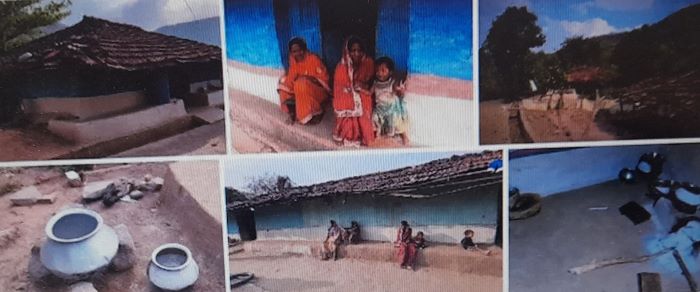
Over several decades now, the modern concept of development has begun to impact their life styles irreversibly. The government is largely responsible for the transformation that has come to visit the community. Kareaam Village in Patalkot paints a picture of tradition coexisting with change. Once accessible only by treacherous paths, the village now boasts roads as a symbol of encroaching transformation. The Bharias' integration with the mainstream is evident, yet they still draw water from distant streams. Houses of stone, wood, bamboo, and clay tiles stand as witnesses to time's passage.
Their lives revolve around the land. Farmers and laborers, they gather from the forests, their expertise lying in medicinal herbs. But winds of change bring them new avenues—cattle rearing, poultry, and perhaps beyond.
Many houses in these villages are a window into Bharia life. Traditional cooking stoves share space with modern gas burners, marking a subtle yet significant shift. A stone idol in the backyard narrates their unique death ceremonies—11 days after death, the stone deity is revered as their protector.
Medicine Men and Nature's Guardians
While Baiga tribe is generally deemed to have developed an alternative system of medicine, extensive in reach and addressing even complex health issues, largely based on roots, barks, leaves, flowers, fruits and seeds of several wild plants and trees, Bharias are also known for being nature's healers, versed in the art of Ayurvedic medicinal herbs. Although not as recognised as Baiga, they too have an elaborate system of healing, particularly for some ailments. Their remedy for wounds and dislocated body parts, using Amarbel and Hatha Jodi, is a testament to their age-old wisdom. Different parts of plants, such as roots, leaves, stems, and fruits, are used to prepare concoctions, infusions, and pastes for consumption or external application.
The Bharia tribal system of medicine is holistic and relies on the use of locally available herbs, plants, and natural resources for healing and maintaining well-being. Key features of the Bharia tribal system of medicine include, their herbal character, a unique system of diagnosis, Healers that specialise, the spiritual and ritualistic elements of the treatment, the oral tradition for transmission of knowledge, and an overarching cultural dimension. These healers are revered for their knowledge of medicinal plants and traditional healing practices. They often acquire their expertise through oral tradition, passed down through generations. The Bharia tribal system of medicine emphasizes a holistic approach to health. It not only focuses on the physical symptoms of an ailment but also takes into consideration the mental, emotional, and spiritual well-being of the individual. Traditional healing practices among the Bharia tribe often involve spiritual and ritualistic elements. Ceremonies, chants, and rituals are performed to invoke the assistance of spirits or deities believed to have healing powers. These elements play a role in the overall healing process. Bharia healers diagnose illnesses through a combination of observation, questioning, and sometimes using divination techniques. They consider factors such as the patient's symptoms, history, and personal circumstances.
Predictably, like many traditional healing practices, theirs also is gradually facing challenges due to modernization, urbanization, and changes in lifestyle. However, efforts are being made to document and preserve this knowledge for future generations and to integrate it with modern healthcare practices where appropriate.
A Culture of Festivities
Their festivals echo their affinity with nature. While Hindu festivals like Diwali and Holi have been woven into their tapestry, the Pola festival remains unique. During monsoons, Gedi (stilts) are worshipped, and Thetra, a sweet made of flour and Mahua, is offered.Dance and music pulse in their veins. The rhythmic beats of Setaam, Sela, Bhadam, Dhandhara, and Ahirai narrate stories of joy and sorrow. The Patalkot valley comes alive with the resonance of drums during weddings, a testament to the tribe's vivacious spirit.
Guardians of Tradition and Agents of Change
The Bharias are a living testament to the power of heritage, proving that while time may paint change, the colours of identity remain vibrant. In the heart of Patalkot Valley, the Bharia tribe thrives as stewards of tradition and agents of change. Their myths resonate in the rustling leaves, their songs echo through the valleys, and their rituals ground them in an ever-evolving world. But is it likely to last?
Their lives today seem a living experiment on how modernity affects, transforms or even destroys pristine and innocent cultures and traditions. The jury is out and the coming times will reveal whether the changes imposed upon them really made their better and happier or otherwise.
(Uday Kumar Varma is an IAS officer. Retired as Secretary, Ministry of Information & Broadcasting)

Related Posts
In Kalidasa's works, woman is not merely a subject of beauty: Shekhawat
The Radiance of Fall: On Beauty, Transience, and the Grace of Letting Go
Kumbh, where cosmic beauty, attraction, emotion, love, devotion flourishes