Keshav
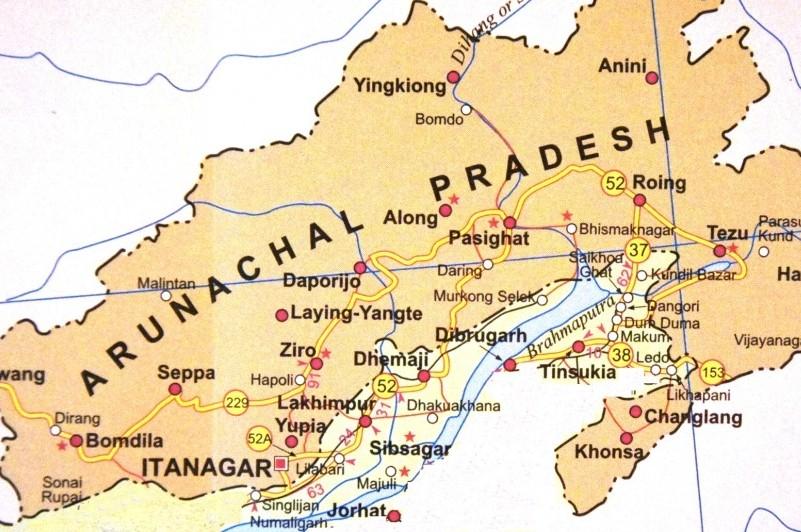
Due to the latest Chinese aggression in Ladakh, the entire Himalayan border area has once again generated a lot of interest among the experts and the general public alike.However, thousands of miles away from the scene of action in Ladakh the eastern most end of the Himalayan sector, Arunachal Pradesh is quietly preparing to face the dual challenge of development and military confrontation.While the people are aware of the Chinese military’s long standing and growing threat, another natural threat looms over the Himalayas, that’s every bit as serious – Earthquakes.
We all know that India is a part of Asia but that’s half the story. The other part is that beneath the surface, the Earth’s crust is divided into plates that are called continental plates. These are large landmasses that keep moving in three patterns. They either move away from each other, or move sideways or collide.Millions of years ago the Indian plate broke off the African plate and started moving towards Eurasian plate. Today we have connected with Asia but are still pushing in it.
This constant pushing by Indian plate gives rise to a special kind of movement called thrusting where one plate moves below the other plate that’s static. These movements are one of the prime causes of Earthquakes.As the thrusting movement reaches a peak at the northernmost end of the Indian plate, it makes Himalayas vulnerable to earthquakes. Seismic (earthquake) activity is normal and the mountain ranges are especially unstable throughout its length and breath. It’s due to this that we listen to news stories about earthquakes in Kashmir, Northern Pakistan, Uttarakhand, Nepal and the Eastern region of India.
More than the Chinese military threat it’s the vulnerability to severe earthquakes that prevents massive infrastructure building in the region. The Himalayas are rich in natural resources but have a fragile ecosystem. It needs a lot of planning and deliberation to initiate any developmental project due to the unstable geology and active seismicity of the region It’s due to this reason that the hydropower potential of Arunachal Pradesh has not been harnessed in right earnest. The state has a potential of producing 58000 megawatt of electricity. But only a fraction of it is being harnessed right now.
But this may change in future. The Wadia Institute of Himalayan Geology, an autonomous organisation with the department of Science and Technology, Government of India has conducted seismic study in the state of Arunachal Pradesh that can change the way we approached developmental work in the region till now. The study team was led by Dr Devajit Hazarika. The team carried out a seismic activity study at Tuting-Tidding Suture Zone (TTSZ) is a major part of Eastern Himalayas in Lohit River Basin of Arunachal Pradesh. Their studies have suggested that earthquakes in eastern most regions are emanating at two different depths.
(Writer based in Noida)
+++++++++++