 Uday Kumar Varma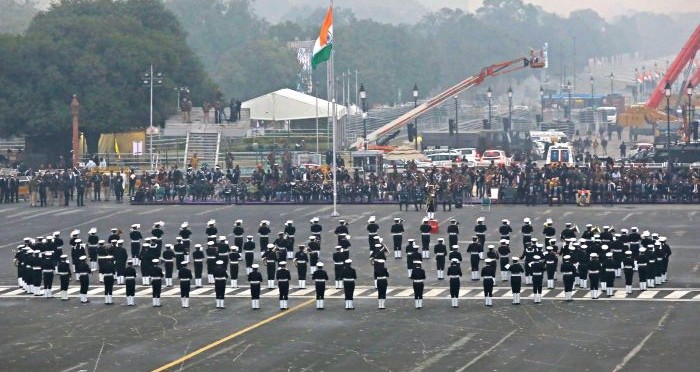
Beating Retreat in a New Key
On the evening of 29 January, as dusk gathers softly over Raisina Hill and the sandstone façades of power begin to glow in amber light, India performs one of its most understated yet evocative rituals. The Beating Retreat ceremony, held three days after Republic Day, brings the grand pageantry of the national celebrations to a contemplative close. It is neither a spectacle nor a statement alone; it is, in a sense, a farewell—to the festivities, to the marching columns, to the heightened emotion of national remembrance. It does not proclaim; it listens. It gathers sound, light, and memory.
The tradition itself is an inheritance. Born in 17th-century Europe and refined in the British Army, “beating retreat” was originally a signal—drums and bugles calling soldiers back from the edge of combat at sunset. The British carried it to India, and independent India, instead of discarding it, chose to transform it. Over decades, the ceremony acquired a distinctly Indian gravity: massed military bands, precise choreography, and a twilight solemnity that made it less about martial power and more about reflective pause.
For long, the emotional centre of this ceremony was restraint. Western marches and hymns—most memorably Abide with Me—lent Beating Retreat a mood of dignified melancholy. For many Indians, these sounds ceased to feel foreign; they became part of a shared national memory, associated not with empire, but with a certain hushed grace at the close of Republic Day.
This year, however, something unmistakably shifted.
The Beating Retreat of 2026 carried an overwhelming patriotic fervour—perhaps unprecedented in its intensity. The change was not abrupt or aggressive, but it was unmistakable. Indian classical instruments such as the sitar and sarangi entered the soundscape, their timbre subtly altering the emotional texture of the ceremony. Indigenous compositions found pride of place, and even the marching steps bore gentle inflections—still disciplined, yet carrying rhythms that felt closer to Indian martial traditions than to European drill.
Above all, one presence dominated the evening: Vande Mataram.
Played and replayed, reimagined and reorchestrated, the song permeated the ceremony in multiple manifestations. This was no coincidence. As the nation marks 150 years since Bankim Chandra Chatterjee composed Vande Mataram, the song returned not merely as a patriotic refrain, but as a living force—binding music, memory, and meaning.
Unlike an anthem that commands attention, Vande Mataram invokes belonging. It does not merely praise the nation; it imagines it—as mother, as land, as moral presence. Its repeated appearance infused the ceremony with an emotional urgency that went beyond formal patriotism. The audience was not just witnessing a performance; it was participating in a collective remembrance.
This perhaps explains why the ceremony felt charged in a way that surpassed earlier years. The retreat no longer whispered alone; it sang.
The present dispensation’s determined effort to Indianize inherited traditions was clearly visible—not as a rejection of the past, but as a deliberate re-centering. The ceremony retained its structure, its precision, its dignity. What changed was the voice in which it spoke. The music leaned inward, towards indigenous idioms; the emotion leaned outward, towards a more assertive national self-awareness.
And yet, for those who have grown with Beating Retreat over decades, nostalgia lingered—quiet, unresentful. Nostalgia for a gentler melancholy, for evenings when the ceremony seemed to mourn history rather than affirm identity. But nostalgia, too, has its rightful place. It reminds us that traditions are not static monuments; they are living conversations between eras.
What makes this transformation compelling is that Beating Retreat has not become strident. Even in its heightened patriotism, it preserved its essential character: a ceremony that resists excess, that allows silence to speak, that understands the poetry of an ending.
As the final notes—through the measured call of the buglers, carried by brass and strings, and given pulse by the drums—faded into the Delhi evening, one sensed that the retreat was no longer merely about withdrawal. It was about arrival: of a tradition finally at ease in its Indian skin.
The day ended, as it always does.
But this time, dusk did not simply fall.
It sang Vande Mataram.
At a time when we are marking 150 years of Vande Mataram, this rendition at the Beating Retreat 2026 by our armed forces is particularly special. pic.twitter.com/O2GeBQw9lA
— Narendra Modi (@narendramodi) January 29, 2026
(Uday Kumar Varma is an IAS officer. Retired as Secretary, Ministry of Information & Broadcasting)









Related Items
BJP passes resolution condemning Congress over Vande Mataram
BJP slams CWC’s Vande Mataram resolution
Congress to stick to1937 resolution on Vande Mataram