 Newsinc24 Team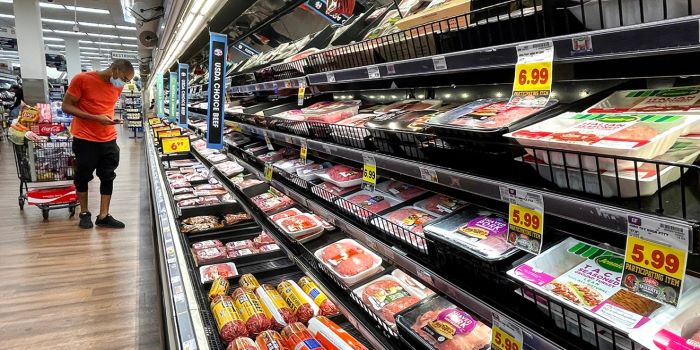
In US, inflation soared over the past year at its highest rate in four decades, hammering American consumers, wiping out pay raises and reinforcing the Federal Reserve's decision to begin raising borrowing rates across the economy. The Labor Department said Thursday that consumer prices jumped 7.5 per cent last month compared with a year earlier, the steepest year-over-year increase since February 1982. When measured from December to January, inflation was 0.6per cent, the same as the previous month and more than economists had expected. Prices rose 0.7per cent from October to November and 0.9per cent from September to October. Shortages of supplies and workers, heavy doses of federal aid, ultra-low interest rates and robust consumer spending combined to send inflation leaping in the past year. And there are few signs that it will slow significantly anytime soon.
Wages are rising at the fastest pace in at least 20 years, which can pressure companies to raise prices to cover higher labor costs. Ports and warehouses are overwhelmed, with hundreds of workers at the ports of Los Angeles and Long Beach, the nation's busiest, out sick last month. Many products and parts remain in short supply as a result.The latest inflation data suggested to some economists that the Fed could raise its key rate in March by one-half a percentage point, rather than its typical quarter-point hike. Over time, higher rates will raise the costs for a wide range of borrowing, from mortgages and credit cards to auto and business loans. That could cool spending and inflation, but for the Fed, the decision to steadily tighten credit could also trigger another recession.
Prices for a broad range of goods and services accelerated from December to January and not just for items directly affected by the pandemic. Apartment rental costs rose 0.5per cent in January, the fastest pace in 20 years. Electricity prices surged 4.2per cent in January alone, the sharpest rise in 15 years, and are up 10.7per cent from a year earlier. Last month, household furniture and supplies rose 1.6per cent, the largest one-month increase on records dating to 1967. Food costs, driven by pricier eggs, cereal and dairy products, increased 0.9per cent in January. New car prices, which have jumped during the pandemic because of a shortage of computer chips, were unchanged last month but are up 12.2per cent from a year ago. The surge in new-car prices has, in turn, accelerated used-car prices; they rose 1.5per cent in January and are up a dizzying 41per cent from a year ago.The steady rise in prices has left many Americans less able to afford food, gas, rent, child care and other necessities. More broadly, inflation has emerged as the biggest risk factor for the economy and as a serious threat to President Joe Biden and congressional Democrats as midterm elections loom later this year.


Related Posts
Why global shocks are driving edible oil inflation higher
Sensex drops 429 pts,Nifty below 22,610 amid RBI rate hike
RBI hikes repo rate 25 bps to 5.50%, FY27 growth seen at 7.1%