 Krishan Gopal Sharma
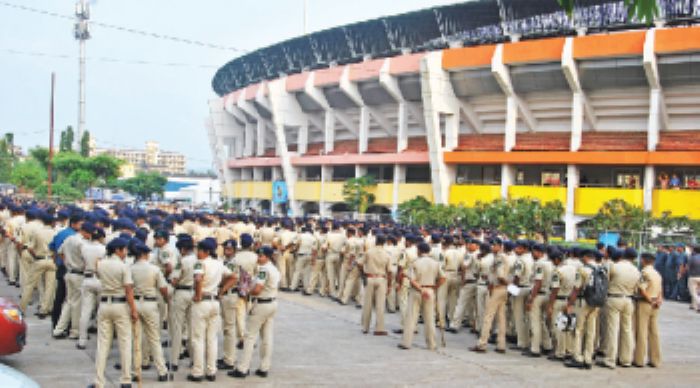
When leadership grows distant from the people, the chair begins to matter more than the citizen
The trigger: a capital prepares
Sometimes, a quiet government memorandum can say more about the relationship between power and the people than a hundred political speeches.
On 3 September, the Ministry of Personnel, Public Grievances and Pensions issued a memorandum announcing that Central Government offices in Delhi and New Delhi would remain closed on 11 September, ahead of the 18th BRICS Leaders' Summit and Business Forum at Bharat Mandapam. The summit is scheduled for 11–13 September, with leaders from around thirty BRICS member and partner countries, heads of international organisations and business representatives expected to attend. The government says the decision is intended to facilitate the substantial logistical arrangements involved and minimise inconvenience to the general public.
There is, of course, nothing unusual about elaborate security and traffic arrangements for an international gathering of this scale. India should host such events, and host them well. They are an opportunity to demonstrate diplomatic confidence, organisational ability and the country's growing place in the world.
Yet there is another question beneath the logistics. What happens to a city when the convenience of a major international event begins to determine the daily life of the people who inhabit it?
The question is not confined to BRICS. Delhi has been through similar experiences during other large international gatherings. During the 2023 G20 Summit, restrictions in New Delhi affected markets, commercial establishments and delivery services, while street vendors and gig workers reported substantial financial losses. One street vendor described the experience as being like a lockdown and estimated that he would lose around Rs6,000 during the affected days.
The point is not to oppose international summits or the security measures that accompany them. The point is to remember that what appears in an official file as an administrative inconvenience can have a very different meaning on the street. For a government office, a day's closure is a notification. For a daily wage worker, a day without work can mean a meal postponed, a bill delayed or a little debt added to an already fragile household budget.
There is a difference, therefore, between preparing a city for the world and temporarily asking its citizens to disappear from the picture.
That difference deserves some reflection.
From the people to the perimeter
There was a time when the candidate needed the voter in a very physical sense — the handshake, the conversation, the cup of tea at a roadside stall, the opportunity to listen to a complaint that had not passed through an official filter. Politics happened in streets, courtyards, village squares and crowded bazaars. A leader could be interrupted, questioned, surrounded and sometimes even embarrassed by ordinary people. It was not always convenient, and certainly not always orderly. But there was something deeply democratic about that disorder. The distance between the person seeking power and the person giving it was small enough for both to see and hear each other.
Much has changed since then. Modern security threats are real, public figures require protection, and no sensible comparison can ignore the realities of the present. Gandhi, Nehru and other leaders of the freedom movement lived in circumstances very different from those of today's political leadership. Their methods cannot simply be transplanted into the present.
Yet the contrast remains worth remembering.
The candidate who once sought out the crowd can now find the crowd behind barricades, while the elected representative moves through an increasingly controlled space. The security perimeter may protect the person; the larger question is whether, over time, it also separates the person from the society they came to represent.
The problem, then, is not the barricade itself.
It is what the barricade begins to represent.
When the chair becomes a fortress
Power has an unfortunate habit of changing physical distance.
The politician who once stood in a queue, shook hands at a roadside gathering or stopped for tea at a modest stall eventually acquires a convoy. The convoy acquires escorts, the escorts acquire protocols, and protocols create a carefully managed world around the person in the chair. Gradually, ordinary access becomes an exception rather than a natural part of public life.
There is nothing inherently wrong with security. The danger lies in allowing security to become the architecture through which the citizen experiences political power.
The candidate once needed to reach the voter.
The representative now often reaches the destination without encountering the citizen at all.
Somewhere between those two experiences lies a subtle change in the meaning of public office. The chair, which is constitutionally a temporary trust, begins to acquire the physical appearance of permanence. It becomes elevated, protected and insulated. And once power becomes insulated from ordinary life, it becomes easier for those inside the perimeter to forget what life looks like outside it.
That may be one of the quiet costs of power.
The paradox of the surveillance age
There is an even more curious contradiction in our times.
Technology has given governments extraordinary powers of observation. CCTV networks, biometric systems, facial-recognition technologies, drones and increasingly sophisticated digital tools have transformed the state's ability to identify, monitor and respond to potential threats. The modern state can know far more about movement and patterns of behaviour than governments of previous generations could have imagined.
And yet, at the same time, political leadership can appear more physically distant from ordinary citizens than ever before.
That is the paradox.
If technology can watch so much, why does the citizen still have to be kept so far away?
Perhaps because technology can detect a threat. It cannot create trust.
Seneca, writing nearly two thousand years ago, captured something of this psychology. In On Anger, he records the observation that those who are feared by many must themselves live with fear. His larger argument was that power built through fear does not make the person wielding it free from fear.
The thought has a contemporary resonance.
A society saturated with surveillance may be highly controlled without necessarily being highly trusted. A camera can tell the state where a person is. It cannot tell the state what that person feels.
And no number of cameras can replace the simple political value of being able to meet people without a wall of intermediaries.
Who gets to remain visible?
This becomes particularly interesting when a city prepares for a major international event.
The polished avenues are visible. The monuments are illuminated. The flags are displayed. Flower arrangements, cultural performances, murals and other beautification efforts are carefully planned around the areas through which visiting delegations will move. Delhi is once again preparing to present itself to the world.
There is nothing wrong with that either. Every host wants its city to look its best.
But who gets to remain visible when the city presents its best face?
The hawker?
The rickshaw driver?
The small shopkeeper?
The delivery worker?
The commuter trying to get to work?
They are not inconveniences in the normal life of the city. They are the city.
The temptation before any government hosting a prestigious international event is to present a perfect picture. But a country does not become more impressive by hiding the people who make it what it is. India is not merely its monumental buildings, manicured avenues and ceremonial spaces. It is also the crowded market, the roadside tea stall, the street vendor calling out to a customer, the worker waiting for a bus and the countless ordinary lives unfolding beyond the official itinerary.
Perhaps our international guests would understand us better if they were allowed to see some of that India too.
The price of distance
There is another cost, less visible than traffic disruption or lost business.
Every time citizens experience the state primarily through barricades, police cordons, traffic diversions and restricted access, the psychological distance between government and governed grows a little wider. That distance does not appear in a government balance sheet. It does not have a budgetary allocation. Yet, over time, it can become something far more expensive: distrust.
A government can command compliance through authority. It can impose restrictions through law. It can secure a road through barricades. What it cannot manufacture is affection.
That has to be earned.
And affection, unlike security, cannot be ordered into existence.
This is why the physical distance between a leader and ordinary people matters. A democracy does not merely depend upon elections. It depends upon contact — upon the possibility that those who govern can still encounter the unfiltered reality of those who are governed.
The daily wage worker does not live behind a security cordon. The small trader cannot compensate for a lost day's earnings with an official notification. The commuter cannot always plan around a route that has suddenly been closed.
The inconvenience is therefore not distributed equally.
For some, it is a matter of altered schedules. For others, it can be the day's livelihood.
The chair or the people?
Perhaps the real test of leadership is not how securely a leader can move through a city, but how comfortably that leader can remain connected to the people outside the perimeter.
Security is necessary. Protocol has its place. Public figures facing genuine threats must be protected. But democracy requires something else as well: perspective.
A leader travelling through an emptied avenue may reach the destination safely. The more important question is whether, somewhere along that journey, the leader can still see the people who have been asked to stand aside.
The Republic does not belong to the convoy. It belongs to the citizen.
And the chair is not a throne. It is a temporary trust.
Jean-Jacques Rousseau's observation in The Social Contract remains relevant here: “The strongest is never strong enough to be always the master, unless he transforms strength into right, and obedience into duty.”
Political authority ultimately differs from physical power. A government can close a road, impose a restriction or erect a barricade. It cannot, however, permanently barricade public memory or manufacture public trust.
The question is not whether leaders should be protected from the people. They should not have to choose between personal safety and public office.
The deeper question is whether, in protecting the occupant of the chair, we are slowly distancing the chair itself from the people.
Author's Note
Perhaps this is the uncomfortable paradox of modern leadership. The more formidable the fortress around the chair becomes, the more important it is to ask what happened to the faith that once made such a fortress less necessary.
The old roadside handshake need not be romanticised. The crowded public meeting was not always an ideal of democratic virtue. The past had its own failings, and the present has its own genuine dangers. Yet there was something valuable in the physical nearness of political life — the possibility of being seen, questioned and occasionally challenged by the very people whose mandate placed a person in power.
A democracy should certainly protect its leaders. But it must also ensure that, in protecting the occupant of the chair, it does not gradually distance the chair from the people.
The greatest security a democratic leader can possess is not the number of men standing between the leader and the people, but the number of people who still feel there is nothing to fear from their leader.
And perhaps that is the true measure of power: not how far the people are kept away, but how close the leader can remain to them.
<><><>
(Author: kgsharma1@gmail.com; The writer is a retired officer of the Indian Information Service and a freelance writer. Also worked as an international media consultant with UNICEF Nigeria and contributes regularly to various publications.)
Related Posts
India's internal security landscape has changed irrevocably: Home Secy
India, Canada agree to boost security ties, extradition cooperation
G20 trade Ministers’ meet: Goyal calls for food security & cooperation