 Newsinc24 Team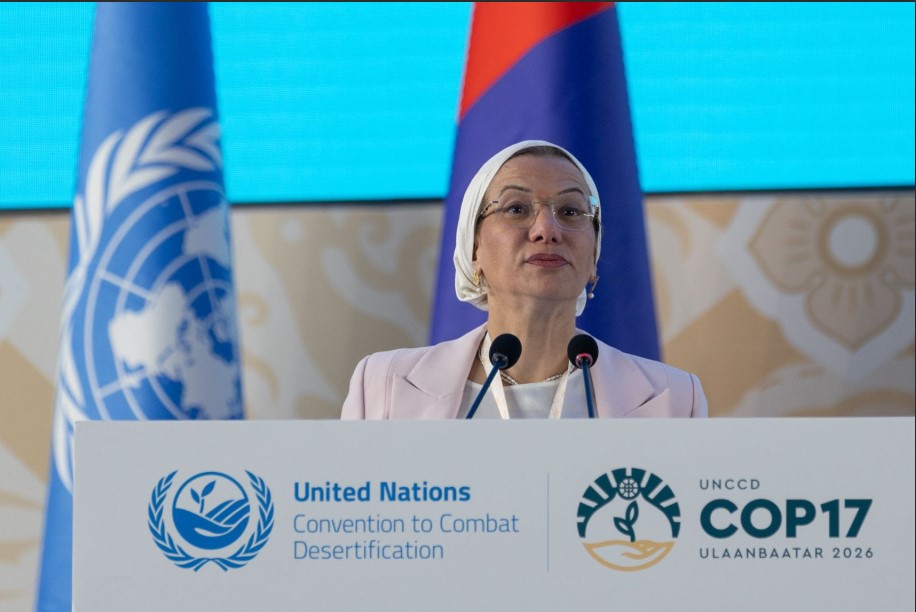
Delegates from 196 countries and the European Union gathered in Mongolia's capital on Monday for the opening of the 17th session of the Conference of the Parties (COP17) to the United Nations Convention to Combat Desertification (UNCCD), marking the start of two weeks of negotiations on land restoration, drought resilience and sustainable land management.According to agency reports, the conference will bring together governments, financial institutions, businesses, scientists and civil society groups to strengthen partnerships, mobilize investment and advance practical solutions to address growing environmental challenges. Discussions will focus on drought, rangelands, agricultural land, soil conservation and financing mechanisms to support restoration efforts.
According to UNCCD estimates, land degradation and drought cost the global economy nearly USD 900 billion annually, affecting up to 40 per cent of the world's land and 3.2 billion people. Droughts have increased by almost one-third since 2000 and now cause at least USD 300 billion in losses every year. As the first of the three Rio Convention conferences scheduled for 2026, COP17 is expected to strengthen cooperation on issues ranging from climate change and biodiversity loss to food and water security. The conference is also being viewed as an opportunity to translate global commitments into concrete action.
Addressing the opening session, Mongolian Prime Minister N. Uchral called for a shift from commitments to implementation, urging countries to increase investment in land restoration, strengthen cooperation and place drought resilience at the centre of development policies. He also emphasized the importance of integrating the knowledge of herders and local communities into global land management strategies. UNCCD Executive Secretary Yasmine Fouad said land degradation and drought are no longer distant environmental concerns but are already affecting food systems, water resources and economic stability. She stressed that the conference should focus on scaling up solutions through stronger political commitment, investment and international partnerships.
For host nation Mongolia, the issues under discussion have immediate significance. Nearly 77 per cent of the country's land is affected by degradation, while pastoralism supports the livelihoods of one in three people. Severe droughts and harsh winters during 2023 and 2024 led to the loss of more than seven million livestock, underscoring the vulnerability of dryland communities. One of the conference's major priorities will be strengthening drought resilience. More than 70 countries have now developed national drought plans, compared with only three in 2013, reflecting a growing shift toward long-term preparedness. Delegates are expected to discuss measures related to early warning systems, international cooperation and financing mechanisms.
Financing will also remain at the centre of discussions. An estimated USD 355 billion is required annually to tackle land degradation and drought, while current investment stands at just USD 77 billion, leaving a substantial funding gap. COP17 will explore ways to attract greater private-sector participation and unlock new sources of finance for restoration projects. Rangelands, which cover 54 per cent of the Earth's land surface and support around two billion people, will receive special attention during the conference, which coincides with the International Year of Rangelands and Pastoralists. Countries are expected to discuss a new policy framework and launch initiatives aimed at strengthening sustainable rangeland management. The conference will conclude on August 28, when participating countries are expected to adopt decisions that will shape global efforts to combat desertification, restore degraded land and strengthen drought resilience in the years ahead.









Related Items
India hosts 12th BRICS Environment Ministers’ meeting in New Delhi
Trump praises India's voter ID system in bid to pass SAVE America Act
MEA Secretary highlights India's BRICS 2026 priorities at Cairo forum