 Uday Kumar Varma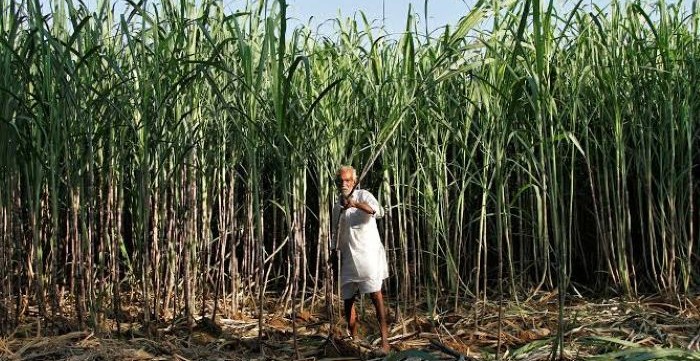
The controversy surrounding E20 petrol has generated an interesting misconception: that India does not really produce ethanol and that the fuel being blended with petrol is largely imported from the United States. The facts tell a rather different story.
India has been producing ethanol for decades, primarily through its sugar industry and distilleries. What has changed dramatically in recent years is not the existence of ethanol production but its scale, feedstock base and strategic importance.
From a Modest Programme to E20
India's Ethanol Blended Petrol programme has a history going back more than two decades. A pilot was launched in 2001, and the programme was subsequently expanded through successive policy initiatives. The major acceleration, however, came after 2014.
According to the latest government figures, ethanol blending increased from less than 1.5 per cent in 2013-14 to around 20 per cent by 2025-26. Ethanol procurement rose from about 38 crore litres in 2013-14 to more than 1,200 crore litres projected for 2025-26. At the same time, India's installed ethanol production capacity expanded from about 421 crore litres in 2014 to nearly 2,000 crore litres in 2026—almost a five-fold increase.
These figures settle one part of the present controversy: India has built a substantial domestic ethanol industry and is not dependent on imported ethanol for its E20 programme.
There is, however, an important qualification. Domestic production does not mean that India has stopped importing ethanol. Recent trade data show that India continues to import some ethanol, with the United States accounting for the overwhelming share of those imports in 2025-26. But total ethanol imports were below $500 million. These imports should not be confused with the much larger domestic production and procurement that underpin the E20 programme.
What Goes into India's Ethanol?
The more interesting question is what India uses to produce this ethanol.
Historically, sugarcane and molasses have been central to the industry. Sugar mills and associated distilleries have therefore become important ethanol producers, providing an additional revenue stream for the sugar sector and a market for molasses and other sugar-industry products.
But the feedstock base has progressively widened. Maize, broken rice, other grains and damaged or surplus food grains have increasingly entered the picture. Government policy has deliberately expanded the range of permitted feedstocks in order to make ethanol supplies more reliable and less dependent on any single agricultural commodity.
This diversification is strategically important. A country as large and agriculturally diverse as India cannot sensibly build its energy security around one crop.
The Economic Case
There are several economic arguments in favour of the programme.
Every litre of domestically produced ethanol that substitutes for imported petrol reduces, at least in gross terms, India's requirement for imported crude oil. According to the latest government estimate, the ethanol programme has resulted in more than ₹1.9 lakh crore in foreign-exchange savings since 2014-15, while substituting more than 310 lakh metric tonnes of crude oil.
There are wider benefits as well. Ethanol creates an additional market for agricultural produce, supports sugar mills and distilleries, and brings investment into rural areas. For the sugar industry, which has periodically struggled with surplus production and arrears to farmers, ethanol has provided an important alternative revenue stream.
But these benefits should not be confused with the net economic benefit of ethanol. Producing ethanol also consumes land, water, energy, fertiliser and capital. The opportunity cost of using a crop for fuel rather than food, feed or another economic purpose must be considered.
The right question is therefore not simply how much foreign exchange ethanol saves, but what the country spends in obtaining that saving.
The Environmental Question Is More Complicated
The environmental case is similarly nuanced.
Ethanol is renewable in the sense that its feedstocks can be replenished, unlike fossil petroleum. Replacing a portion of petrol with ethanol can reduce fossil-fuel consumption and, depending on the feedstock and production process, greenhouse-gas emissions.
But ethanol is not automatically a zero-carbon fuel.
The entire lifecycle matters—from growing the crop and applying fertiliser to processing, transporting and finally using the ethanol. Water is another critical consideration. Sugarcane, in particular, can have a high water footprint. Encouraging less water-intensive feedstocks and developing second-generation ethanol are therefore important elements of a sustainable biofuel strategy.
This is particularly relevant for India, where water is already under growing pressure.
An ethanol policy that encourages more water-intensive cultivation in already stressed regions could therefore create an environmental problem while trying to solve an energy problem.
The Food-versus-Fuel Dilemma
Perhaps the most politically sensitive criticism concerns food security.
When maize, rice or other grains are used to produce ethanol, an obvious question arises: could the same agricultural resources have been used for food or animal feed?
The concern should not be dismissed. Nor should every tonne of grain diverted to ethanol automatically be described as a threat to food security.
There is a significant difference between using surplus, damaged or otherwise unsuitable grain and diverting grain needed to feed the population. Government policy has permitted damaged food grains, broken rice and grains unfit for human consumption as ethanol feedstocks.
Nevertheless, the boundary must be carefully watched. The fact that food stocks are temporarily surplus does not mean that they will always remain so. Climate variability, changing agricultural yields, population demand and international food prices can alter the equation quickly.
Energy policy must therefore never be allowed to undermine food security.
The More Promising Future: Waste to Fuel
This is perhaps where India's ethanol story should now move.
Instead of progressively depending upon crops that can also serve as food, India should increasingly develop technologies that convert agricultural residues and other non-food biomass into fuel.
India produces enormous quantities of crop residues. Turning these into ethanol could provide three benefits simultaneously: additional energy, additional rural income and reduced agricultural waste.
The Government has already been promoting advanced biofuels through initiatives such as the modified JI-VAN programme. India is also developing capabilities to produce ethanol from agricultural waste and other non-traditional feedstocks.
This is potentially a much more sustainable direction than simply increasing the quantity of first-generation ethanol.
The longer-term objective should therefore be to progressively shift the ethanol economy towards waste, residues and advanced technologies, wherever these can demonstrate genuine environmental and economic advantages.
What Should India Do Next?
The answer should not be to abandon ethanol—or to treat E20 as the final destination.
India should instead adopt a more discriminating ethanol strategy.
Feedstocks should be assessed for their water consumption, land requirements, food-security implications, lifecycle emissions and net energy gain. Second-generation ethanol should receive increasing technological and commercial support. Regional differences should matter: a feedstock that makes economic and environmental sense in one part of India may not make sense in another.
And blending targets should not become ends in themselves. They should remain subject to periodic review as the relative economics and environmental performance of ethanol, electric mobility, solar energy, batteries, hydrogen and other technologies evolve.
A Place in India's Energy Future
The ethanol debate ultimately illustrates a larger truth about India's energy transition.
India cannot afford to place all its bets on one technology. Solar energy will be central to the future of electricity. Electric vehicles will increasingly transform road transport. Energy storage will become indispensable. Hydrogen may find important applications in industry and heavy transport. Sustainable biofuels can reduce dependence on liquid fossil fuels, particularly during the long transition in which millions of internal-combustion vehicles will continue to operate.
Ethanol is therefore best understood not as the answer to India's energy challenge, but as one part of the answer.
Its future legitimacy will depend on making it progressively less dependent on food and scarce water, more dependent on waste and advanced technology, and demonstrably beneficial when its complete economic and environmental costs are taken into account.
India does not have to choose between energy security, food security and environmental sustainability. But achieving all three will require something more demanding than slogans: better technology, better data and better policy choices.
That is ultimately the real lesson of India's ethanol journey. The objective should not be to produce more ethanol at any cost. It should be to produce the right ethanol, from the right resources, at the right environmental and economic cost—and to use it as one component, an important one, of a much larger strategy for India's energy future.
(Uday Kumar Varma is an IAS officer. Retired as Secretary, Ministry of Information & Broadcasting)

Related Posts
India-Africa partnership built for generations, not just today:Jaishankar
INDIA bloc march: ECI says no party sought appointment till 4 pm
INDIA bloc protest march against CEC, several leaders detained