 Farwa Aamer
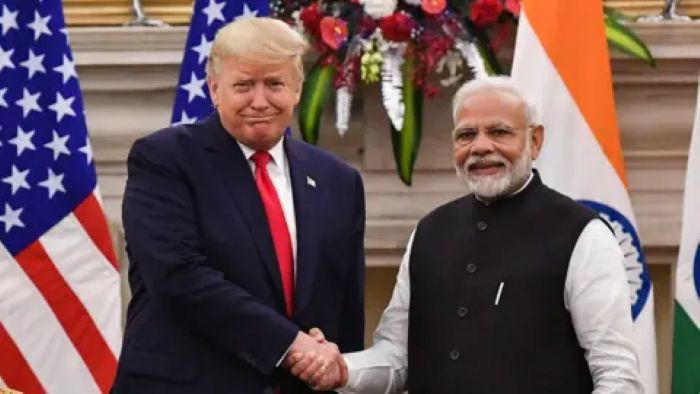
As Prime Minister Narendra Modi lands in Washington for his first in-person meeting with President Donald Trump in his second term, While the India-U.S. partnership has witnessed significant growth over the past decade—especially in defense and technology cooperation—this moment marks a crucial test of how much of that momentum can be sustained and expanded.
India has been quick to engage, ensuring hard-won diplomatic gains are not only preserved but also leveraged for new opportunities. Early high-level exchanges between the top leaders, as well as Modi's status as only the fourth leader to meet Trump since his January inauguration, underscore the strategic weight of the India-U.S. relationship. There is optimism on both sides that the relationship will remain steady.
For the much-anticipated Modi-Trump meeting, trade and immigration will take center stage. Modi is coming prepared with concessions—lower duties on U.S. imports and greater market access for American goods—and a willingness to recalibrate. All eyes are on the possibilities of a mini-trade deal or some sort of resolution that could soften the tariff blow for India. Defense and energy cooperation will also feature prominently, with India looking to purchase more U.S. military equipment and LNG. On immigration, India is expected to push for the protection of H-1B visas while signaling further cooperation on illegal migration issues.
The Indo-Pacific will be another focal point, especially with India hosting this year’s Quad Summit. U.S.-China competition has intensified over the past years, and New Delhi’s role as a strategic counterweight in the region makes its alignment with Washington even more critical. For the U.S. administration now, it's important to see what a certain relationship brings to the table, and for India, it will be important to display and convey exactly that while securing its own interests.
Global issues like the Ukraine conflict may also feature in the talks especially as India has a unique leverage with both Moscow and Kyiv. There is a possibility of reviving conversations around the India-Middle East-Europe Economic Corridor (IMEC) and connectivity—another space where India can show its strength as a dependable partner for the United States.
Important to note that Modi and Trump share a strong personal rapport overall—a factor that could smoothen negotiations. The real question is whether their chemistry can translate into substantive policy wins
(Farwa Aamer is the Director of South Asia Initiatives, Asia Society Policy Institute, New York).
Related Posts
PM Modi holds talks with Liechtenstein’s Prince Alois
Trump claims Brazil election looked rigged
Phone banking ruined the banks: PM Modi targets Cong in Odisha