 Krishan Gopal Sharma
Introduction
India, the world’s largest democracy, is sending a message that’s as strategic as it is unsettling: it will choose its partners based on interests, not ideologies. From hosting Vladimir Putin to deepening ties with Israel and engaging the Taliban, New Delhi’s foreign policy is pivoting towards a hard-nosed realism that prioritises autonomy over alignment with liberal values.
This shift is not subtle. It’s deliberate, calculated, and increasingly visible on the global stage. India is no longer positioning itself as a moral counterweight to authoritarian regimes—it is engaging with them, often unapologetically.
Strategic Over Sentimental
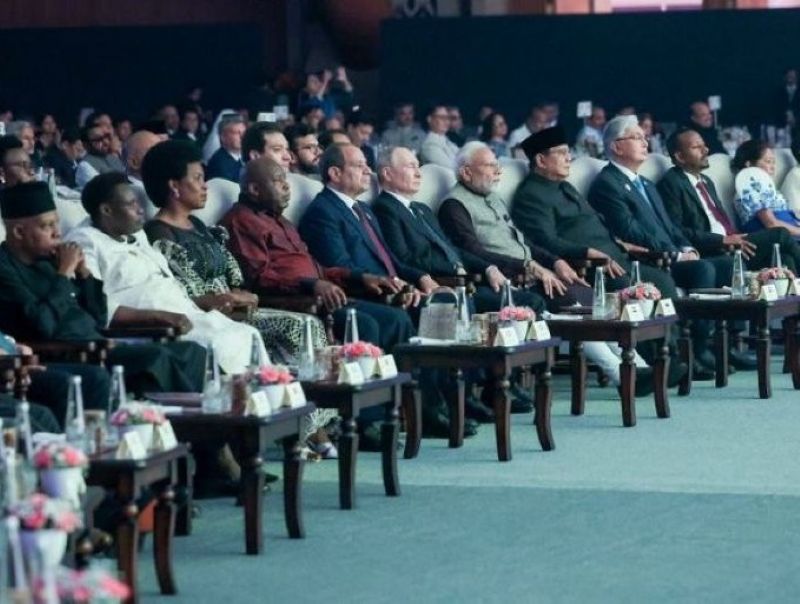
The clearest signal came with Putin’s December 2025 visit. Despite an ICC warrant and global condemnation over Ukraine, India rolled out the red carpet. Defence deals, energy assurances, and logistics agreements were signed, while Western capitals watched with unease.
Similarly, India’s unwavering support for Israel during its Gaza campaign—marked by arms cooperation and diplomatic shielding—has drawn criticism from human rights groups. Yet the relationship remains robust, driven by shared security interests and technological collaboration.
Even more striking is India’s outreach to the Taliban. From upgrading its Kabul mission to holding high-level talks, New Delhi is engaging a regime once considered untouchable. The rationale: regional stability and countering Chinese influence in Afghanistan.
The Democracy Dilemma
These moves raise uncomfortable questions. Can a democracy claim moral leadership while partnering with regimes accused of war crimes and repression? India’s answer appears to be: yes, if national interest demands it.
As former diplomat Shivshankar Menon once noted, “Foreign policy is not about choosing friends. It’s about advancing interests.” India seems to have taken that maxim to heart.
But the optics matter. The exclusion of Opposition leaders from the state dinner with Putin was not just a domestic snub—it signalled a centralised, personality-driven diplomacy that sidelines pluralism. For a country that prides itself on democratic depth, such gestures risk eroding credibility abroad.
Global Reactions
Western governments are uneasy. India’s actions complicate sanctions enforcement, dilute Indo-Pacific cohesion, and challenge the idea of shared democratic values. Human rights advocates warn that silence on abuses undermines India’s moral standing.
Yet in the Global South, India’s posture is seen as assertive and sovereign—an alternative to Western hypocrisy. China, meanwhile, watches warily. India’s engagement with Russia and the Taliban dilutes Beijing’s leverage and signals a multipolar world where no single power dominates.
Risks and Rewards
The risks are real. India could face secondary sanctions, reputational damage, and strained ties with liberal democracies. Overreliance on Russian systems may limit interoperability with Western platforms.
But the rewards—strategic depth, energy security, and regional influence—are equally compelling. India is betting that its size, market, and geopolitical weight allow it to chart an independent course, even if it means shaking hands with pariahs.
Conclusion: Autonomy with Consequences
India’s foreign policy is no longer about moral posturing—it’s about strategic positioning. By aligning with Russia, Israel, and even the Taliban, New Delhi is asserting its autonomy in a fractured world.
This is not a betrayal of democracy, but a redefinition of it—one that prioritises sovereignty over sentiment, and interests over ideals. The question is not whether India can afford this shift, but whether the world can afford to ignore what it signals: that the age of value-based alliances is fading, and the age of transactional diplomacy is here. India is not just choosing its partners. It’s choosing the kind of global actor it wants to be.
<><><> (Views are personal)
(The writer is a retired officer of the Indian Information Service and a former Editor-in-Charge of DD News and AIR News (Akashvani), India’s national broadcasters. I have also served as an international media consultant with UNICEF Nigeria and been contributing regularly to various publications.)







Related Items
China rejects US sanctions bill, opposes 'long-arm jurisdiction'
SEMICON 2026: India preparing today for the chips of tomorrow: PM
PM Modi inaugurates SEMICON India 2026, engages with participants