 Bikash Narayan Mishra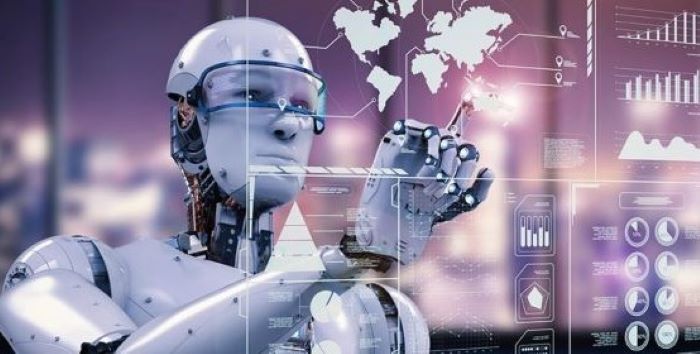
We humans are naturally curious and creative. Since our earliest ancestors bashed a rock on the ground to make the first sharp edged tool, millions of years ago, humans have continued to innovate. From the debut of wheel some 6000 years ago to the launch of Mars rovers, it has been on. James Watt’s, the Scoƫsh Engineer, Steam Engine invenƟon in the 1700s is one of the most momentous technological leaps in human history. Then came the telegraph in 1830s by the American Samuel Morse which revolutionized the long-distance communicaƟon and formed the bedrock of the information age. This was followed by Scoƫsh Graham Bell’s invetion of telephone in 1875 and the American Thomas Edison’s light bulb in 1879 which transformed the entre world. This was followed by the invention of first horseless carriage, the car, by the German Karl Benz in 1886. The American Write brothers then came with the flying machine in 1903 which enabled the humans to fly.
We are now in internet and digital age. Charles Babbage, an English mechanical engineer conceptualized the computer way back in early 19th century. But Konrad Zuse of Germany is credited with the invention of first programmable modern computer in 1941 The last two hundred years have been marked by so many landmark inventions some of which have been mentioned above. Our lives would not have been same without them. From the pre wheel age to the onset of ArƟficial Intelligence days we have come a long way. Necessity is believed to be mother of all invenƟons; but someƟme without necessity also we have inventions. This enhances speed and accuracy at Ɵmes. Our dependance on animals for transportaƟon have reduced to an alarming extent. It is now existng in very few pockets of the globe in mountainous paths or for some stop gap arrangements in undeveloped areas. Machines are not only stronger and more dexterous but they are supposed to be more intelligent too. Are they creatve also?
Machines are doing much more than what we could have done in their absence; but there is an exception in as much as they can’t be human and caring as humans are. Even as it is the beginning and AI has not entered into all walks of our lives the recent advances of AI are highly significant. A person like Bill Gate is of the firm view that they are the most important development since personal computers were invented. So, what could be the implications on growth, productivity and employment and more on employment. On this the analysis of Goldman and Sachs is both optimistic and littlte thought provoking too. It says the combination of significant labor cost savings, new job creation and a productivity boost for non-displaced workers raises the possibility of a labor productivity boom. This will be on the same line as happened post invention of electric motors and personal computer. As per their assessment Globally 18 per cent work could be automated by AI, with larger effects in high-income countries. The most vulnerable jobs will be office and administrative, legal and architecture and engineering. The least exposed will be construction, installation and maintenance. Socially, the impact will fall most heavily on relaƟvely well educated white- collar workers. This may lead to down ward mobility of middle and upper-middle classes. So, even if their increasing use will lead to rise in productivity it will have social and poliƟcal impacts and more so in the emerging and developing economies.
The story will go beyond this. While we might have very efficient system and procedures in many areas including in judiciary with the help of AI, we might also have a world of faked informaƟon. Complete surveillance by Govt and companies on the activities of individuals and other companies cannot be ruled out. It will also have effect on the political democratic process. Democracy as such is a conversation and conversation rely on language. When AI hacks language it can affect our ability to have meaningful conversation. It will have potential to change our economies, our polity, our social relations and science. It can also change how we think and create although by nature we are creative. In fact, it’s quite complex to understand the whole dynamics. We don’t know how to have a regulator for AI since it’s a general-purpose technology.
But then trying to understand the effects, positive or otherwise, it would be like trying to understand the effect of the printing press in 15th century. There cannot be a clear demarcation where to start and where to end; to agree on what to be favored and what to be avoided/prevented. Even if some countries did that others will not stop. The Chinese decided to go slow on naval power in early fiŌeen century that did not stop others from doing so. In India there was lot of resistance to computerization of railway ticketing the 1990s and also to bank computerization few years later. Now we cannot imagine a manual railway ticketing or a banking outside the purview of core banking.
AI refers to simulation of human intelligence processes by machines, especially computers. While it is nearly impossible on the part of any nation including India to prevent the adoption of IA, nor it will be prudent to do so, nations must prioritize regulations for artificial intelligence ethics, data privacy and protection of intellectual property rights (IPR). Considering the imminent impact on employment and may be displacement on account thereof reskilling of the workforce and building an AI-savvy workforce should engage the attention of policy makers. Massive layoff by multinational employers is now a global phenomenon. There is an undercurrent of discomfort and fear among the tech savvy and not so tech savvy all over the world. The coming in of AI is going to add to the discomfiture of the job seekers and also of those who are already in job. Be that as it may general AI has the potential to transform Indian Businesses by enabling personalized customer experiences, raising the productivity bar, accelerating innovaƟons and revolutionizing communication and education. We are a diverse nation, diversity not only in terms of religion or language; but also, in terms of educayion. IBM CEO tells Bloomberg in an interview that over a 5 years period they expect 30 percent of jobs geƫng replaced by AI & automation. Some others opine generative artificial intelligence is a blessing in disguise as it can take away a lot of repetitive works and leave people to actually perform more creative work. But this will happen in an ideal situation which unfortunately is not the case in a majority of developing economics including India.
Some Banks have already started incorporating AI into their business models. Morgan & Stanley has begun using open AI-powered chatbots to organise its wealth management database. While it is pertinent for the future workforce to learn AI skills in a country like ours where creating employment opportunities is the top most focus of Government .However, this has to be carried out in a mission mode. The world economic forum predicts that AI will bring three changes; job cuts, job creation & increased efficiency. It should be our endeavour to take the middle path and focus more on job creation while promoting AI.
(Writer is a former banker & senior Advisor with Indian Banking Association. Views are personal)










Related Items
PART II: The Intelligence beneath thought
The Sacred Pause in the age of intelligence
Why the true AI threat is not a rogue machine, but a human one