 Newsinc24 Team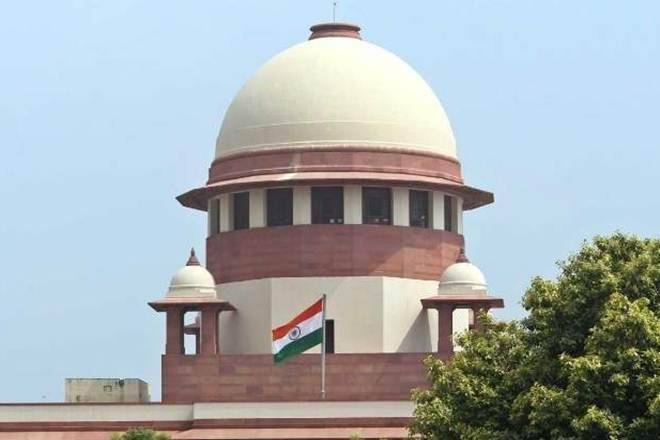
The Supreme Court refused to lay down a yardstick for granting reservation in promotion to Scheduled Castes and Scheduled Tribes in government jobs. A three-judge bench headed by Justice Nageswara Rao on Friday said states are obligated to collect data on inadequacy of representation of SCs/STs. The apex court said it cannot lay down any yardstick to determine the inadequacy of representation of SCs/STs and it for the states to do so. The Centre had earlier told the bench that it is a fact of life that even after around 75 years if independence those belonging to SCs and STs have not been brought to the same level of merit as the forward classes.The apex court had reserved its verdict on October 26, 2021 .
Pointing out that the court, in its 2006 judgement in M Nagaraj vs Union of India, had “made it clear that the validity of law made by the State Governments providing reservation in promotions shall be decided on a case-to-case basis for the purpose of establishing whether the inadequacy of representation is supported by quantifiable data”, the bench said “therefore, we are of the opinion that no yardstick can be laid down by this Court for determining the adequacy of representation of SCs and STs in promotional posts for the purpose of providing reservation”. The bench also said that the Nagaraj judgement “would have prospective effect”. In the Nagaraj case, a five-judge Constitution bench had upheld the Constitutional amendments by which Articles 16 (4A) and 16 (4B) were inserted, saying they flow from Article 16 (4) and do not alter its structure.
The Nagaraj ruling also laid down three conditions which the State must fulfil before granting reservation in promotion to SCs and STs. “The State is not bound to make reservation for SC/ST in matter of promotions. However, if they wish to exercise their discretion and make such provision, the State has to collect quantifiable data showing backwardness of the class and inadequacy of representation of that class in public employment in addition to compliance of Article 335. It is made clear that even if the State has compelling reasons, as stated above, the State will have to see that its reservation provision does not lead to excessiveness so as to breach the ceiling-limit of 50% or obliterate the creamy layer or extend the reservation indefinitely,” the court ruled.














Related Items
US Court system is 'rigged', Political system is 'rigged', asserts Trump
Byju's founder sentenced to 6 months in jail by Singapore court: Reports
NEET paper leak: Delhi Court sends RCC owner to 9-day CBI custody