 Krishan Gopal Sharma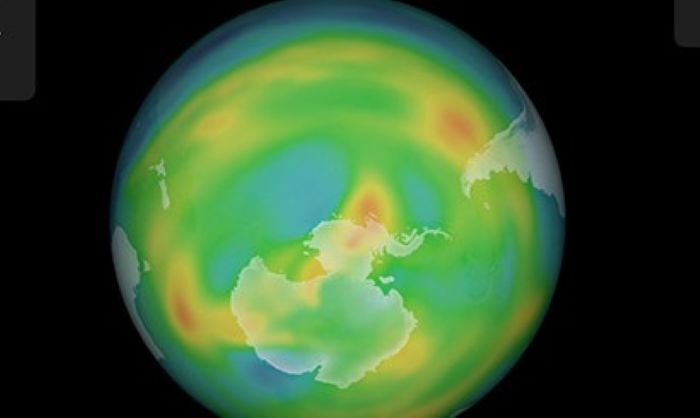
The world has reached a moment of reckoning. For decades, international environmental conventions were criticised for producing grand pledges without practical delivery, leaving vulnerable communities exposed to worsening climate impacts, desertification, and drought. Yet 2025 has marked a turning point. With COP30 in Belém, Brazil, and CRIC23 in Panama City, the global community is beginning to demonstrate that it has learned from past shortcomings. Much like the success of the Montreal Protocol on Ozone, these gatherings show that the world is finally moving from rhetoric to action, accountability, and inclusivity.
From Pledges to Practical Frameworks
The Paris Agreement of 2015 was historic in setting the 1.5°C temperature goal, but its reliance on voluntary commitments meant progress was uneven. By contrast, COP30 and CRIC23 have introduced structured frameworks, measurable indicators, and monitoring platforms. This shift signals a new era where science and transparency are embedded into global governance.
At CRIC23, delegates launched a global monitoring platform for land degradation, enabling countries to share standardised data in real time. At COP30, negotiators advanced the Global Goal on Adaptation (GGA), with indicators to measure resilience. These are not abstract promises but tools for accountability, ensuring that progress can be tracked and verified.
CRIC23: Elevating Drought Resilience
CRIC23 has been groundbreaking in mainstreaming drought resilience into the UNCCD agenda. For the first time, drought preparedness and adaptation strategies are treated as central priorities, not peripheral concerns. This reflects the growing urgency of climate impacts, with erratic rainfall and rising temperatures threatening food security across continents.
Equally significant has been the formal inclusion of Indigenous Peoples and youth representatives in plenary sessions. Their voices, often sidelined in earlier conventions, are now shaping global strategies. This inclusivity ensures that local knowledge systems and generational perspectives are recognised as vital to sustainable solutions.
Financing has also gained momentum. Private sector pledges at scale have complemented government commitments, marking a shift towards diversified funding sources. While delivery remains uncertain, the emphasis on closing funding gaps is a practical step forward.
COP30: Breakthroughs in Climate Finance and Adaptation
COP30 achieved several breakthroughs that resonate with CRIC23’s trajectory. The most significant was the tripling of climate finance commitments, aiming for $300 billion annually by 2035. This directly addressed the equity concerns of developing nations, which have long argued that they cannot shoulder the burden of climate action without adequate support.
Another milestone was the advancement of the Global Goal on Adaptation, ensuring resilience is measurable and mainstreamed alongside mitigation. COP30 also institutionalised civil society, Indigenous, and youth participation, embedding inclusivity into climate negotiations. Together, these achievements reflect a growing consensus that adaptation and resilience are as critical as emissions reduction.
India’s Distinctive Role
India has emerged as a bridge between science, equity, and grassroots action. At COP30, it championed climate justice, aligning with other Global South nations to secure stronger financing commitments. At CRIC23, India showcased its hybrid drought adaptation model, blending traditional water harvesting techniques with modern climate forecasting tools. This innovative approach has been recognised as a best practice, demonstrating how heritage and technology can be combined to build resilience.
India also highlighted community-driven restoration programmes, empowering local populations to take ownership of land management. By emphasising South–South cooperation, India has ensured that developing nations share knowledge and resources, strengthening collective capacity. Its leadership demonstrates that national innovation and community participation can shape international agendas.
Unresolved Issues and Their Importance
Despite progress, several unresolved issues remain, and they are critical to the success of these conventions.
- Financing gaps: Commitments have been scaled up, but concerns persist about whether pledges will translate into actual disbursements. Without reliable finance, vulnerable communities risk being left exposed.
- Policy alignment: Integrating land restoration goals with climate and biodiversity frameworks is complex. Without coherence, efforts may fragment, leading to duplication or inefficiency.
- Feasibility of Land Degradation Neutrality (LDN) by 2030: Given current rates of degradation and uneven national capacities, achieving neutrality by 2030 appears ambitious.
- Inclusivity in practice: While Indigenous and youth voices have gained visibility, their influence often remains limited to advisory roles rather than decision-making power.
These unresolved issues are not minor details; they are foundational to the success of global conventions. Without addressing them, achievements risk losing momentum.
Lessons from the Montreal Protocol
The Montreal Protocol on Ozone (1987) remains the most successful environmental treaty, having led to the near-complete phase-out of ozone-depleting substances and measurable recovery of the ozone layer. Its success lay in binding commitments, science-driven policy, and equitable financing through the Multilateral Fund.
CRIC23 and COP30 are beginning to resemble this trajectory. Both have embedded science and monitoring into their frameworks, scaled up financing commitments, and advanced equity and inclusivity. While they are not yet legally binding in the same way, the structural shift towards practical, collective action echoes the Montreal Protocol’s success factors.
Conclusion: Towards Lasting Planetary Protection
The world is beginning to realise the gravity of the problems at hand. CRIC23 is leading the way in embedding drought resilience and land restoration into global frameworks. COP30 has advanced adaptation and finance, ensuring that vulnerable nations are not left behind. India has played a distinctive leadership role, championing equity, showcasing innovation, and empowering communities.
Yet the unresolved issues — financing gaps, policy alignment, feasibility of targets, and genuine inclusivity — remain the test of whether this new era of environmental governance will achieve the same success as past treaties. Their resolution will determine whether the world’s newfound realisation translates into lasting planetary protection.
Like the Montreal Protocol, which saved the ozone layer, CRIC23 and COP30 show that the world is capable of collective action when the urgency is clear. The challenge now is to ensure that these achievements are not temporary but embedded into the long-term architecture of global governance. Only then can humanity move from progress to permanence in safeguarding the Earth’s future.
<><><> (Views are personal.)
(The writer is a retired officer of the Indian Information Service and a former Editor-in-Charge of DD News and AIR News (Akashvani), India’s national broadcasters. I have also served as an international media consultant with UNICEF Nigeria and been contributing regularly to various publications)










Related Items
India, Russia agree to advance bilateral investment treaty talks
India's electoral process among most transparent in world: CEC
India-EU FTA: European Commission moves to get it signed