 Uday Kumar Varma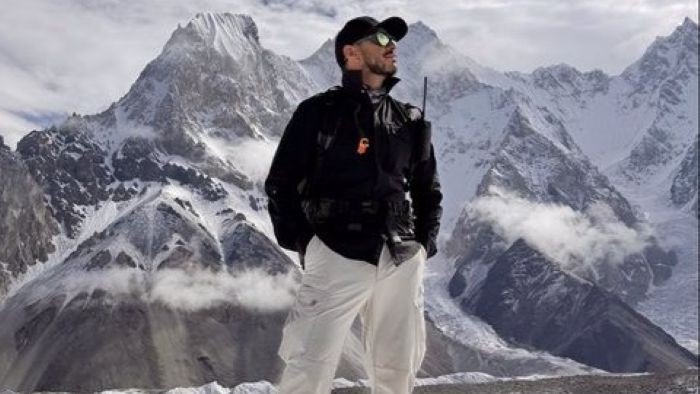
When news broke that Nirmal Purja had lost his life in the Karakoram, the world mourned one of its greatest mountaineers. The mountains, one imagines, remained unmoved. They have witnessed too many triumphs and too many tragedies to distinguish between them. Yet Purja’s untimely death is more than the loss of an extraordinary climber. It is another reminder that even in an age of astonishing technological progress, there are still places where nature retains the final word.
Mountaineering has always been a dialogue between human aspiration and nature’s indifference. Every generation has believed that better equipment, better forecasts and greater experience had made the mountains safer. Every generation has discovered that technology may reduce risk, but it cannot abolish uncertainty.
That truth has echoed through the history of Everest itself. Nearly three decades before Edmund Hillary and Tenzing Norgay stood on the world’s highest peak in 1953, George Mallory and Andrew Irvine disappeared into its clouds, leaving behind one of mountaineering’s greatest mysteries. Their fate became part of Everest’s legend. Even after the summit was finally reached, the mountain continued to remind climbers that success and survival were never the same thing. The devastating Everest disaster of 1996 reinforced that lesson for a new generation.
For India and Nepal, Tenzing’s achievement carried a meaning beyond mountaineering. It brought the sons of the Himalaya from the margins of expedition narratives to the centre of the world’s imagination. The Sherpa was no longer merely the guide behind the climber; he had become the hero himself.
More than seventy years later, Nirmal Purja carried that Himalayan legacy into a new era. A former Gurkha soldier with extraordinary physical endurance and infectious optimism, he accomplished what many experts had considered impossible by climbing all fourteen peaks above 8,000 metres in just over six months. He did not merely break records; he expanded the boundaries of what elite mountaineering believed possible.
Yet mountains are perhaps the only kingdoms where every conqueror remains, in truth, a guest. They allow passage, never possession.
Above 8,000 metres, in the thin air known as the “death zone”, reputation counts for little. Avalanches, hidden crevasses, sudden storms and oxygen-starved bodies reduce every climber to the same human vulnerability. The mountain does not distinguish between the novice and the legend.
Why, then, do climbers continue to return? Every generation answers the question differently. Some seek adventure, others self-discovery, and still others the quiet satisfaction of testing the limits of body and mind. Whatever the answer, history suggests that the attraction of the mountains has always proved stronger than the fear they inspire.
Perhaps, in this part of the world, we understand that attraction a little differently. The Himalaya has never been merely a range of snow-clad peaks. It has long been a place of pilgrimage, contemplation and humility. We may celebrate those who reach its summits, but we also instinctively recognise that no one truly conquers a mountain. At best, one earns the privilege of returning safely.
That is why Nirmal Purja’s life deserves to be remembered not simply for the records he set, remarkable though they were. His enduring legacy lies in the spirit with which he climbed—bold but disciplined, ambitious but never arrogant, fearless yet fully aware of the risks. His story joins a century-old narrative that stretches from Mallory and Tenzing to the climbers who will undoubtedly follow.
Records will be broken. New routes will be opened. Better equipment will be invented. Another generation will attempt what today seems impossible. But one truth will remain unchanged. The mountain endures. It asks of those who approach it not confidence alone, but humility. Nirmal Purja understood that better than most. That is why his life will be remembered long after the footprints of his final ascent have disappeared beneath fresh snow.
(Uday Kumar Varma is an IAS officer. Retired as Secretary, Ministry of Information & Broadcasting)

Related Posts
Arunachal Mountaineer Kabak Yano scales Africa’s highest peak Mount Kilimanjaro