 Newsinc24 Team
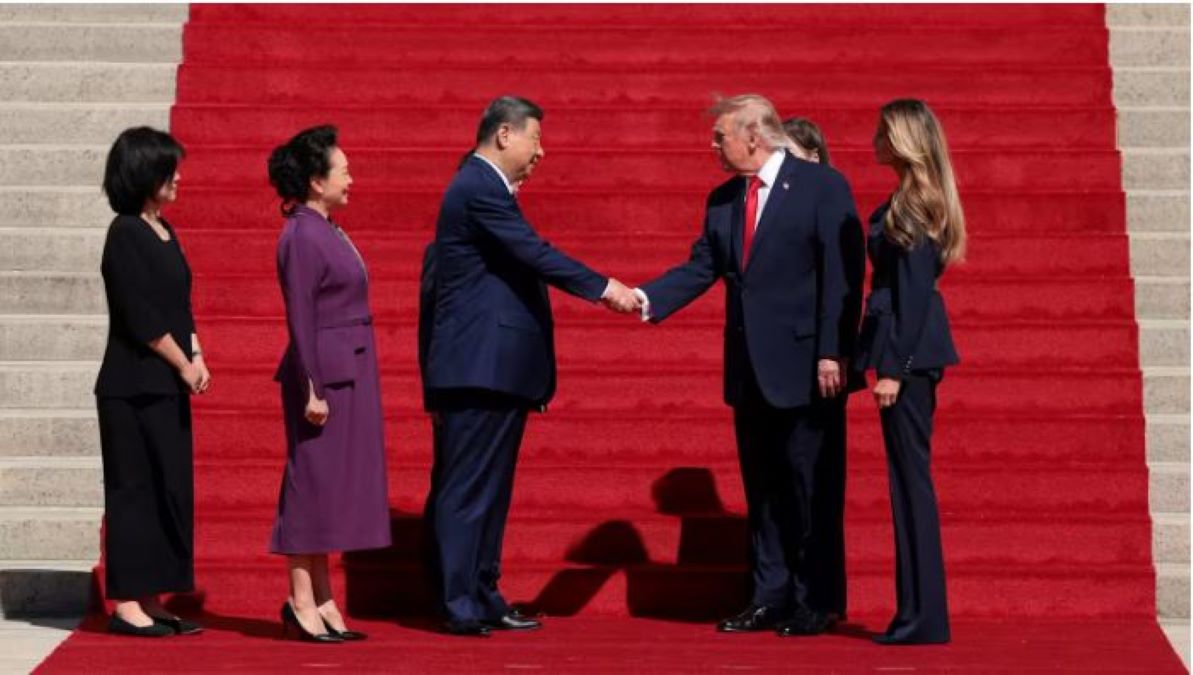
 US President Donald Trump and Chinese President Xi Jinping held talks in Washington this week, with trade, technology, artificial intelligence, Taiwan and broader bilateral relations among the key issues in focus. The summit came as Washington and Beijing seek to maintain stability in ties while continuing to compete across several strategic and economic areas.
Following the meeting, experts from the Asia Society Policy Institute (ASPI) have shared their assessments of US President Donald Trump’s summit with Chinese President Xi Jinping, highlighting the meeting’s symbolism while pointing to limited progress on key areas of disagreement.
Daniel Russel, Distinguished Fellow at ASPI and former Assistant Secretary of State for East Asian and Pacific Affairs, said the summit showed that both sides wanted to prevent further deterioration in relations. However, he noted that the US and China remain locked in competition over trade, technology, Taiwan, defence, rare earths and industrial policy.Russel described the meeting as having an imbalance between “spectacle and substance”, saying the two leaders held around 90 minutes of substantive talks. He said the implementation of announcements on tariffs, agricultural purchases, Boeing orders and rare earth shipments would be key indicators of progress.
Wendy Cutler, Senior Vice President at ASPI and former Acting Deputy US Trade Representative, said only a two-month extension of the trade truce had been announced so far. She said the short extension could give Washington leverage to press Beijing on commitments related to critical minerals and magnets, while warning that US leverage remains limited due to China’s dominance in the sector.Neil Thomas, Senior Fellow on Chinese Politics at the Center for China Analysis, said Xi appeared to have secured the optics of equality with the US president and stability in bilateral ties without making major policy concessions. He identified artificial intelligence (AI) as a potential area for cooperation, particularly in preventing its misuse.
Lyle Morris, Senior Fellow on Foreign Policy and National Security, said the summit was “rich on symbolism but light on substance”. He said the two countries remain divided over Taiwan, technology and regional security, while sharing an interest in preventing conflict and managing competition.Lizzi C. Lee, Fellow on Chinese Economy, said there was no major breakthrough on AI governance but suggested there could be limited scope for cooperation on AI misuse, catastrophic incidents and maintaining human control over the technology.The experts said the implementation of summit understandings, along with stronger working-level dialogue on trade, technology and crisis management, would be important in determining the next phase of US-China relations.


Related Posts
Spiritual awakening must go hand in hand with development: President
President says traditional wisdom can strengthen climate action
President Trump signs Sanctioning Russia and Iran Act