B I Saini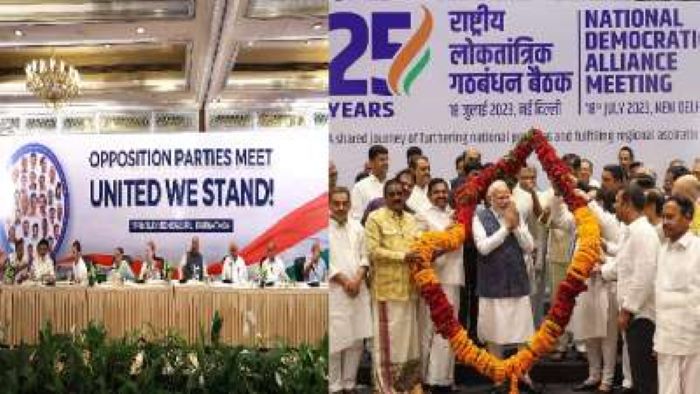
The Bangalore meeting of 26 opposition parties has given birth to a new coalition calling itself the Indian National Developmental Inclusive Alliance, INDIA, to take on the National Democratic Alliance, NDA, in next year’s parliamentary elections.
On the other hand, the NDA led by Prime Minister Narendra Modi is responding to the challenge by expanding its footprint through the inclusion of more regional parties. The day the opposition announced the formation of INDIA in Bangalore, the ruling coalition held a conclave in Delhi to announce that NDA now had 38 constituents representing all parts of the country.
There is no doubt that the formation of the INDIA alliance is a big step forward in forging a combine with the capacity to take on the formidable forces led by Prime Minister Narendra Modi. It is a positive development that the question of leadership of the new combine was not allowed to defeat the broader agenda of opposition unity to defeat the Modi regime. The Congress announcing that it is not interested in staking claim to the Prime Minister’s position at this stage is also a big positive.
But the formation of INDIA has not been without birth pangs. Janata Dal United leader and Bihar Chief Minister Nitish Kumar, one of the prime movers of opposition unity, is said to have been opposed to the new nomenclature. That is perhaps why he did not attend the closing news conference in Bangalore. We may hear more on the matter in the coming days and weeks.
Also, the issue of leadership of the combine may have been pushed to the side in Bangalore but it is bound to come up in the future. The next meeting of the opposition combine is to take place in Mumbai, when the question of constituting a coordination committee to run the affairs of the combine is expected to be discussed and decided upon.
Another important decision taken at the Bangalore meeting was to have a secretariat sort of setup in Delhi to handle the work related to the combine. This may mean more importance to the role of the Congress in bringing together opposition parties. This may also mean, in the long run, sidelining regional parties and their leaders like Nitish Kumar. The Bihar Chief Minister, who has been one of the prime movers of the opposition unity idea, may not have too much liked the move.
There are many challenges ahead for the new opposition combine, INDIA, and it is not going to be easy going ahead. But one cannot deny that it can pose a big challenge to the Narendra Modi led National Democratic Alliance in the coming times, especially next year’s Lok Sabha elections, as well as the upcoming Assembly elections in five states this year.
Prime Minister Narendra Modi has attacked the new opposition combine as a coalition of dynastic parties coming together to continue their alleged corruption. But this may not cut much ice with the public and voters as the BJP has now been in power for more than nine years at the Centre and in many states. The Congress and other opposition parties have also attacked the government led by Prime Minister Narendra Modi for rising inequalities and allegedly promoting crony capitalism.
The country is set for interesting times ahead and keenly fought elections. Neither the government nor the opposition can take the voting public for granted in the Assembly elections to five states coming up by December this year. And these Assembly elections will set the tone for the parliamentary elections due in less than a year.
(The writer is a Political Analyst with decades of journalistic experience. Retired as DG, News, AIR)