 Uday Kumar Varma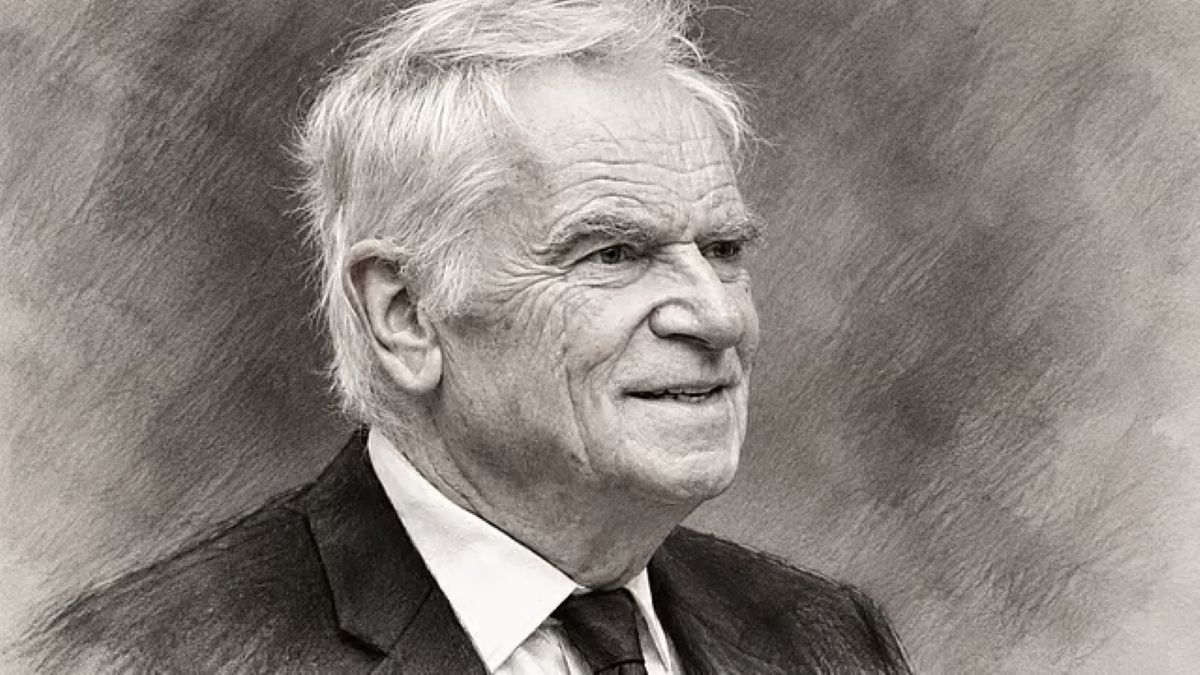
There are writers we admire, writers we respect, and writers we read. Jeffrey Archer belonged firmly to the third category. Millions of us read him. Some were ardent admirers, some reluctant admirers, and some admirers with qualifications. But read him we did—and often long after bedtime.
For more than four decades, Archer knew how to do something that is much harder than it sounds: make us want to know what happens next.
His stories had money, ambition, politics, crime, betrayal, revenge and romance, preferably in generous quantities. There were millionaires, policemen, politicians, businessmen, artists and assorted villains. There were fortunes to be made, fortunes to be lost and, occasionally, a corpse to complicate matters. And then came the twist.
That was Archer's great gift. Just when you thought you had the story figured out, he would move a piece on the chessboard. Sometimes you saw it coming. Sometimes you did not. Either way, you turned the page.
The remarkable thing is that the gift did not desert him with age. Kane and Abel, First Among Equals, A Matter of Honour and A Twist in the Tale belonged to an earlier Archer era. Then came the Clifton Chronicles, followed by the eight-book William Warwick series, beginning with Nothing Ventured in 2019 and ending with End Game in 2025. William Warwick starts as a young constable and rises through the Metropolitan Police to become Commissioner. The ingredients were familiar—crime, art, money, power, police procedure, family and, naturally, twists—but Archer gave them a new lease of life.
Archer kept being Archer almost to the very end.
That matters. He was not simply living off the success of books written decades earlier. He continued to research, invent and write for a new generation of readers. Indeed, the meticulousness of his research was one of the less appreciated aspects of his craft. Whether he was writing about the police, government, finance, the art world or the workings of a courtroom, he wanted to know how things actually worked. Behind the apparently effortless storytelling lay an extraordinary amount of homework.
The critics, however, were not always persuaded. Archer was rarely granted the status of a “serious” novelist. His prose could be functional, his characters sometimes seemed designed for the plot rather than born from life, and his coincidences occasionally strained belief.
Perhaps.
But there is another way of looking at it. A novelist may aspire to literary immortality; a storyteller has the more immediate task of keeping his reader awake. Archer was extraordinarily good at the latter.
India certainly thought so. His books became part of the furniture of English reading here—passed from hand to hand, recommended to friends and consumed on railway journeys, in hostels and on holidays. At the Jaipur Literature Festival, Archer once recalled encountering a boy selling pirated copies of his latest book. The boy asked him whether he wanted “the latest Jeffrey Archer”. Archer replied: “I am the latest Jeffrey Archer.”
It is difficult to imagine a better Archer story.
His own life could have supplied several more. Politics, ambition, money, scandal and imprisonment gave it enough twists and turns to compete with his fiction. His conviction for perjury and perverting the course of justice was no small matter, and it would be wrong to turn it into merely another colourful episode. Yet even prison did not silence the storyteller. He came back to writing, and kept writing.
And now comes the final twist. Archer died between writing sessions, just a day before the publication of Adam & Eve, the novel he had said would be his last.
One could hardly have asked for a more Archer-like ending.
We need not declare every book a masterpiece. We need not settle the argument between the critics and his readers. We can simply acknowledge what he gave us: suspense, entertainment, surprise—and that delicious feeling that there must be just one more chapter worth reading.
Farewell, Jeffrey Archer. The critics may decide where you belong in the history of literature. Your readers already know where you belong.
On the next page.
(Uday Kumar Varma is an IAS officer. Retired as Secretary, Ministry of Information & Broadcasting)

Related Posts
IMF lauds Indian growth story amid global uncertainty
India's Ethanol Story: From Sugarcane to Energy Security
Hamas dissolves Gaza governing body after two decades in power