 Newsinc24 Team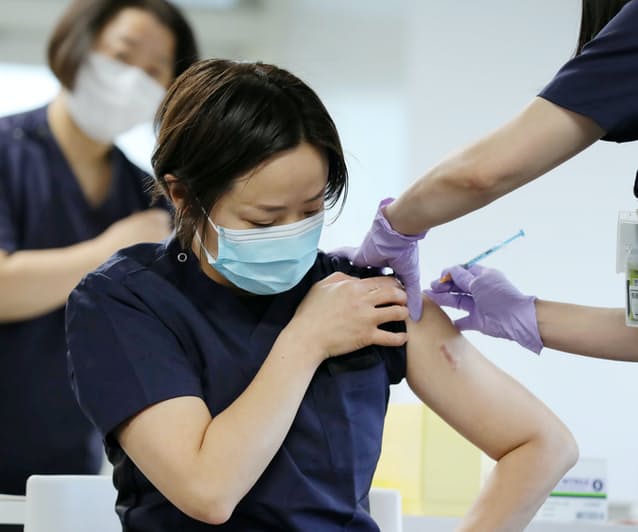
Japan kicks off a mass vaccination programme in Tokyo and Osaka, as the COVID crisis worsens. The military has set up centres offering thousands of shots each day.They are prioritising the elderly. The country's vaccination drive started late and was hampered by supply shortages and organisational hurdles. As a result, Japan is lagging significantly behind other developed nations. Only about 1.9% of the population is fully vaccinated.
Japan's efficient healthcare system has been increasingly overwhelmed by the latest surge, with some hospitals running out of beds and ventilators. Large parts of Japan are currently under a state of emergency to give regional authorities more power to enforce measures against the pandemic. The country has recorded more than 700,000 infections and 12,000 COVID-19 deaths from the virus so far. With the Tokyo Olympics scheduled to start in July, there's mounting pressure to call off the Games. Japan began its inoculation push in mid-February, later than most major economies. The campaign was slowed initially by scant supplies of imported doses of the vaccine developed by Pfizer Inc and BioNTech SE. But even as shipments increased, the rollout has been hampered by manpower shortages and malfunctions in the reservation system.
Authorities hope that by the end of July, people aged 65 and above will have completed their vaccinations. The country started vaccinating its people only in February, later than most other developed nations.There is considerable anxiety about the extremely slow rollout of vaccines, as well as confusion over how to secure slots for the elderly. While Japan had long managed to avoid large scale outbreaks seen in other countries, recent weeks have seen a steady increase in cases. The fourth wave of infections has led authorities to declare states of emergency covering much of the country, including Tokyo. The states of emergency for most regions are due to end on May 31, though the government is leaning towards extending the measures.
Meawhile, Japan on Tuesday has extended the quarantine period for travelers who have recently been to India and five other South Asian countries amid growing concerns over B.1.617 Covid-19 variant. The Japanese government said that those people who recently traveled to India, Bangladesh, the Maldives, Nepal, Pakistan and Sri Lanka, have to complete 10 days of mandatory quarantine period instead of six days. The government will newly impose a three-day quarantine period on travelers who have been to Kazakhstan and Tunisia, with a coronavirus test on the final day, Kyodo News reported.The move is set to take effect on Friday.










Related Items
'Reform Express' to drive growth amid global headwinds: Sitharaman
Gujarat launches mega tree plantation drive on 'World Environment Day'
Japan's parliament passes law to create National Intelligence Council