 Newsinc24 Team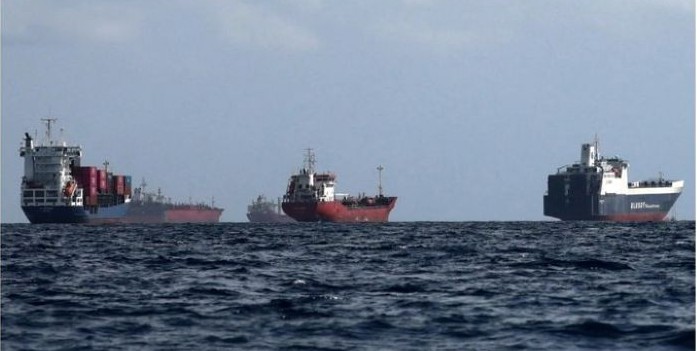
Tensions in West Asia escalated further on Wednesday after Iran seized two vessels in the strategic Strait of Hormuz, tightening its control over one of the world’s most critical energy corridors even as U.S. President Donald Trump announced a halt to planned military strikes.
According to media reports the Islamic Revolutionary Guard Corps (IRGC) detained the ships for alleged maritime violations and escorted them to Iranian waters. The move marks the first such seizure since the outbreak of the ongoing conflict, signalling a sharp escalation in maritime tensions.The development came hours after Trump said the United States would pause attacks on Iran indefinitely following mediation efforts by Pakistan. In a statement, he said Washington had agreed to “hold our attack on the country of Iran” to allow time for negotiations, though no concrete progress in peace talks was evident.
Iran’s Islamic Revolutionary Guard Corps Navy said it had seized two vessels in the Strait of Hormuz and directed them toward Iranian shores, hours after Donald Trump said the United States would extend a ceasefire with Iran.https://t.co/IeNYMNGMop pic.twitter.com/bhgc9Dss5o
— Iran International English (@IranIntl_En) April 22, 2026
Despite the pause in direct military action, Trump reiterated that the U.S. Navy would continue its maritime blockade on Iran’s trade routes. The United States had earlier seized an Iranian cargo vessel and boarded a large oil tanker in the Indian Ocean, actions that Tehran has described as acts of “state terrorism” and piracy.Iran has responded by maintaining its effective closure of the Strait of Hormuz, through which nearly a fifth of global oil and liquefied natural gas supplies typically pass. Shipping activity has been severely disrupted, raising concerns over a prolonged global energy crisis.
Adding to the volatility, the United Kingdom Maritime Trade Operations (UKMTO) reported that at least three commercial vessels came under fire in the region. One container ship sustained heavy damage to its bridge after being attacked by gunfire and rocket-propelled grenades near Oman, though no casualties were reported. Two other ships also reported being targeted west of Iran.Diplomatic efforts to de-escalate the nearly two-month-long conflict appear to have stalled. Pakistan had attempted to facilitate last-minute peace talks in Islamabad, but Iran did not confirm participation, and a U.S. delegation led by Vice President JD Vance did not travel for the discussions, leaving negotiations in limbo.
Iranian officials reacted cautiously to Trump’s announcement, with some expressing scepticism over Washington’s intentions. Advisers to parliamentary leadership suggested the ceasefire pause could be a tactical move, while reiterating that Iran had not sought any extension and would resist the U.S. blockade.Throughout the conflict, Iran has sought to assert dominance over the strait by targeting vessels attempting to pass without its approval, effectively disrupting global shipping lanes. The strategic waterway remains at the centre of the standoff, with both sides unwilling to concede control.
The broader conflict, which began in late February, has already resulted in significant civilian casualties across the region and drawn in multiple actors, including Israel and Lebanon. A recent ceasefire between Israel and Lebanon has done little to ease wider regional tensions, with sporadic violence continuing.Markets reacted cautiously to the latest developments. While oil prices dipped below $100 per barrel following Trump’s announcement, uncertainty over the reopening of the Strait of Hormuz and the future of peace negotiations continues to weigh on global energy markets.
















Related Items
NIA chargesheets 13 persons in Ghaziabad espionage case
Murshidabad completes land handover to BSF for border fencing
Court calls CBI arrest of IRS officer, 2 others in bribery case not legal