 Newsinc24 Team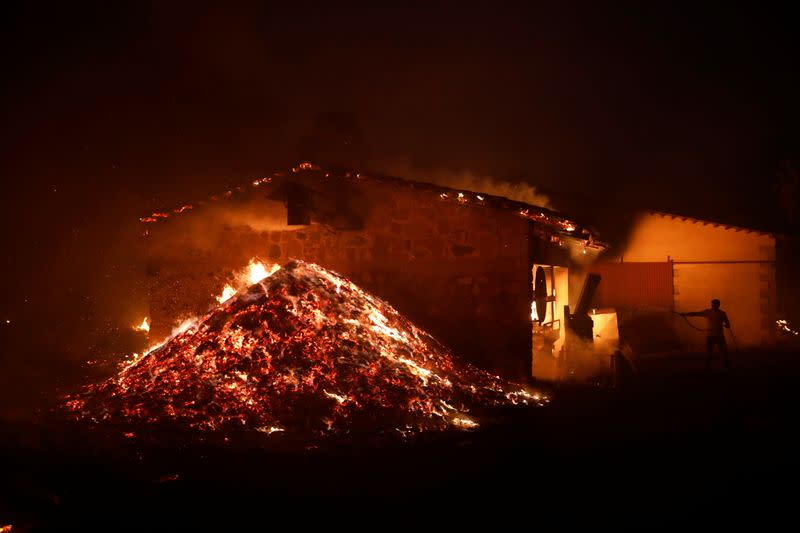
Hundreds of firefighters battled Thursday to contain new flare-ups in wildfire-ravaged areas of Greece, where summer infernos have caused what the prime minister described as the country’s greatest ecological disaster in decades. However, rain overnight in some areas and falling temperatures appeared to have eased the situation after two weeks of devastating blazes, and Prime Minister Kyriakos Mitsotakis said that, they can be more optimistic than previous days. "Climate crisis is here... and it tells us that everything must change," he told reporters, pointing to other devastating fires in Turkey, Italy and Algeria. The prime minister said firefighters, volunteers and locals had saved "countless" homes and businesses, but dozens of properties had been lost nonetheless. Mitsotakis said that 150 homes have been lost in greater Athens over the last week, while the count is ongoing on the island of Evia, which accounts for more than half of the area burned nationwide.
Greece’s most severe heatwave in decades has fanned blazes that have destroyed more than One Lakh (100,000) hectares of forests and farmland, the country’s worst wildfire damage since 2007, the European Forest Fire Information System said.The fires have left three dead, hundreds homeless, forced thousands to flee, and caused economic and environmental devastation.Greece is just one of a number of countries in the Mediterranean region that have been hit by a savage fire season which authorities have blamed on climate change. The fire fronts are still active on Evia and in the Arcadia region of the Peloponnese peninsula and "fires are constantly flaring up" in both areas.
In the north of Evia, where hundreds have been evacuated by boat, 858 firefighters including reinforcements from Ukraine, Romania and Serbia, were battling the flames. And there was fresh concern in Athens after a new fire broke out on Thursday morning in the industrial zone of Aspropyrgos, 20 kilometres (12 miles) northwest of the capital. The Mediterranean has been singled out as a "climate change hotspot", with increasing temperatures and aridity lengthening fire seasons and doubling the areas potential burnt, according to draft IPCC assessment seen exclusively by AFP.














Related Items
UPI goes live in Greece as India expands digital payment reach globally
Uttarakhand plans reward scheme of up to Rs 1 lakh to combat forest fires
K-Rail project scrapped, Keralam CM calls it an environmental disaster