 Newsinc24 Team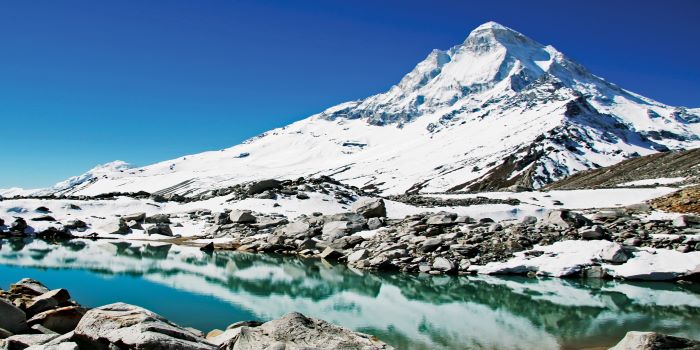
In Uttarakhand,Gangotri Glacier has lost approximately 0.23 square kilometre area in 15 years and the Indian Space Research Organisation (ISRO) is monitoring the changes using Indian Remote Sensing Satellite data. Union environment minister Bhupender Yadav informed Rajya Sabha on Thursday informed that it has been observed that Gangotri glacier has lost approximately 0.23 sq km area due to the retreat of the glacier in the 15 years’ time frame from 2001-2016.” In reply to question to a question by Mahesh Poddar, the minister said that the glacier was melting due to the alleged presence of black carbon in the atmosphere, and know the extent to which the glacier has been melting/retreating in the past two decades. He also asked about the measures being taken by the government to protect habitations in the lower valleys.
Yadav said, adding that the glaciers and their characteristics exhibit complex changes in specific locations, such as various sub-regions in the Himalayas. “There are stable, retreating or even advancing glaciers in the Himalayas, thereby, emphasising the complex geographical and cyclical nature of the glacial dynamics. The literature suggests that the Himalayan region has experienced the presence of black carbon. However, its effect on mass loss and retreat of the Gangotri glacier has not been studied,” the minister told the House. “Black carbon is a short-lived climate pollutant, with a lifetime of only days to weeks after its release into the atmosphere, especially over the Himalayas that experience periodic snowfall. Moreover, Himalayan glaciers have a high concentration of debris on ice and dust on snow, significantly reducing the effect of the changing reflectance of snow and ice on the glaciers. Due to this, the impact of black carbon on Himalayan glaciers is not of a substantial magnitude,” Yadav said.












Related Items
Gujarat’s zoo boosts wildlife protection during intense summer heat
Lotus has bloomed from Gangotri to Ganga Sagar: PM Modi
Severe heatwave grips India, becomes epicentre of global heat rankings