 Newsinc24 Team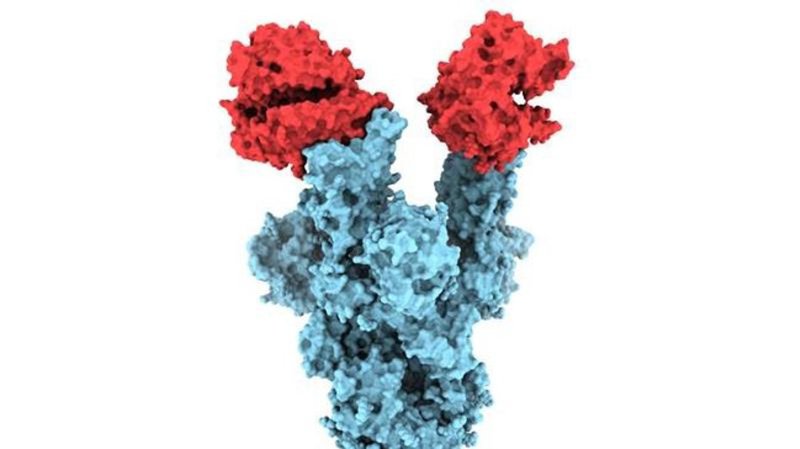
University of British Columbia(UBC) and Canada researchers are the first in the world to publish structural images of the N501Y mutation on the SARS-CoV-2 spike protein—a change believed to be partly responsible for the highly infectious nature and rapid spread of variant B.1.1.7. The B.1.1.7 variant, first reported by the World Health Organization (WHO) in mid-December last year, has an unusually large number of mutations. “The pictures, taken at near-atomic resolution, provide critical insight as to why the B.1.1.7 variant - first detected in the UK and now accounting for a growing number of cases across Canada - is more infectious,” University of British Columbia (UBC) said in a statement.
The research team, led by Dr Sriram Subramaniam, professor in UBC faculty of medicine’s department of biochemistry and molecular biology, found of “particular interest” a mutation known as N501Y located on the coronavirus’s spike protein, which is what it uses to attach itself to human cells that it infects. “The images we captured provide the first structural glimpse of the N501Y mutant and show that the changes resulting from the mutation are localised. In fact, the N501Y mutation is the only mutation in the B.1.1.7 variant that is located on the portion of the spike protein that binds to the human ACE2 receptor, which is the enzyme on the surface of our cells that serves as the entry gate for Sars-CoV-2,” he said.
The coronavirus is 100,000 times smaller than a pinhead and is undetectable using a regular microscope. To “visualise the detailed shapes of viruses and proteins”, the research team used cryo-electron microscopes called cryo-EM that can be up to 12 feet high, and the imaging technology uses beams of electrons to picture the samples at liquid nitrogen temperatures. The research has some positive news as well, as he noted, “Our analysis revealed that even though the N501Y mutant can bind and enter our cells more readily, it can still be neutralised by antibodies that block the entry of the unmutated version of the virus into cells.”
He said they project to have similar structural images of the B.1.617 variant - that originated in India - by the end of May, while his team is also working on visualising the variants that emerged in Brazil, South Africa as well as in California. “It’s important to understand the different molecular structures of these emerging variants to determine whether they’ll respond to existing treatments and vaccines and ultimately find ways to control their spread more effectively,” he said.















Related Items
India-US interim trade talks advance; Goyal pushes Canada CEPA
India, Canada eye $50 billion trade target under proposed CEPA
ICC suspends funding to Cricket Canada amid governance concerns