 Newsinc24 Team
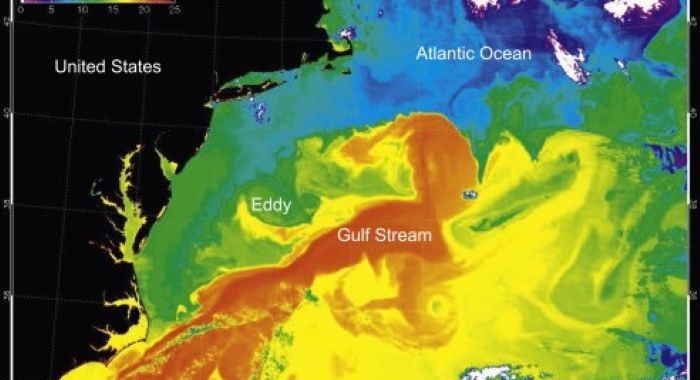
 Glaciers worldwide are melting at an alarming rate due to climate change, and this could have dire consequences for the planet. A study suggests that the Gulf Stream, a powerful ocean current that regulates the climate of the North Atlantic region, could collapse as early as 2025 due to melting glaciers. The Gulf Stream acts as a natural conveyor belt, transporting heat from the Equator to the poles and influencing weather patterns. Without this additional heat, the average temperature could drop by several degrees in North America, parts of Asia, and Europe, leading to severe disruptions in weather patterns and rising sea levels. The study estimates a timescale for the collapse of the Gulf Stream between 2025 and 2095, with a central estimate of 2050 if global carbon emissions are not reduced. A disruption of the Gulf Stream could result in more extreme weather events, including colder winters and hotter summers, with devastating consequences for agriculture, infrastructure, and public health.
This abrupt cooling could trigger a cascade of severe consequences worldwide, including an increase in storms, disruptions in rainfall patterns crucial for agriculture, and a rise in sea levels along the eastern coast of North America, reminiscent of scenarios depicted in the film 'The Day After Tomorrow.' "I think we should be very worried. This would be a very, very large change. The Amoc has not been shut off for 12,000 years," said Professor Peter Ditlevsen, at the University of Copenhagen in Denmark, who led the new study.The study, published in Nature Communications, utilized historical sea surface temperature data dating back to 1870 as a proxy for assessing changes in ocean current strength over time. The researchers mapped this data onto predictive models of systems approaching a critical tipping point, known as a "saddle-node bifurcation," with striking accuracy.
The potential disruption of the Gulf Stream poses dire implications for Western Europe, where its warm currents play a pivotal role in moderating temperatures, safeguarding against extreme weather events that could have devastating impacts on agriculture, infrastructure, and public health.
















Related Items
Europe bakes in unprecedented heatwave, at least 11 dead
India-Europe trade ties focused at CTIL-FICCI FTA Conference
Fossil fuels principal driver of climate crisis: UN chief