 Ira Singh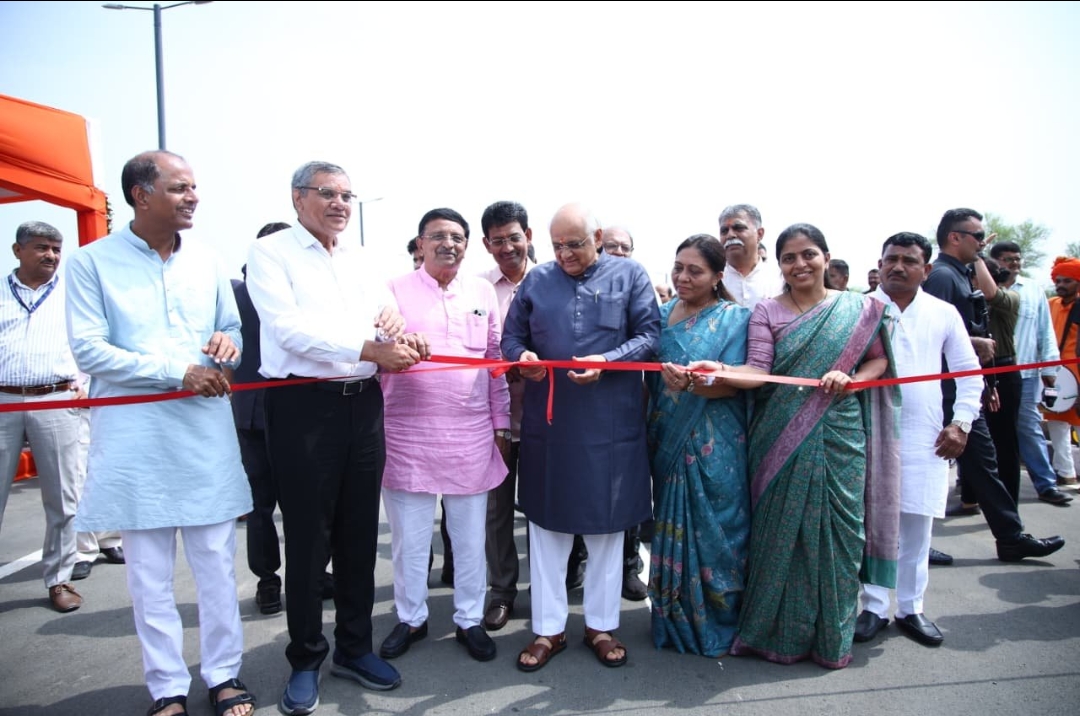
Gujarat Chief Minister Bhupendra Patel on Sunday inaugurated Gandhinagar's first cable-stayed bridge, a landmark Rs175-crore infrastructure project built to ease traffic congestion on the busy Ahmedabad-Gandhinagar Highway, where nearly 1.5 lakh vehicles commute daily.
The 1.5-km-long overbridge, constructed over Apollo Circle near Bhat Chowkdi, is expected to significantly improve traffic flow between Ahmedabad and Gandhinagar by eliminating one of the busiest bottlenecks on the corridor. The project is part of the state government's broader push to strengthen road infrastructure and enhance connectivity across Gujarat.The junction at Apollo Circle has witnessed chronic traffic congestion for years due to heavy commuter and commercial vehicle movement between the twin cities. With the opening of the new cable-stayed bridge, authorities expect smoother traffic movement, shorter travel times and improved road safety for nearly 1.5 lakh daily commuters.
Gandhinagar, Gujarat: Chief Minister Bhupendra Patel inaugurated Gujarat's first six-lane urban cable-stayed bridge at Bhat Circle pic.twitter.com/v7yTfj6JhK
— IANS (@ians_india) July 5, 2026
During the event, Patel also laid the foundation stone for the expansion of the Narmada Canal Bridge near Bhat on the Ahmedabad-Gandhinagar Highway. The existing six-lane bridge will be widened through the construction of two additional three-lane bridges on either side, increasing the corridor's capacity to 12 lanes.The Rs48-crore expansion project is aimed at removing another major traffic bottleneck on the highway. According to officials, specialised construction methods, including the use of floating pontoons to support heavy machinery during the installation of bridge piers inside the canal, will be adopted for the project.
Once completed, both infrastructure projects are expected to provide uninterrupted traffic movement between Ahmedabad and Gandhinagar, reducing congestion and making travel faster and more efficient, particularly during peak hours.Before being opened to the public, the cable-stayed bridge underwent an extensive structural load test to verify its safety and stability. Engineers placed 18 heavy trucks with a combined weight exceeding 700 tonnes at designated points on the bridge over two-hour intervals to assess its load-bearing capacity.
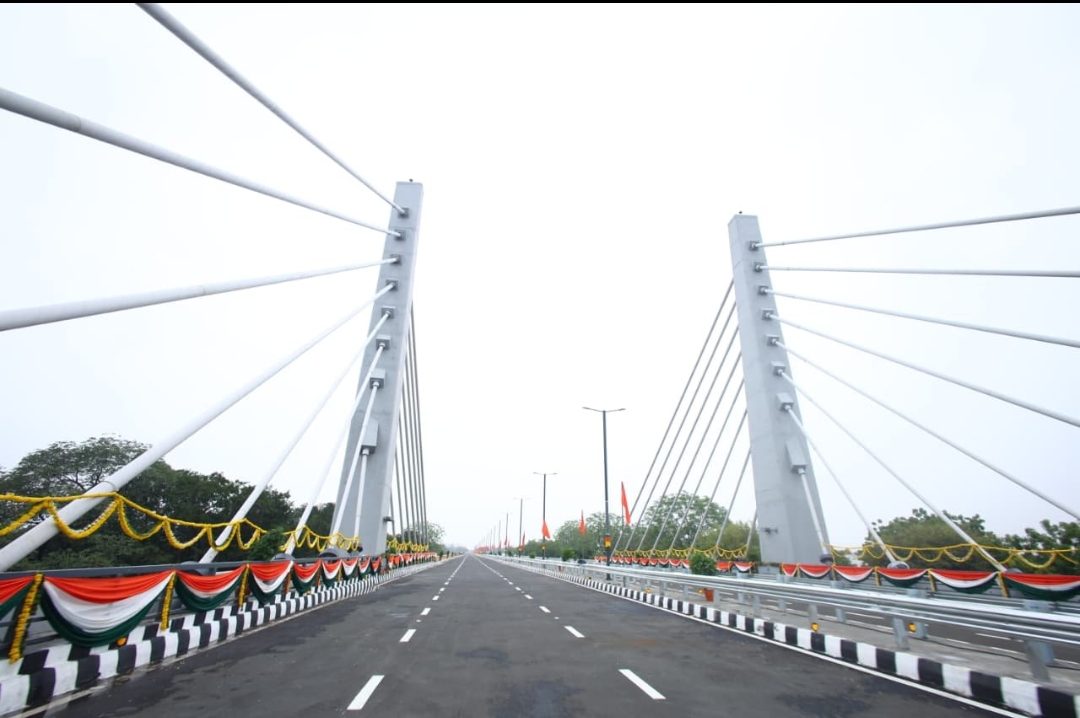
Officials said the bridge's main structure and steel cable support system were closely monitored throughout the testing process. Unlike conventional concrete bridges, which generally undergo shorter evaluation periods, the cable-stayed design required a more detailed assessment, particularly of its longest span between two piers.The bridge features 38-metre-high pylons supported by a network of high-strength steel cables, a design widely used in modern bridge construction across countries such as Japan and China.
Authorities also plan to install an advanced structural health monitoring system on the bridge after it is opened to traffic. The Rs2.5-crore system will continuously monitor structural parameters such as load distribution, stress levels, wind speed and the condition of the steel cables, enabling round-the-clock surveillance and early detection of any potential structural issues.
(State Correspondent)
















Related Items
India, Bengal not safe until borders are secured: Amit Shah
India composite PMI rises to 54.6 in Aug from 52 month low: HSBC
India & Brazil sign MoU in ICTs on sidelines of BRICS track meeting