 Newsinc24 Team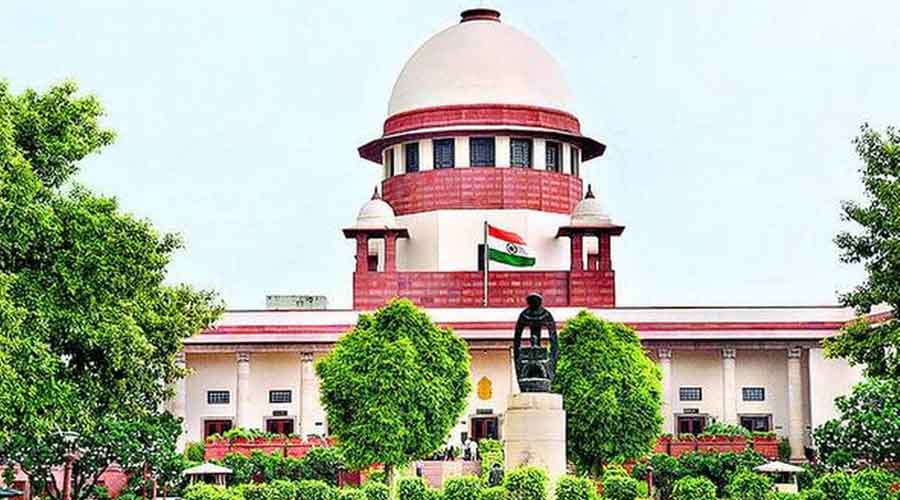
The Supreme Court on Thursday raised concerns over the illegal immigrants getting Aadhaar cards and asked whether such foreigners be allowed to vote during elections. A bench headed by Chief Justice of India (CJI) Surya Kant and Justice Joymalya Bagchi, made the remarks while listening a bunch of petition challenging Election Commission of India's Special Intensive Revision (SIR) of voter lists in several states. Raising concerns over intruders who managed to get Aadhaar cards, the Supreme Court has asked whether a non-citizen with an Aadhaar card should be given voting rights too. Aadhaar, the court said, is to ensure social welfare benefits reach everyone, and this document must not automatically confer the right to vote.
The bench reiterated that an Aadhaar card does not "confer absolute proof of citizenship". "That is why we said it will be one of the documents on the list of documents. If anyone is deleted, they will have to be given a notice of deletion," it said. The Aadhaar Act makes it clear that it does not confer citizenship or domicile. The bench also underlined that the poll panel retains "inherent power to determine the correctness of entries in Form 6," the application used to register as a voter. The Supreme Court rejected the suggestion that the poll body must function like a "post office" and automatically accept every Form 6 submission. The bench, however, observed that the claim that such a revision has never been conducted before cannot be used to undermine the EC's authority to run the exercise. It said any deletion from the voter list must be preceded by proper notice.
Advocate Kapil Sibal, representing some petitioners, argued that the SIR process imposes an unconstitutional burden on ordinary voters, many of whom may struggle with paperwork and face the risk of deletion. He said once a voter's name is included in the electoral roll, the presumption of validity follows unless the state proves otherwise. "Any exclusion must follow a process which is reasonable and fair."
Justice Bagchi, however, stressed the need to weed out dead voters, noting that lists were publicly displayed in panchayats and on official websites. "We do not judge in a vacuum," he said. The court also set timelines for separate challenges to the SIR in Tamil Nadu, Kerala and West Bengal.


.jpg)






Related Items
Nitish enabled Lalu to become CM,Samrat after winning trust vote
Gujarat HC restrains vote counting in Baroda Cricket Assoc election
Cong used infiltration as tool for vote-bank politics: Amit Shah in Assam