 Waseem Iqbal
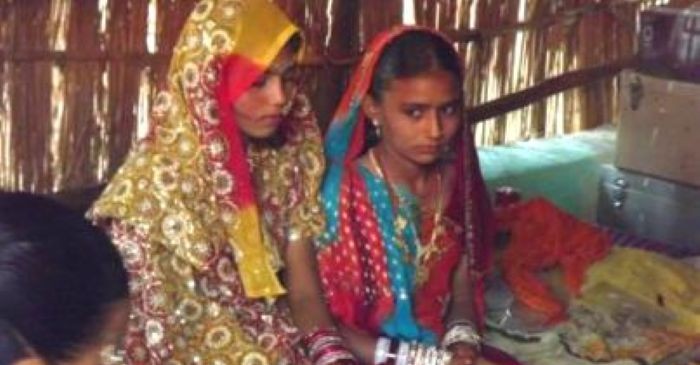
Akshaya Tritiya is the festival of auspicious timings. It is the day when every moment is believed to be divine, and any new beginning on this day is considered blessed. Yet, often, people blinded by ignorance and rigid customs misuse this occasion to conduct marriages of children. What is seen as an auspicious beginning is, in reality, an ending, the end of childhood, the erosion of society’s moral compass, and the loss of a child’s future. States like Madhya Pradesh have for years allowed such practices to continue under the weight of tradition. But signs of change have begun to emerge.
Last year, the Department of Women and Child Development in Madhya Pradesh intensified its efforts to prevent child marriages on Akshaya Tritiya by launching a ‘16 Days of Activism’ across the state. Building on such momentum, a few months ahead of this year’s Akshaya Tritiya, over 1900 faith leaders from across religions pledged to end child marriage during the ‘Bal Vivah Mukti Rath’ campaign, led by Just Rights for Children in collaboration with district administrations and village heads. This campaign on wheels, to support Government of India’s 100-day intensive awareness drive against child marriage, reached over 1400 religious places across the state.
While the ministry’s intervention to closely monitor mass wedding ceremonies during Akshaya Tritiya marked a significant shift in how governance addresses this issue last year, the inclusion of faith leaders and religious spaces has emerged as a pivotal line of defence. A practice long justified in the name of faith and custom is now being challenged by those who shape faith itself, within the very spaces where such marriages are solemnised.
A closer look at the data makes it clear that this is not just symbolic concern, but a necessary and timely intervention. Census data and subsequent surveys indicate that a significant number of children in Madhya Pradesh continue to be married before reaching the legal age. The National Family Health Survey reveals that 23.1 percent of women aged 20 to 24 in the state were married before turning 18. While there has been a gradual decline in the prevalence of child marriage over the years, the fact that nearly one in four young women was married early remains deeply concerning. In several instances, children as young as 12 to 14 are married, and in some regions, early engagements continue to be socially accepted.
This is a deeply troubling reality. Multiple studies have firmly established the interlinkages between education, child marriage, and economic independence. Early marriage almost always results in girls dropping out of school, limiting their ability to become financially self-reliant and reinforcing cycles of dependency. It also hampers physical and psychological development, and early pregnancies pose serious health risks to both mother and child, often perpetuating malnutrition and poor health outcomes across generations.
While child marriage disproportionately affects girls across India, Madhya Pradesh has also seen a notable number of boys being married before the legal age, pointing to broader social and economic pressures that sustain the practice.
Recognising this, in October 2024, the Supreme Court of India, while hearing a petition on child marriage, emphasised the need for a multi-pronged strategy focusing on prevention, protection, prosecution, and community engagement. This came in response to a petition filed by one of the Just Rights for Children’s partner.
Civil society organisations along with government officials have been on an unprecedented drive against child marriage. For instance, the 250+ NGO partners of Just Rights for Children is actively working at the grassroots level across the country and in Madhya Pradesh. Its interventions include identifying vulnerable families and linking them to government schemes, facilitating the re-enrolment of children who have dropped out of school, and intervening directly in cases where child marriages are imminent. In situations where persuasion fails, legal measures are also used to stop such marriages.
An especially effective step has been the involvement of religious leaders across communities. Since marriages often require the presence of priests, qazis, or pastors, their refusal to solemnise child marriages can significantly deter the practice.
These sustained efforts are beginning to show encouraging results. Thousands of child marriages have been prevented in recent years in the state, and awareness is steadily growing that child marriage is not only illegal but also a grave violation of children’s rights. Under the Protection of Children from Sexual Offences Act, 2012, any sexual activity with a minor, even within marriage, constitutes a punishable offence.
Government schemes, particularly the ‘Ladli Laxmi Yojana’, have also played a crucial role in delaying marriages and ensuring that girls stay in school longer. This has contributed to increased enrolment in secondary education and reduced risks associated with adolescent pregnancies, thereby improving maternal and child health outcomes in the state.
While the combined efforts of the government and civil society have led to a steady decline in child marriage rates in Madhya Pradesh, more needs to be done to reach the tipping point where the practice begins to fade on its own. In recent years, measures such as the constitution of information teams at the village and ward levels, comprising teachers, anganwadi workers, ASHA workers, panchayat members, and other community stakeholders, have helped track marriages and report any suspected child marriage. Similarly, mechanisms such as district and block-level control rooms and the deployment of flying squads to monitor wedding venues have strengthened enforcement under the law.
These measures signal a strong and growing commitment to ensuring a child marriage-free Akshaya Tritiya. Importantly, the issue of child marriage has now moved from the margins to the centre of public and media discourse. For one of the first times at this scale, the judiciary, executive, and civil society are working in close coordination to tackle this challenge.
There is reason to hope that by 2030, Madhya Pradesh will be able to bring child marriage rates down to the tipping point. And for the countless children who have, for generations, been trapped in this cycle, that would be nothing short of transformative.
(Waseem Iqbal, Director, Aim for Awareness in Society (AAS), Indore, partner of Just Rights for Children)


Related Posts
Drug abuse among children must be seen as child protection issue: CJI
India firmly supports legal mobility of people, says Jaishankar
Pakistan: 'Legal Coup' gives absolute power to Field Marshal Munir