Vijay Singh
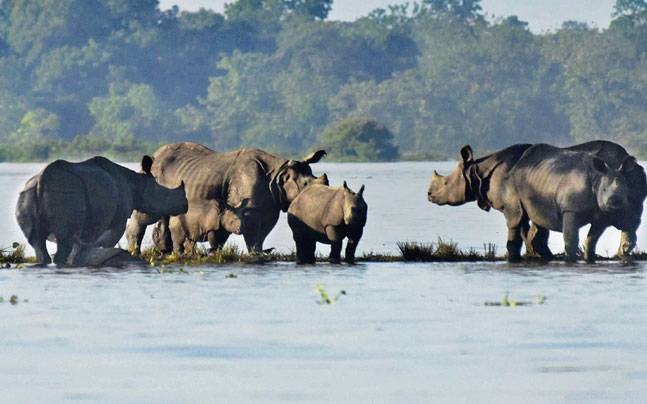
It is well known fact that Assam is a flood prone state. And the 1,055 sq km Kaziranga National Park and Tiger Reserve which is sandwiched between the Brahmaputra river and the Karbi Anglong Hills... is no exception.The annual phenomena of floods from the gigantic river Bramhaputra is hugely destructive causing loss of human lives as well as wild animals. This year flood in the state is being seen as the sixth worst flood since 1988.
The high increasing floods can become baffling problem but some experts consider the annual deluge essential for the survival of Kaziranga National Park. According to the experts...Kaziranga Sanctuary posses . . a floodplain ecosystem. The system fully depends on water. And one can see that the entire area of Kaziranga....formed by alluvial deposits from the Brahmaputra and its tributaries is centred around the river.
The experts say that the reshaping nature of floods helps refill Kaziranga’s water bodies and maintain its landscape. The landscape is a mix of wetlands, grasslands and semi-evergreen deciduous forests. The floodwaters also remove unwanted plants like water hyacinth and help in maintaining its grassland status.
Kaziranga Wildlife Sanctuary declared as World Heritage Site is widely known for rare one horn Rhinos, boar,hog deer, elephants and tigers as well. According to reports...this year four rhinos and same number of boar and deer drowned in high flood waters and 14 hog deer died in road accidents so far. But the actual number of deaths will be known only after the water recede.Now see what the experts say over the possible solutions for protecting these valubale wildlife animals from the perenial floods.
Although rich grassland habitats of Kaziranga hugely support these wildlife animals, but for them...the highlands of Karbi Anglong are the lifeline of the park during the floods. The experts suggest the need for a landscape-scale conservation approach that recognises the value of the Karbi Anglong hills.
Over the years, around 144 artificial highlands were built inside the park for wild animals where they take temporary shelter for their survival during the flood. While these highlands help a fair bit in reducing the number of casualties, but these are not a ‘permanent solution’. The experts opine that such constructions will also damage the natural ecosystem of the park.
Wildlife experts believe that the existing animal corridors for safe passage to the Karbi hills must be ensured. And for that , a 35-km-long flyover over NH-37 has been proposed by the Centre last year September. This project is yet to take shape.
Another important point is that the animals become vulnerable during the floods. So it is also necessary to create awareness among the local villagers against poaching and harming wildlife. The Forest department put extra efforts during the floods. They together with other organisations like CWRC and with the help of inhabitant from fringe villages on the southern part of the park , do tough rescue operations. They guide strayed animals to safer ground, provide medical treatment to the injured ones and also keep a strict vigil round the clock to protect them from poachers.
It is also worth to recall the Supreme Court directions banning all types of mining and related activities along the park’s southern boundary and in the entire catchment area of those rivers originate from the Karbi Anglong hill ranges and flow into Kaziranga. And bann also imposed on new construction activities in private lands on nine animal corridors .Now it is upto the state authorities to enforce the ban strictly.
We see how essential is Brahmaputra flood for survival of Kaziranga Park. But poachers take advantage of the grim flood scenario.Without animals..... No life in Kaziranga Wildlife Sanctuary. So more emphasis on protection of these helpless animals from illegal hunting is the need of time.
********