 Newsinc24 Team
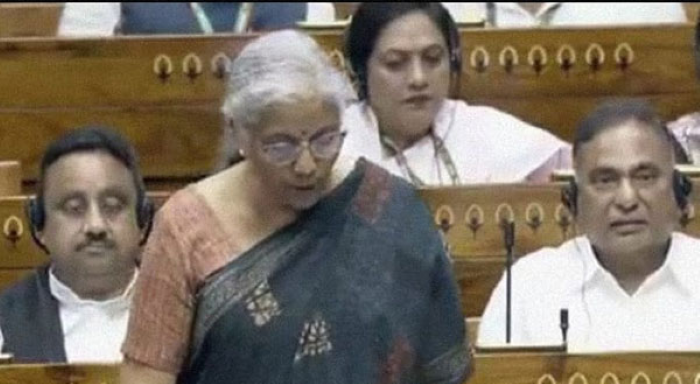
 Economic Survey 2023-24 has projected a real Gross Domestic Product (GDP) growth of 6.5 to 7 per cent in Financial Year 2024-25. On the first day of the Budget Session, Union Finance Minister Nirmala Sitharman on Monday tabled the Economic Survey in the Lok Sabha. According to the survey, domestic growth drivers have supported economic growth in the financial year 2023-24 despite uncertain global economic performance. The survey states that merchandise and services exports are likely to increase. It further mentions that a normal rainfall forecast by the India Meteorological Department and the satisfactory spread of the southwest monsoon are likely to improve agriculture sector performance and support the revival of rural demand. It also said, that structural reforms such as the Goods and Service Tax (GST) and the Insolvency and Bankruptcy Code (IBC) have also matured and are delivering envisaged results.
On the inflation front, the Reserve Bank of India expects headline inflation to be 4.5 per cent in the Financial Year 2025 and 4.1 per cent in the Financial Year 2026. The International Monetary Fund has projected an inflation rate of 4.6 per cent in 2024 and 4.2 per cent in 2025 for India. The Survey mentions that the real GDP in the Financial Year 2024 was 20 per cent higher than its level in the Financial Year 2020, a feat that only a very few major economies achieved, with a strong possibility for robust growth in this financial year. It said, growth has been inclusive with a reduction in unemployment and multi-dimensional poverty and an increase in labour force participation.
The survey states that the country’s real GDP grew by 8.2 per cent in the financial year 2024, posting growth of over 7 per cent for a third consecutive year, driven by stable consumption demand and steadily improving investment demand. Net taxes at constant (2011-12) prices grew by 19.1 per cent in the financial year 2024.
The Survey highlights that the global trade outlook for 2024 remains positive, with merchandise trade expected to pick up. It states that global financial markets have scaled new heights, with investors betting on global economic expansion. However, any corrections in the elevated financial market valuations may have ramifications for household finances and corporate valuation, negatively impacting growth prospects.
The survey also mentioned that the annual unemployment rate in India has been decreasing.According to the annual Periodic Labour Force Survey (PLFS), the unemployment rate for individuals aged 15 and above has been falling since the pandemic. This trend is accompanied by an increase in the labour force participation rate and the worker-to-population ratio. Even under the stricter current weekly status, employment levels have rebounded in both urban and rural areas following the pandemic.


Related Posts
India’s economic resilience built through a decade of reforms:FM
Fed raises rates, signals more hikes ahead as inflation persists
India's August retail inflation rises to 4.82% from 4.45% in July