 Newsinc24 Team
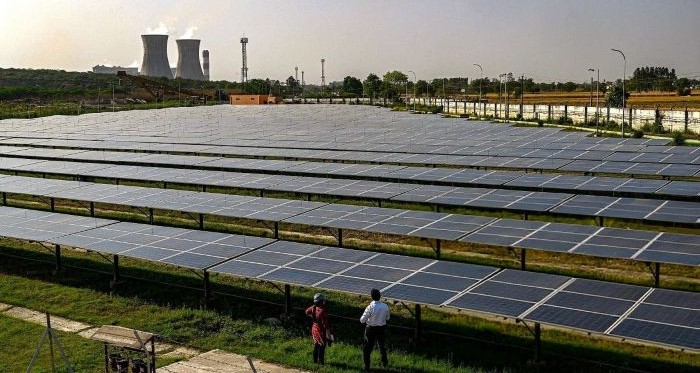
 The administration of US President Donald Trump has imposed a steep preliminary duty of 126 per cent on certain solar goods imported from India, alleging that Indian manufacturers benefit from unfair government subsidies that distort competition in the US market.The decision, announced by the United States Department of Commerce on Wednesday, comes just weeks after New Delhi and Washington outlined a framework for an interim bilateral trade agreement aimed at easing tariff tensions.According to a Commerce Department fact sheet, investigators determined that Indian solar panel manufacturers receive subsidies amounting to 126 per cent, enabling them to undercut American producers. The department also set initial countervailing duties ranging between 86 per cent and 143 per cent on imports from Indonesia and 81 per cent on those from Laos, citing similar subsidy concerns.The duties are separate from the broader global tariff measures recently introduced by President Trump, some of which were struck down by the US Supreme Court. Following that ruling, the administration imposed fresh baseline tariffs of 10 per cent, with the possibility of increasing them to 15 per cent.
While the move is expected to benefit domestic manufacturers, it adds uncertainty for the US solar industry, which relies heavily on imported modules. India, Indonesia and Laos together accounted for 57 per cent of US solar module imports in the first half of 2025, according to information. Developers had increasingly shifted sourcing to these countries after Washington imposed steep duties on four Southeast Asian nations earlier.India is currently the fifth-largest supplier of solar modules to the US. In 2024, the US imported 54 gigawatts (GW) of solar modules, of which India supplied 4.4 GW, representing around 8 per cent of the total volume. Solar imports from India were valued at $792.6 million last year — more than nine times the value recorded in 2022, Commerce Department figures showed.
Market reaction was swift. Shares of Indian solar equipment manufacturers declined sharply following the announcement. Waaree Energies stated the new duties are unlikely to have any material adverse impact on its business, while Vikram Solar indicated the overall effect would be limited.However, analysts have expressed caution. Citi analyst Vikram Bagri noted in a research report that the high preliminary duty rates could effectively shut Indian solar panel makers out of the US market if confirmed in the final ruling.The investigation was initiated following a petition by the Alliance for American Solar Manufacturing and Trade, which argued that foreign subsidies were harming domestic producers. Tim Brightbill, co-chair of Wiley Rein’s International Trade Practice and lead counsel for the alliance, described the preliminary findings as a significant step toward restoring fair competition in the US solar sector.
According to information,the Commerce Department is expected to issue its final determination on July 6. In parallel, it is conducting an anti-dumping investigation into solar cell imports from India, Indonesia and Laos.The Indian government has not yet issued an official response to the latest tariff action. Meanwhile, opposition leaders from the Congress have intensified criticism of the Modi government’s trade strategy, urging it to reconsider aspects of the proposed bilateral deal.The development introduces fresh strain into trade ties between the two countries at a time when both sides had signalled intent to deepen economic engagement.

















Related Items
Russia backs India's call for peace in Ukraine:Peskov
Jaishankar, Luxembourg Dy PM Bettel discuss trade, investment ties
India expands UNESCO heritage footprint with four new sites