 Newsinc24 Team
 India is raising alarm over Beijing’s ambitious plan to construct the world’s largest hydropower dam on the Brahmaputra, fearing severe disruptions to downstream water flows and regional security. Officials raise concern that the Chinese project, with an estimated cost of nearly $170 billion, could reduce water flows into India by up to 85% during the dry season.To counter this, New Delhi has accelerated discussions on its own mega-dam — the Upper Siang Multipurpose Storage Project — intended to safeguard water security, ensure flood moderation, and mitigate any strategic risks posed by China’s control of the transboundary river,according to information. The Brahmaputra, known as Yarlung Zangbo in Tibet, originates from the Angsi Glacier and sustains more than 100 million people across China, India, and Bangladesh.
China has reportedly announced plans for the massive hydropower project in December, at a site just before the river crosses into India. Indian officials worry that Beijing could use the dam as a strategic tool, given ongoing border disputes and China’s longstanding territorial claims in Arunachal Pradesh. An internal government analysis suggests the Chinese dam may divert as much as 40 billion cubic meters of water — a third of the flow India receives at a key border point.Officials caution that the impact will be most severe in non-monsoon months, when agricultural regions and water-intensive industries across Assam and the Northeast depend heavily on consistent river flows. Without an Indian counter-project, cities like Guwahati could face water shortages of up to 25%.
Delhi Pushes Its Own Mega-Dam
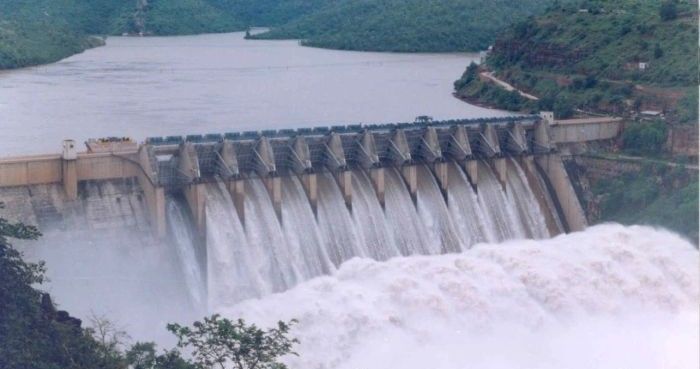
According to information,in response, India’s largest hydropower company has begun preliminary work near the proposed Upper Siang site under tight security. Prime Minister Narendra Modi’s office has convened high-level meetings to fast-track the dam, which, if completed, would become the country’s largest hydropower project. With a planned storage capacity of 14 BCM, it could release controlled water flows during lean seasons and absorb sudden surges if China were to release excess volumes downstream.India is also considering keeping at least 30% of its storage empty at all times to buffer against unexpected discharges.Despite Delhi’s urgency, the project faces strong opposition in Arunachal Pradesh. Many residents of the Adi community, whose livelihoods depend on paddy, orange, and cardamom farming, fear the dam will submerge their villages and destroy their way of life.In May, protests escalated when angry villagers damaged survey machinery, destroyed a bridge, and set up makeshift roadblocks to block access for dam workers. At least 16 villages are expected to be submerged, directly displacing 10,000 people, with over 100,000 impacted indirectly.“The cardamom, paddy, jackfruit, and pear we grow help us educate our children and sustain our families. We will fight the dam to death,” said Odoni Palo Pabin, a local resident and mother of two.Community leaders argue that the risks outweigh potential benefits, while state authorities — led by Arunachal’s chief minister — back the project, calling China’s dam an “existential threat.” The state has pledged to engage with families on compensation packages, while NHPC has earmarked over $3 million for education and emergency infrastructure to support relocation efforts.
Development or Destruction?
India has a long history of anti-dam movements that have delayed or downsized large-scale hydropower projects. Even if the Upper Siang dam proceeds, experts estimate it could take a decade to complete — likely after China’s mega-dam becomes operational in the early 2030s.Environmentalists warn that the seismic vulnerability of the region poses additional risks. Both Tibet and Arunachal Pradesh lie in earthquake-prone zones and are susceptible to landslides and extreme weather events. “The project is being built in an area of high seismicity and frequent glacial flooding. Dam safety is a very legitimate concern, and India should be engaging directly with China on this,” said Sayanangshu Modak, an academic expert on transboundary water issues.The controversy also underscores the growing weaponization of water in South Asia. India itself has been accused by Pakistan of manipulating water flows, after suspending its participation in the Indus Waters Treaty earlier this year.As both Delhi and Beijing go ahead with rival dam projects, the question remains whether these massive undertakings will bring long-term security or spark fresh instability in an already fragile Himalayan frontier.












Related Items
2 Dubai-Bound SpiceJet flights delayed at Delhi Airport, protests erupt
India, MERCOSUR initiate talks to expand Preferential Trade Agreement
India's August retail inflation rises to 4.82% from 4.45% in July