 Krishan Gopal Sharma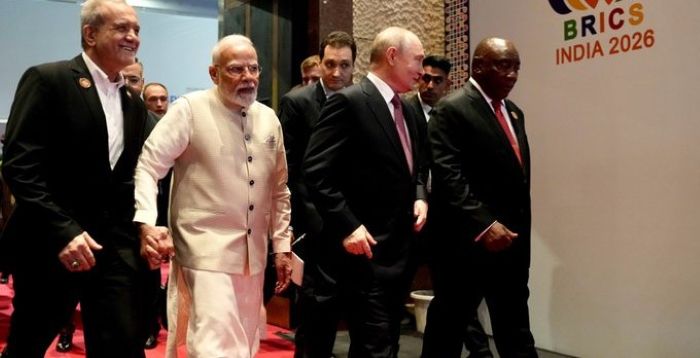
India won the difficult battle for consensus. The harder question is whether it won enough from it.
The 18th BRICS Summit in New Delhi ended with something that should not be dismissed as routine: an agreed declaration from an expanded grouping whose members carry very different political interests, economic priorities and strategic compulsions. Keeping eleven countries at the same table, particularly when wars, sanctions, tariffs, terrorism and great-power rivalries have fractured the international system, was itself a diplomatic achievement. The New Delhi Declaration, running to 140 paragraphs, reflected that painstaking balancing act.
But once the applause has faded and the photographs have been filed away, another question deserves to be asked.
What did India actually get done?
That is not the same as asking whether the summit was a success. It clearly was, in diplomatic terms. Nor should BRICS be judged against unrealistic expectations of a common currency, a common foreign policy or a united geopolitical front. The differences among its members are simply too substantial. India, China, Russia, Brazil, Iran, Saudi Arabia and the UAE, among others, may share an interest in a more representative international order, but that does not make them a political or economic bloc in the conventional sense.
The more useful test is a humbler one.
Could India have converted the consensus it painstakingly created into a few more measurable, operational outcomes?
The answer is yes.
And that is where the New Delhi Summit becomes more interesting — and slightly less comfortable.
The low-hanging fruit
For years, the most glamorous BRICS discussion has centred on the possibility of a common currency capable of challenging the dollar. It makes for impressive headlines, but it is not a realistic near-term objective. Monetary convergence, fiscal coordination, capital-market integration and political trust do not appear simply because leaders declare a new financial era.
There was, however, a much more achievable target: making existing payment systems work more easily across borders.
The New Delhi Declaration acknowledges the work of the BRICS Payment Task Force on cross-border payment interoperability and local-currency settlements. But it also says there is “no one-size-fits-all approach” and calls for continued technical engagement.
That is sensible diplomacy. It is also where the opportunity lies.
India already has UPI. Other BRICS members have their own increasingly sophisticated instant-payment systems. The technical, regulatory and currency complications are real, but they are not insurmountable. A pilot connecting willing members for selected trade, tourism or remittance corridors would have been a modest beginning. It would not have produced a BRICS currency. It would have produced something arguably more useful: a BRICS payment experience that citizens and businesses could actually feel.
That distinction matters.
A currency is a symbol of integration. A functioning payment corridor is evidence of it.
From digital rhetoric to digital reality
The same argument applies to digital public infrastructure.
The declaration welcomes the proposal for a BRICS digital public infrastructure repository and pilot projects for digital transformation. It also recognises the importance of safe, secure, inclusive and interoperable digital systems.
This is an area in which India has something distinctive to offer.
But why should cooperation stop at a repository?
A few willing members could have been encouraged to test interoperable solutions in areas such as digital identity, payments, health services or agricultural platforms. A limited pilot would have been far more revealing than another broad commitment to cooperation.
The principle should be simple: if BRICS wants to speak for the Global South, it should occasionally build something that the Global South can use.
The summit did, in fact, produce several initiatives in this direction, including the proposed digital public infrastructure repository, a BRICS Training Hub Network and a Centre for BRICS Industrial Competencies.
That makes the criticism more nuanced. The problem is not that New Delhi produced no practical initiatives. It did. The question is whether enough of them have been designed with clear timelines, measurable outcomes and visible public utility.
AI needs more than principles
Artificial intelligence presents an even larger opportunity.
The declaration recognises AI's enormous potential for economic growth and sustainable development and commits BRICS members to cooperation on accessibility, safety, security, inclusiveness, reliability and global AI governance. It also specifically acknowledges India's AI Impact Summit of February 2026.
That is important.
But the Global South does not merely need another statement about responsible AI. It needs affordable access to computing, datasets, skills, research capacity and trustworthy applications. It needs safeguards against the concentration of technological power in a handful of countries and companies.
India could therefore have pushed the next step: not another declaration on AI governance, but a BRICS public-interest AI programme — perhaps beginning with healthcare, agriculture, education and disaster management.
That would have been a natural extension of India's own digital experience.
The declaration has established the principle. The next challenge is to make the principle tangible.
A disaster network waiting to happen
There is another area where ideology should not stand in the way of cooperation: disasters.
Floods, cyclones, droughts, wildfires, earthquakes and extreme weather do not respect political boundaries. Nor do they ask whether a country is democratic, authoritarian, capitalist or socialist.
The New Delhi Declaration welcomes BRICS guidelines for disaster-management early-warning data integration and voluntary principles for climate-resilient urban infrastructure.
That is already a useful foundation.
But why not turn those guidelines into a functioning BRICS early-warning and emergency-response network? Meteorological agencies, satellites, emergency communications, scientific institutions and disaster-response organisations could share selected information and expertise.
It would have required no agreement on Ukraine, Gaza, tariffs or the future of the international financial system.
Sometimes the best place to test multilateralism is where politics has the least reason to interfere.
Trade: fewer grand designs, more corridors
Trade is more difficult.
BRICS members are partners, but they are also competitors. India's manufacturers, for example, do not necessarily view China's industrial scale with the same enthusiasm with which diplomats speak about South-South cooperation. The Gulf economies have different priorities from manufacturing-heavy Asian economies. Brazil has its own agricultural and industrial interests.
This is precisely why BRICS should concentrate on small, negotiable corridors rather than grand trade architecture.
Mutual recognition of selected standards. Easier customs procedures. Trade-finance mechanisms for MSMEs. Digital documentation. Sector-specific supply-chain agreements. Selected tariff reductions where reciprocity is possible.
None of these would create a BRICS free-trade area.
But collectively they could begin creating something more useful: a BRICS economic ecosystem.
The declaration itself calls for deeper economic partnership and recognises the continued work of the BRICS Payment Task Force, the New Development Bank and other financial mechanisms. It also welcomes progress towards the BRICS Economic Partnership Strategy 2030.
The question now is whether these mechanisms will remain institutional architecture on paper or become instruments that businesses actually use.
And then there was the theatre of the summit
There is another dimension of diplomacy that communiqués rarely capture.
Summits are also theatre.
Not theatre in the sense of being fake. Rather, diplomacy is conducted simultaneously through negotiations, symbols, gestures, meals, photographs and carefully choreographed moments.
The New Delhi Summit offered some interesting examples.
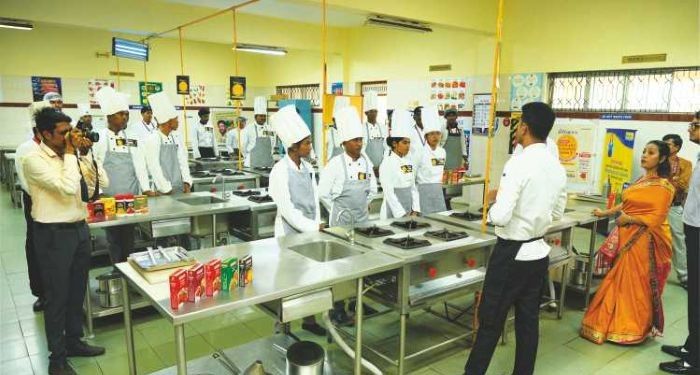
Take the gala dinner. The menu was entirely vegetarian and deliberately showcased Indian regional cuisine and millets, including dishes such as paneer lababdar, millet pulao and mushroom preparations. It was an unapologetically Indian presentation of food and culture.
There is nothing inherently wrong with that. On the contrary, Indian vegetarian cuisine is extraordinarily diverse.
Yet the controversy that followed raises a more interesting question than whether vegetarian food was appropriate.
When India hosts the world, should it present only the India it wishes the world to see, or the India that actually exists in all its diversity?
Hospitality is not merely about showcasing the host. It is also about making the guest feel accommodated.
A thoughtfully inclusive menu could have celebrated India's vegetarian traditions while offering choices for different dietary cultures. That would not have diluted the cultural message. It might actually have strengthened it.
The issue, therefore, is not the food.
It is the philosophy of hospitality.
When the camera becomes part of diplomacy
The tree-planting ceremony offers an even more revealing lesson.
BRICS leaders planted saplings of the great banyan at Bharat Mandapam — a powerful symbol of roots, endurance and interconnectedness. Ten saplings were planted on the first day of the summit.
The symbolism was almost too perfect.
But some of the accompanying images also offered a curious contrast. At one point, Russian President Vladimir Putin and Chinese President Xi Jinping appeared more engaged with the physical act of watering or tending the saplings, while Prime Minister Narendra Modi appeared in a more formal pose facing the cameras.
It would be unfair to infer intention from a photograph. Perhaps the choreography simply placed each leader differently. Perhaps the moment lasted only seconds.
Yet photographs are no longer incidental to diplomacy.
They are diplomacy.
In an age in which millions encounter an international summit through a single image on a phone screen, body language and choreography acquire a political life of their own.
The tree was meant to symbolise the future.
The camera reminded us how much modern politics is still concerned with the present.
That is not a criticism directed at one leader. It is a broader warning to all political leadership: when the image becomes more memorable than the act, symbolism can begin to substitute for substance.
India's achievement should not be understated
None of this should diminish what India accomplished.
The real difficulty of the New Delhi Summit lay precisely in bringing together countries that do not naturally agree. The declaration addressed conflicts and humanitarian crises, economic protectionism, terrorism, AI, digital infrastructure, climate resilience, health, local-currency settlements and reform of global institutions. It also recorded condemnation of the Pahalgam terrorist attack.
Indian officials had spoken even before the summit of more than 50 outcomes from the year-long presidency.
So the criticism cannot honestly be that India achieved nothing.
It achieved quite a lot.
The criticism is more demanding:
Given the diplomatic capital India accumulated, could it have secured a few outcomes that were impossible to misunderstand?
One payment corridor that actually works.
One digital public infrastructure pilot that citizens can use.
One disaster-warning mechanism that demonstrably improves response.
One MSME trade corridor that reduces transaction costs.
One AI initiative that moves from principle to public benefit.
These would not have made for the grandest headlines. They might have made for the strongest legacy.
The summit after the summit
This is ultimately the test facing BRICS.
Its danger is not failure. Its danger is becoming comfortable with symbolic success.
The declaration itself repeatedly speaks of cooperation, resilience, innovation, sustainability and a more representative international order. Those are worthy objectives. But every multilateral institution eventually faces the same question: when does the language of cooperation become the machinery of cooperation?
BRICS does not have to become NATO. It does not have to become the European Union. It does not even have to agree on every major geopolitical question.
It simply has to become dependable in a few areas where its members can genuinely work together.
That is why the most useful way to judge New Delhi may not be by the number of paragraphs in its declaration, but by the number of commitments that survive after the leaders have gone home.
India won the difficult battle for consensus.
The harder test begins now — whether consensus can be converted into capability.
Because the measure of a summit is not how impressive its declaration sounds when the leaders leave the room.
It is what remains working after the cameras have gone.
(Author: kgsharma1@gmail.com; The writer is a retired officer of the Indian Information Service and a freelance writer. Also worked as an international media consultant with UNICEF Nigeria and contributes regularly to various publications.)










Related Items
BRICS Declaration reflects India’s growing global influence: Singh
Beyond Diplomacy, India serves BRICS leaders a culinary journey
India passes BRICS Baton to China, PM Modi seeks Declaration action