 Uday Kumar Varma
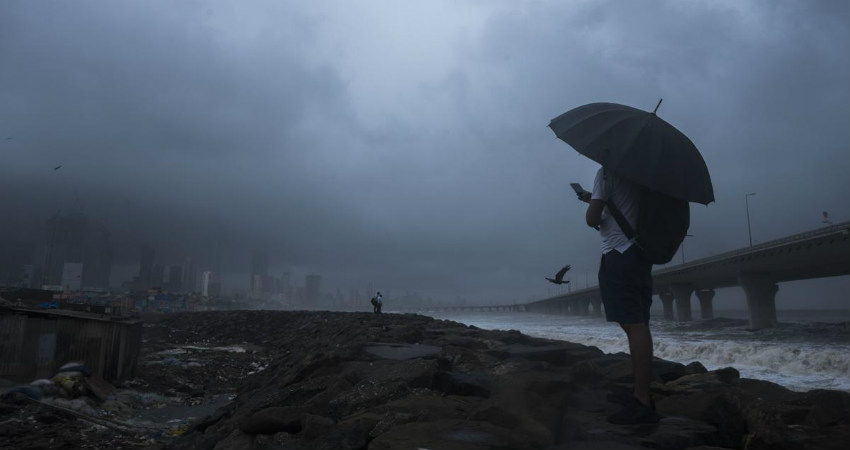
A Monsoon Out of Step
The Himalayas have provided the latest and most unsettling images of India's monsoon. In Uttarakhand and Himachal Pradesh, intense rain has triggered landslides, flash floods and the collapse of roads and bridges. Mountain slopes have given way, sometimes carrying away everything in their path.
The images are becoming disturbingly familiar.
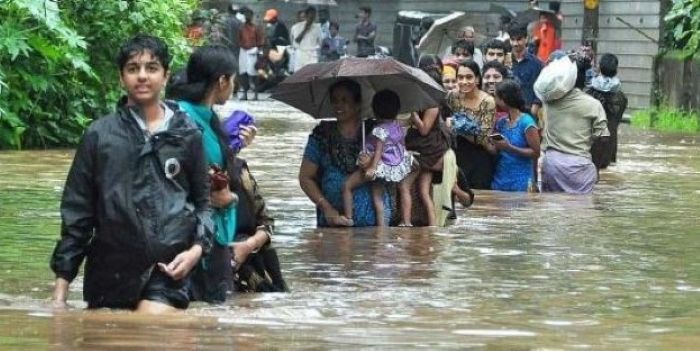
Only days earlier, it was Delhi's turn. A few hours of intense rain were enough to flood roads, disrupt traffic and throw the capital's daily life into disarray. Gujarat, Maharashtra and Madhya Pradesh have also experienced episodes of torrential rain and flooding, while elsewhere farmers have waited anxiously for rains that have been slow or inadequate.
The geography is different. The human misery is not.
At first sight, there appears to be no pattern. Yet there is one.
The southwest monsoon has always been variable. But something more consequential seems to be happening. Rain is increasingly arriving in intense bursts, separated sometimes by long periods of dryness. The story of India's monsoon is no longer simply about how much rain falls. It is about when, where and how it falls.
When Rain Comes All at Once
Consider Gujarat. On July 23, the India Meteorological Department recorded more than 100 centimetres of rain in 24 hours in Valsad district. Such episodes can overwhelm rivers, drainage systems, roads and settlements within hours.
The scientific evidence for a changing rainfall pattern is substantial. A major study published in Nature Communicationsfound that between 1950 and 2015, average monsoon rainfall over central India declined by about 10 per cent even as widespread extreme-rain events increased threefold.
The paradox is striking: less average rain can coexist with more destructive rain.
Climate change is an important part of the explanation. The Indian Ocean has warmed, while a warmer atmosphere can hold more moisture. When that moisture is released under favourable atmospheric conditions, rainfall can arrive with much greater intensity. Natural variations such as El Niño continue to influence individual seasons, but they now operate against a warmer climatic background.
Not every flood is caused by climate change. Nor can every irregular monsoon be attributed to a single factor. But a warmer climate can alter the conditions in which extreme rainfall occurs.
The monsoon is not simply becoming wetter or drier. It is becoming more difficult to live with.
When Rain Becomes a Landslide
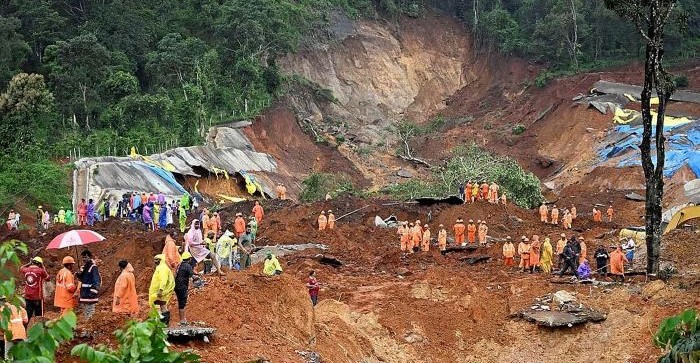
Nowhere is that vulnerability more dramatic than in the Himalayas.
A landslide is not caused by rain alone. The Himalayas are young, geologically active mountains, with steep slopes and fractured rock. Intense rain can saturate the soil, increase the weight of a slope and reduce its stability until it suddenly gives way.
But nature is not acting alone.
Road widening and construction require cutting into mountain slopes. Blasting can disturb fractured rock. Removal of vegetation weakens the roots that help hold soil together. Poor drainage can channel water into already vulnerable areas. Buildings and other structures add pressure to fragile terrain.
Recent research has shown how intense rainfall, changes in land use and vegetation, and infrastructure development can interact to amplify landslide risk.
The rain is the trigger. Vulnerability is the multiplier.
This does not mean that the Himalayas should not be developed. Roads, electricity, connectivity, homes and livelihoods are essential. But development in fragile terrain cannot be judged only by engineering feasibility or economic cost. Geological stability and ecological carrying capacity must be part of the calculation.
Nature Is Changing. So Are We
The same principle applies beyond the mountains.
Heavy rain becomes a disaster when landscapes lose their ability to absorb it. Wetlands disappear beneath concrete. Floodplains are encroached upon. Traditional ponds and tanks are neglected. Urban drainage systems designed around historical rainfall struggle when an extraordinary volume of water arrives within a few hours.
Climate change may be changing the rain. We are changing the landscape.
Together, the two are turning extreme weather into human disaster.
There is also a paradox in India's water security. More intense rain does not necessarily mean more water available for the future. When enormous quantities fall within a few hours, much of the water runs off rapidly instead of infiltrating the soil. Rivers swell while aquifers may remain inadequately replenished. Reservoirs receive sudden inflows followed by long dry spells.
India therefore faces a new challenge: not merely to receive the monsoon, but to capture its water when it arrives.
Agriculture faces a similar dilemma. Farmers can often adapt to a delayed or weak monsoon if the uncertainty is limited. What is much harder to manage is a season of long dry spells followed by intense rain. Sowing is disrupted, crops are damaged and fertile soil can be washed away.
Learning to Live With the New Monsoon
India has made considerable progress in forecasting. The India Meteorological Department's observation network, weather radars, numerical models and increasingly localised warnings have improved our ability to anticipate dangerous weather.
But prediction is only the beginning.
A warning matters only if a village can evacuate, a city can drain the water, a vulnerable road can be closed in time and emergency services can reach those in distress. Forecasting and preparedness must therefore advance together.
Cities need drainage systems designed for more intense rainfall. Wetlands, lakes and traditional water bodies must be protected and restored. Floodplains should not be treated as vacant land. Groundwater recharge and watershed management need to become integral to water planning.
The Himalayas require particular care. Roads, bridges and tunnels must take account of geological vulnerability and drainage, while cumulative environmental impacts should be considered before construction begins—not after a mountain comes down.
Agriculture, too, needs greater resilience through diversified crops, better irrigation, flexible sowing practices and weather-based advisories.
Adaptation can no longer be an environmental afterthought. Climate resilience is becoming a measure of good governance.
A Rhythm Rewritten
Benjamin Franklin famously observed that nothing was certain except death and taxes. As The Economist recently noted, anyone familiar with India might once have been tempted to add the southwest monsoon to that list.
Perhaps that was once justified.
For thousands of years, the monsoon has shaped India's civilisation. It has determined harvests, guided commerce, replenished water sources and inspired poetry and music. Its arrival has never been merely a meteorological event; it has been woven into the economic and cultural fabric of the country.
But the monsoon we knew is not necessarily the monsoon we are going to inherit.
Sometimes the change is a cloudburst where there was once a steady rain. Sometimes it is a dry spell in the middle of a wet season. Sometimes it is a river rising too quickly, a hillside suddenly giving way, or a city unable to drain water as fast as it arrives.
The monsoon has not abandoned India.
It is asking India to change.
We cannot command the clouds or restore yesterday's climate. But we can build cities that absorb rather than simply drain water, protect the landscapes that protect us, develop the Himalayas with greater respect for their limits, make farms more resilient and turn forecasts into timely action.
For centuries, India learnt to live by the monsoon.
The task before us now is to learn to live with its new rhythm.
(Uday Kumar Varma is an IAS officer. Retired as Secretary, Ministry of Information & Broadcasting)



Related Posts
Learn from tribal communities how to live with nature: President Murmu
Gujarat Assembly monsoon session begins, 9 bills on agenda
Himachal monsoon fury:157 dead, 259 roads closed