 Krishan Gopal Sharma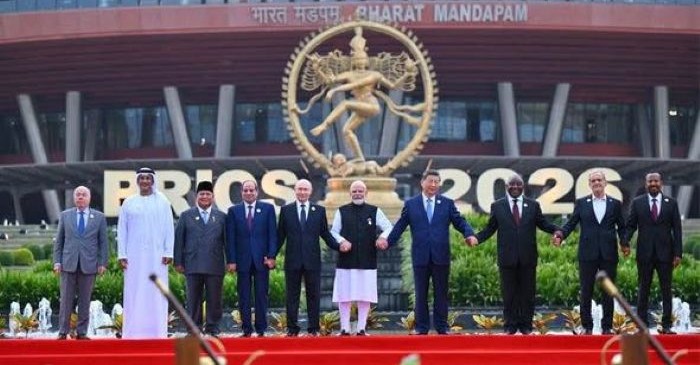
How sideline bilaterals keep a divided world talking
There is something almost theatrical about a global summit. Flags stand in perfect rows, leaders arrive to carefully choreographed welcomes, cameras capture handshakes and smiles, and inside the plenary hall speeches are delivered in the language of national interest, strategic autonomy and global cooperation. Then comes the communiqué — carefully negotiated, cautiously worded and presented as evidence that the world can still agree on something. But what if the real diplomacy is happening elsewhere? Perhaps not beneath the bright lights of the main stage, but in the quieter rooms beyond it. Perhaps the future of a multilateral grouping is sometimes shaped not by the speech delivered to dozens of nations, but by the conversation between two leaders who step away from the cameras for half an hour. This is the paradox of contemporary multilateralism: the larger the gathering, the greater the need for smaller conversations. The plenary creates visibility; the bilateral creates possibility.
The theatre and the real work
Multilateral diplomacy has always contained an element of theatre. It has to. A leader speaking before a domestic audience cannot easily sound uncertain, while national positions are often presented in their hardest form because every word spoken internationally can travel instantly back home. A concession made in public can be portrayed as weakness; even a gesture of flexibility can acquire a political life of its own. The difficulty becomes greater when a grouping brings together countries with sharply different histories, interests and strategic calculations. BRICS, the G20 and other multilateral platforms are not ideological families. They are coalitions of countries that may agree on one issue and disagree profoundly on another. Some have territorial disputes; others belong to competing strategic camps; still others insist on strategic autonomy and resist being drawn into someone else's geopolitical contest. Expecting such a collection of nations to speak with one voice on every contentious issue is therefore unrealistic.
That is where the bilateral meeting acquires importance. The plenary establishes common ground; the bilateral explores the cracks. A difficult border question may not belong in a summit declaration. A disagreement over trade may be too politically sensitive for public discussion. A country may want assurances from another before supporting a collective initiative. None of these matters necessarily requires the multilateral forum to collapse into disagreement. They can be discussed quietly, away from the pressure of an audience. Sometimes, that is how diplomacy works best. The multilateral gathering provides the setting and legitimacy for engagement; the smaller meeting provides the space in which difficult questions can be addressed without every sentence becoming a test of national pride.
The diplomatic cover of a summit
There is another, less obvious advantage. A multilateral summit provides what might be called diplomatic cover. When two countries whose relations are strained arrange a meeting on the margins of an international summit, neither has to explain why it has suddenly decided to engage with the other. Both were already expected to be there. The meeting can be presented as routine, even when the conversation is anything but routine. A standalone visit carries symbolism and can suggest a political opening, inviting questions from domestic constituencies. A meeting on the sidelines of a summit is different. It allows both sides to engage without first having to explain the meaning of the engagement.
There is no need to announce reconciliation; there is only a conversation. And conversations, unlike declarations, can begin with disagreement. They can establish red lines, test possibilities, clarify misunderstandings and even establish what cannot be agreed upon — which is itself a valuable diplomatic outcome. The summit thus becomes more than a meeting of many nations. It becomes a marketplace of smaller conversations, where countries can manage relationships that do not fit neatly into the public architecture of the larger grouping.
The word “sideline”, therefore, can itself be misleading. These meetings may take place on the margins of the formal summit, but they are not necessarily marginal to its outcome. In some circumstances, they are at the centre of the diplomacy that makes the larger gathering workable.
The wisdom of parking a dispute
Diplomacy has a curious relationship with disagreement. We often measure success by the number of issues on which countries agree. Yet experienced diplomacy also understands the value of identifying issues on which agreement is simply not possible at that moment. The temptation at a major summit is to put everything on the table and seek a comprehensive settlement. That may sound impressive, but it can also be dangerously unrealistic.
Some disputes have decades of history behind them. Some involve territory, national identity or security calculations. They cannot be wished away by a paragraph in a communiqué. The wiser approach may sometimes be to park the disagreement. That does not mean abandoning it. It means preventing one intractable issue from poisoning everything else. Countries may disagree about a conflict but cooperate on food security. They may have unresolved territorial differences but work together on connectivity. They may differ on the architecture of global security while supporting reforms of international financial institutions.
This kind of compartmentalisation is not necessarily hypocrisy. It can be the difference between paralysis and progress. A multilateral institution does not become stronger because all its members suddenly think alike. It becomes stronger when its members learn how to disagree without making cooperation impossible. The ability to leave some questions unresolved while advancing others is not a failure of diplomacy; sometimes it is its most practical achievement.
Camp David: when private diplomacy matters
One of the most powerful historical examples of the value of intensive, private negotiation came from Camp David in 1978. Egyptian President Anwar Sadat and Israeli Prime Minister Menachem Begin arrived at the presidential retreat in Maryland carrying decades of conflict, distrust and political baggage. President Jimmy Carter brought them together after earlier efforts had reached an impasse. The Camp David Summit ran from 5 to 17 September 1978 and was exceptionally demanding. When the trilateral format became difficult to sustain, Carter and Secretary of State Cyrus Vance met separately with the Egyptian and Israeli delegations over much of the following twelve days.
The distinction matters. The Camp David Accords were not the result of three leaders simply sitting around one table until they discovered harmony. The negotiations involved repeated drafts, separate meetings, mediation and painstaking bargaining. The summit produced two framework documents rather than an immediate peace treaty; the Egyptian-Israeli Peace Treaty was signed on 26 March 1979 after further negotiations and compromises.
The lesson is not that physical isolation automatically produces diplomatic breakthroughs. It is more subtle. By taking the negotiations away from the normal pressures of public performance, Carter was able to work through differences without every setback becoming a public confrontation. He could carry proposals between the two sides, test possible compromises and keep the process alive when direct exchanges became difficult. Sometimes diplomacy requires a little distance from the audience before it can come closer to an agreement.
The architecture of opportunity
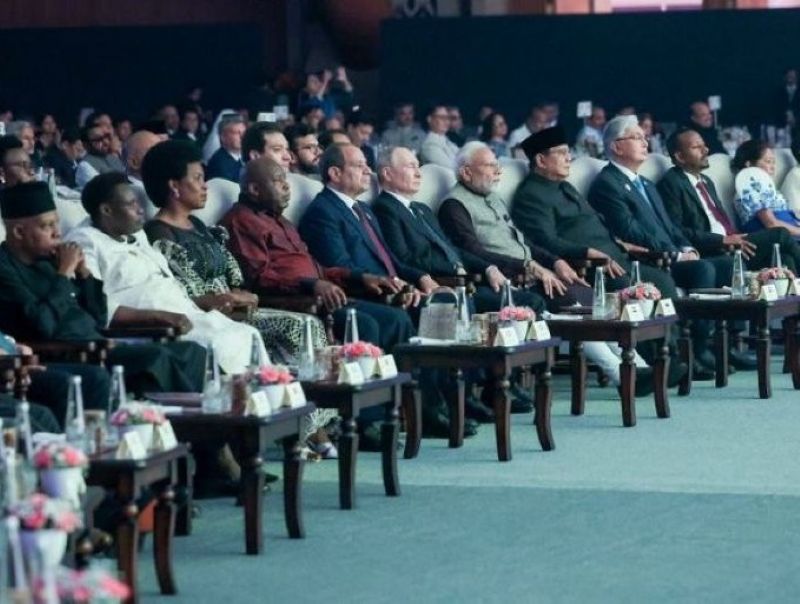
There is also a physical dimension to diplomacy that is easily overlooked. Summit venues bring leaders who might rarely meet in ordinary circumstances into the same physical and political space. Plenary halls, meeting rooms, dining areas, corridors and waiting spaces create opportunities for formal meetings as well as brief encounters. A conversation in a corridor may lead to a scheduled bilateral; a bilateral may lead to a longer discussion; that discussion may produce an instruction to officials; and the instruction may eventually become an agreement.
The architecture does not itself produce diplomacy, and there is little value in romanticising the conference venue as some secret instrument of statecraft. But proximity matters because diplomacy cannot occur between leaders who never meet. A coffee break can sometimes create an opening that a carefully prepared agenda could not. A brief exchange may reveal an opportunity that would disappear under the weight of protocol. In an age in which leaders are increasingly surrounded by advisers, security personnel and communication teams, the chance for an unscripted conversation can itself possess diplomatic value.
The private bargain behind public consensus
Multilateral negotiations involve a complicated arithmetic of interests. One country wants movement on trade; another wants greater attention to development; a third wants language on security; a fourth is concerned about energy; a fifth wants stronger recognition of the concerns of the Global South. Trying to reconcile all these interests simultaneously in a room full of delegations can produce gridlock.
Bilateral diplomacy allows some of that bargaining to take place separately. A country may offer another assurances on a bilateral issue. A disagreement over a technical matter may be resolved quietly. A political concern may be acknowledged without appearing in the final declaration. Officials can then return to the larger negotiation with enough flexibility to permit consensus. The final communiqué may consequently appear remarkably smooth even though the road towards it was anything but.
The public sees the sentence; the diplomats remember the negotiations that made the sentence possible. The apparent simplicity of a final declaration can conceal a complicated web of compromises, understandings and decisions to leave certain questions unresolved. This is not necessarily deception. It is often the accumulated product of diplomacy — dozens of small adjustments made away from the cameras.
India and the value of strategic space
For India, this flexibility has particular significance. The international system is becoming more polarised, and strategic competition among major powers increasingly carries the temptation of bloc politics. Countries are frequently encouraged to choose sides, even when their interests do not fit neatly into either camp. Strategic autonomy gives India space to work with different countries on different issues without accepting that one relationship must automatically determine all others.
The current BRICS summit in New Delhi offers a timely illustration. On the eve of the summit, Prime Minister Narendra Modi held separate discussions with Russian President Vladimir Putin and Iranian President Masoud Pezeshkian, while the wider BRICS gathering brings together countries with markedly different relationships with the major powers and with one another. The bilateral conversations do not replace the multilateral forum; they help make such a diverse forum usable.
That is particularly relevant to India's diplomacy. New Delhi can engage BRICS as a platform for Global South concerns and reform of global governance while maintaining separate strategic, economic, technological and security relationships with countries outside the grouping. Recent reporting on the BRICS summit has underlined precisely this tension: the grouping is becoming more diverse and influential, but its members also carry conflicting interests. India's challenge — and opportunity — lies in keeping those differences from turning the forum into another rigid geopolitical bloc.
This is where bilateralism becomes a shield for strategic autonomy. A country does not surrender its independence simply because it maintains several partnerships. On the contrary, the ability to speak to different sides may preserve room for manoeuvre when the international system is becoming less forgiving of neutrality and more demanding of alignment.
Keeping the multilateral stage alive
There is, finally, a larger lesson. A successful multilateral grouping does not require its members to eliminate their differences. That would be impossible. What it requires is the institutional maturity to prevent those differences from destroying the areas where cooperation remains possible. The appearance of unity at the end of a summit is therefore not necessarily artificial simply because disagreements existed behind closed doors. That unity may be the product of those disagreements being handled intelligently.
The world does not need more photographs of leaders standing shoulder to shoulder. It needs more opportunities for them to sit across from one another and speak honestly. The private bilateral gives adversaries a place to disagree without humiliation, partners a place to negotiate without publicity and institutions a way to move forward without pretending that their contradictions have disappeared.
In that sense, sideline diplomacy is not peripheral to multilateralism. It may be one of the mechanisms that makes multilateralism possible in the first place.
The diplomacy beyond the cameras
The great irony of modern multilateralism is that its survival may depend upon something that looks, at first glance, almost anti-multilateral: the private bilateral.
The plenary hall gives the world its image of collective action. The smaller room often gives that image its substance. Behind the cameras, disputes are parked, red lines are tested, misunderstandings clarified and compromises quietly explored. When leaders eventually return to the main stage, what appears to be consensus may actually be something more valuable — a carefully negotiated decision to keep talking.
Perhaps that is the real achievement of a summit in a divided world.
Not that everyone agrees, but that nobody walks away.
And perhaps the most important room at any global gathering is still the one in which, for a little while, nobody is watching.
<><><>
(Author: kgsharma1@gmail.com; The writer is a retired officer of the Indian Information Service and a freelance writer. Also worked as an international media consultant with UNICEF Nigeria and contributes regularly to various publications.)













Related Items
Diplomatic achievement: Mayawati lauds adoption of BRICS Declaration
BRICS: The Delhi Moment
BRICS declaration flags nuclear risks, tariffs, condemns J-K terror attack