 Uday Kumar Varma
Every conquest leaves silences behind, often sorrowful. Tea’s triumph was no different. If empire rode on the leaf, it also carried away voices— of culture, labour, and landscape. Herbs, grains, fruits, and flowers that once quenched thirst and tethered life to land were quietly sidelined. What disappeared was not merely a repertoire of recipes but a way of drinking— rooted in intimacy with the seasons, respect for the body, and a sense of local sufficiency.
The Vanishing of Diversity
Before tea, India drank with awareness. A farmer in Bengal cooled himself with bel sharbat, a herdsman in Rajasthan with chhaachh, a priest in Tamil Nadu with panakam offered first to Vishnu. These were not indulgences but daily affirmations of harmony between body and climate. After tea, they did not vanish outright, but were reduced to festive or medicinal roles—overshadowed by the daily inevitability of tea. Convenience and habit silenced diversity.
The change was also material. Palm groves, mahua trees, and rice paddies once sustained local drinking cultures. Under colonial imperatives, fertile lands turned into monocultures of tea. In Assam, the spread of plantations uprooted forests and erased the tribal practices of brewing rice beer— rituals that carried myth, song, and ceremony. As Verrier Elwin observed, among tribal communities, rice beer was “a sacred bridge between humans and ancestors.” With tea’s advance, those bridges attenuated.
The Global Transformation
Across the world, the leaf redefined habits. In England, ale and small beer—once daily staples—gave way to tea as a gentler, moralized drink, safer than water and emblematic of refinement. In Japan, the meditative austerity of the tea ceremony eclipsed older rice brews and herbal infusions. In Morocco, mint wedded with Chinese green tea until the two could scarcely be told apart. Each culture gained a ritual, but lost a plurality.
And yet, to say that tea only displaced is too simple. It also absorbed and reshaped. In India, chai did not remain Chinese—it became a syncretic brew, spiced with cardamom, boiled with milk, sweetened with jaggery. In Morocco, mint lent it fragrance and familiarity; in Argentina, yerba maté resisted its dominance by creating its own national cult. The story, then, is not one of erasure alone, but of transformation—of adaptation and loss intertwined.
The Counterfactual: A World Without Tea
But what if tea had never come? What if the clipper ships were never laden with chests of tea leaves, and the gardens of Assam never razed into plantations? What might India—and the world—have drunk instead?
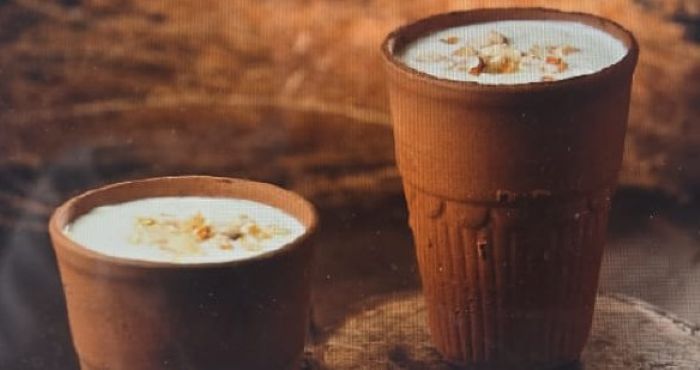
In this alternate India, mornings begin with a clay cup of warm neer mor, spiced with curry leaves and a trace of asafoetida—awakening the body without caffeine. In Delhi, winter markets hum with sellers of fermented black carrot kanji, ladling its magenta elixir into brass tumblers—a probiotic long before the word existed. On College Street, Kolkata’s intellectuals sip bel sharbat, thick and fragrant, debating Tagore and Marx with a cooling calm. At railway platforms, one hears not “chai, chai!” but “lassi, thandi lassi!”—earthen pots brimming with froth, whisked briskly by wiry boys in shorts.
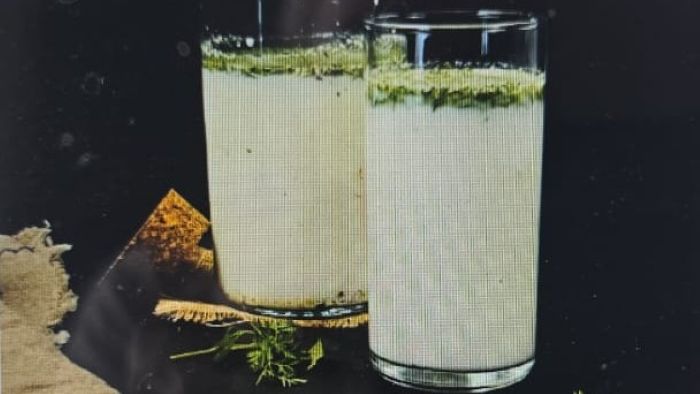
Households steep tulsi, ginger, or gokhru leaves for afternoon pauses; the five o’clock ritual may be thandai—rose petals and fennel crushed in chilled copper cups. Recipes remain seasonal, regional, even familial. Grandmothers are prized not for their masala chai, but for mastery of kadha for cough, sattu pani for summer sustenance, and sonth with jaggery and pepper for the monsoon. Every sip maps the body to the land—a cartography of belonging in taste.
In this India, wellness and taste do not oppose each other. There is no need to market “turmeric lattes” to a global elite—haldi doodh has never left the table. Cold drinks never replaced aam panna or jaljeera. The Indian beverage is not a counterpoint to modernity—it is modernity, evolving with microbiome science and climate wisdom.Would this India be healthier? Possibly. Would it be culturally richer? Undoubtedly. Would it be more diverse, less centralised in its sipping? Assuredly.
Globally, too, the world drinks differently. Europe’s coffeehouses flourish as sites of debate and invention. Chocolate deepens its hold in Spain and France; maize-based chicha and atole thrive in the Americas; Africa’s hibiscus and palm wines travel across oceans. As T. S. Eliot might suggest, “human lives would be measured not in teacups, but in earthen mugs, brimming with what the land brews.”
What Was Truly Lost
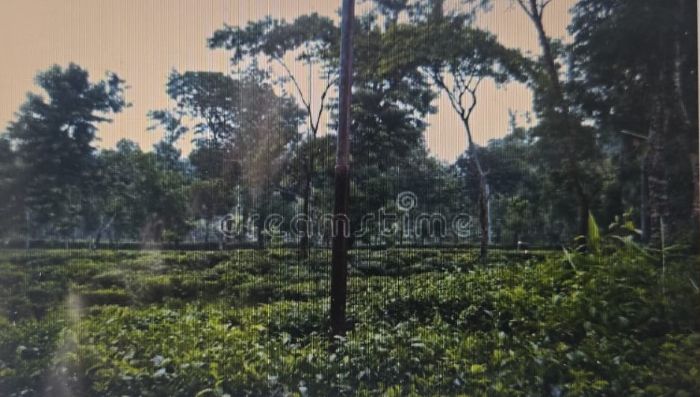
Palm toddy tapped at dawn, rice beer brewed for harvest, aam panna offered in clay cups—these were not mere beverages but ceremonies of belonging. Their disappearance replaced the delicate ecology of season, soil, and body with a single, uniform ritual: the daily cup. Rabindranath Tagore once lamented, “We sit at the edge of time, sipping from cups not made by our ancestors, and forget that the taste of our own soil was once enough.”
Tea displaced not just recipes but knowledge and labour. The ecological wisdom of local drinks—fermented rice water, ground spices, courtyard herbs—was replaced by monocultures, supply chains, and global trade. Where once the climate and the body decided what was drunk, the kettle and teacup imposed uniformity. Tea, in its imperial form, embodied bothneed and greed.
Culturally, too, the shift was intimate. The alchemy of homemade drinks—panakam mixed before festivals, majjige churned in clay pots, kanji fermenting on windowsills—gave way to standardised rituals. The thousand kitchens that once brewed seasonal wisdom became uniform in offering. Tea imposed a false constancy—a drink for all times, all seasons, all people. What it displaced was not only variety but the very sense of rhythm, of living attuned to change
The Memory of Possibility
What if another leaf, fruit, or grain had risen to prominence? Might bael, kokum, or sattu have achieved global renown? Could Ayurveda’s seasonal logic have shaped the world’s beverage map? These are the “paths not taken” that Eliot memorializes:
“Footfalls echo in the memory,
down the passage we did not take,
towards the door we never opened.”
To drink tea today is to taste both comfort and amnesia—history’s gain and its forgetting. The lost world of indigenous drinks is such a passage, a reminder of recipes not perfected, rituals not carried forward. To recover them is not to reject tea but to remember that the world once drank differently—and in that diversity lay a wisdom worth reclaiming. In the final reflection, tea’s triumph reminds us of the cost of convenience and empire. For every leaf imported, for every plantation established, a thousand local practices faded. Yet in pockets of quiet resistance—village toddy taps, coastal kokum presses, summer lassi carts—the legacy endures. These are the living counterfactuals: whispers of what might have been, and what might still be recovered.
(Uday Kumar Varma is an IAS officer. Retired as Secretary, Ministry of Information & Broadcasting)



Related Posts
Trump backs India-Middle East-Europe corridor amid Iran war
Fitch Ratings raises India’s FY27 GDP growth forecast to 6.9%
Asian Games: India beat Japan by two runs in rain-hit T20I