 Uday Kumar Varma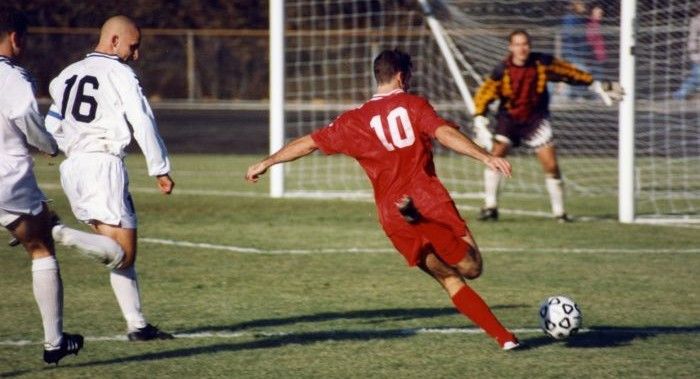
Letter III: When Rivals Create Greatness
My dear Parth, Viyanka, and Veyd,
Today, before I begin my letter, I want to show you something very precious.
It is an old traveller's journal.
Its leather cover has faded with age, and its pages have turned yellow with time. On every page is written the story of a great sporting contest that people once believed would never be forgotten.
As I open the first page, I find myself in ancient Greece. Thousands have gathered to watch athletes run, wrestle, throw the discus, and race their chariots in the Olympic Games. The competitors come from different city-states, each eager to prove that it has produced the finest athletes.
A few pages later, I arrive in ancient Rome. Enormous crowds fill magnificent arenas where contests of strength and courage are held. Those spectacles remind us that people have always admired bravery and skill. Yet they also remind us how fortunate we are that modern sport celebrates competition without cruelty. Today, a football field, not an arena of violence, is where the world gathers to witness courage, discipline, and excellence.
I turn another page.
The centuries pass. Kings and kingdoms disappear. Steam engines, aeroplanes, and satellites appear.
And then I find myself standing in a football stadium where thousands of voices are singing together before a match has even begun.
What has remained unchanged through all these centuries?
Human beings have always loved great contests. Not because they enjoy quarrels, but because they admire excellence. That is why football has its great rivalries.
Now, rivalry is a curious thing.
Your classmates may race each other to finish first in a school competition. Two chess players may think hard for hours, each hoping to win. Brothers and sisters often challenge one another at games. They compete fiercely, yet they still laugh together afterwards.
That is rivalry at its best. It encourages us to become better than we were yesterday.
Football has many such rivalries. They are not simply matches. They are stories handed down from one generation to another.
Perhaps the most famous is El Clásico, played between Real Madrid and FC Barcelona in Spain.
For more than a hundred years these two clubs have represented different traditions, histories, and identities. Whenever they meet, hundreds of millions of people across the world watch with excitement. Some of football's greatest artists—Alfredo Di Stéfano, Johan Cruyff, Lionel Messi, Cristiano Ronaldo, Luka Modrić, Xavi Hernández, Andrés Iniesta and many others—have written unforgettable chapters in this remarkable story.
Across the English Channel lies another famous rivalry.
Whenever Liverpool meets Manchester United, two proud football cities renew a contest that has thrilled supporters for generations. Their stadiums echo with songs, their supporters wear their colours with pride, and children grow up hearing stories of famous victories long before they attend their first match.
Now let us travel to Argentina.
There we find one of the world's most passionate football contests—Boca Juniors against River Plate.
On derby day, Buenos Aires seems to breathe football. Blue and yellow flags flutter from one side of the city, while red and white banners fill the other. Families, neighbours, and lifelong friends may support opposite clubs, yet after the match they continue to share meals, conversations, and laughter together. The rivalry is fierce, but life goes on.
Our journey now returns home to India.
Long before football became a global television spectacle, the city of Kolkata had already fallen deeply in love with the game. For generations, few sporting occasions have stirred Indian football lovers as much as the Mohun Bagan–East Bengal Derby. The rivalry has its roots in history, particularly in the years surrounding the Partition of India, when many families who had crossed from East Bengal found in East Bengal Club a symbol of hope and identity. Mohun Bagan, already one of India's most celebrated clubs, represented another proud tradition. Derby day became much more than a football match; it became a part of Kolkata's cultural life. Even today, when these two famous clubs meet, the excitement is unmistakable. Along with Mohammedan Sporting, they form the city's historic "Big Three," whose stories occupy a cherished place in Indian football.
By now you may have noticed something interesting.
The greatest rivalries are rarely built on hatred. They are built on respect.
Every great club knows that without a worthy opponent, there can be no truly memorable victory.
When Lionel Messi and Cristiano Ronaldo competed for nearly fifteen years, football lovers often argued about who was greater. Yet each pushed the other to reach even higher standards of excellence. Their rivalry became one of the finest chapters in football history because it inspired greatness rather than bitterness.
That is a lesson worth remembering.
In life, you too will meet people who seem just a little better than you at something. One friend may solve mathematics problems more quickly. Another may paint more beautifully. Someone else may run faster or play the piano more skilfully.
Do not envy them. Do not dislike them. Instead, let them inspire you to practise a little harder and dream a little bigger.
Good rivals do not make us smaller. They help us become better. Perhaps that is why football lovers treasure these great rivalries so dearly.
When the referee blows the final whistle, one team may celebrate while the other walks away disappointed. But both have contributed to something far greater than themselves. They have given the world ninety minutes of courage, skill, imagination, and hope.
And that is the true purpose of every great contest.
So, my dear children, whenever you hear people talking excitedly about El Clásico, the Liverpool–Manchester United rivalry, Boca Juniors against River Plate, or our own Mohun Bagan and East Bengal, remember that you are not merely hearing about football matches.
You are hearing stories that have been written over generations by players, supporters, families, and entire cities.
For the greatest rivalries do not divide people forever. They remind us that excellence is born when worthy opponents bring out the very best in one another.
With all my love,
Dadu
(Uday Kumar Varma is an IAS officer. Retired as Secretary, Ministry of Information & Broadcasting)

Related Posts
CM Mohan Yadav pitches Madhya Pradesh as investment hub in Dubai
'Unity in diversity is in India’s DNA': RSS chief Mohan Bhagwat in NYC
Mayor Mamdani opposes Mohan Bhagwat's NYC event