 Newsinc24 Team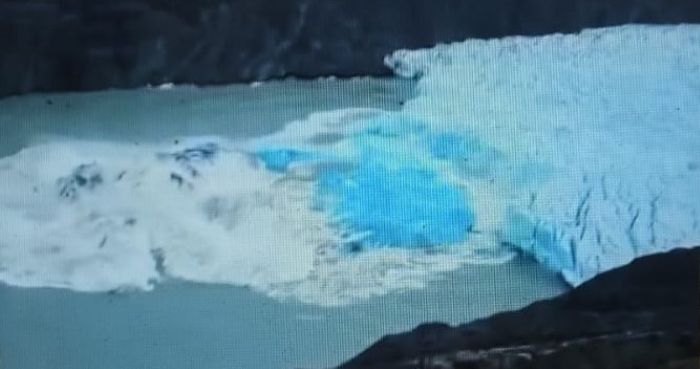
An avalanche of ice and rock, likely a result of glacial lake outburst, triggered massive flash floods that tore through parts of Nepal, killing at least 160 people and causing extensive damage to villages and infrastructure. Climate experts at the Kathmandu-based International Centre for Integrated Mountain Development say an avalanche from a glacier likely caused Wednesday's flash flood. The Lhende Khola River, a tributary of the Bhotekoshi River, witnessed maximum flooding, experts said."The Lhende Khola has flooded twice in fourteen months, this time triggered by an ice rock avalanche from a glacier on the Nepal side that blocked the river and released a sudden surge downstream," Saswata Sanyal, a disaster risk reduction specialist at the climate research group, told a news agency.
This is how a glacial lake outburst triggered a massive flood toward Nepal.
— Super Polite (@polite_super) August 26, 2026
No heavy rainfall or cloudburst, but a sudden flow of water from the glacial lake unleashed a powerful surge of water and debris, causing severe flooding downstream in Nepal's Koshi River basin.
… pic.twitter.com/f8tr5RyqRI
Satellite imagery indicates that a section of glacier about 2,000 feet wide snapped off almost cleanly and fell from an altitude of around 17,000 feet, according to Daniel Shugar, a geologist at the University of Calgary who studied the images. The block dropped nearly 4,000 feet before reaching the valley floor, sending pulverised ice and water towards the Lhende Khola river and, ultimately, the Bhotekoshi River near the Nepal-China border.
The source of the flood in Nepal is a collapsed glacier ????⚒️
— Dr Dan Shugar ???????? (@watershedlab.bsky.social) August 26, 2026 at 4:10 PM
[image or embed]
At 8:37 a.m. local time, shaking in the region was initially reported by US Geological Survey as a 4.4 magnitude earthquake along the Nepal-China border, north of Kathmandu.USGS later clarified that the shaking was not an earthquake, but was rather caused by this exceptionally powerful landslide itself, which registered as the equivalent of a magnitude 5.2 earthquake. Around the same time, an “avalanche” of ice and rock — more like a landslide in this case — tore down a mountainside and into the Lhende Khola River, a tributary of the Bhote Koshi River, which flows from China into Nepal, often through deep gorges.
This image helps explain what happened along the Nepal–Tibet border. According to reports, a magnitude 4.4 earthquake on the Tibetan side triggered a massive ice avalanche, which then led to the flash flooding of the Bhotekoshi River in Nepal. Around 1,000 people are missing, and… pic.twitter.com/2n46czGNoB
— Weather Monitor (@WeatherMonitors) August 26, 2026
The disaster struck an area that has suffered a similar event within the past 14 months. Climate experts at the International Centre for Integrated Mountain Development said the Lhende Khola had flooded twice during that period, with last year’s flash flood linked to an overflowing glacial lake in Tibet.For the communities living along Nepal’s steep Himalayan valleys, Wednesday’s catastrophe offered a stark reminder of how quickly a seemingly remote change high in the mountains can turn into a deadly wall of water and debris downstream.
Nepal is particularly vulnerable to “glacial lake outbursts,” where the vast lakes of water formed by melting glaciers become so full that they burst through the land or ice that dams them, sending water and debris cascading down steep mountainsides.














Related Items
Nepal flash floods: over 160 killed,India sends relief materials
At least 55 killed in Nepal flash flood, Bihar, UP borders on alert
Nepal flash flood kills at least 16 people, 384 tourists out of contact