 Ira Singh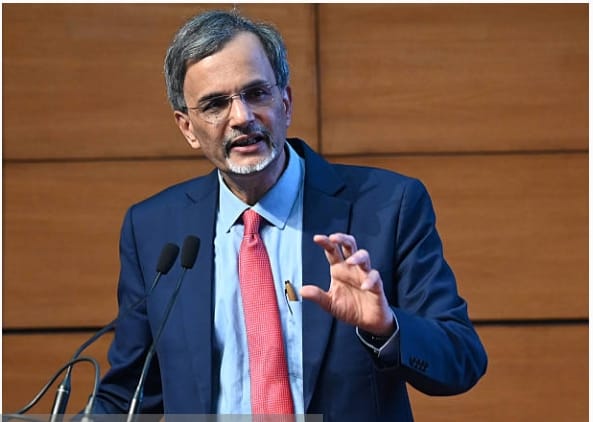
As India prepares for the Union Budget 2026-27, Chief Economic Adviser (CEA) V Anantha Nageswaran has underscored that the country has earned macroeconomic stability in a turbulent global environment and must now convert it into enduring strength through structural reforms, manufacturing competitiveness and strategic self-reliance. This broader economic narrative is expected to frame Budget proposals, including a sharper focus on renewable energy manufacturing and green technologies.
In an opinion piece, Nageswaran noted that India’s recent economic journey stands out not for dramatic leaps, but for resilience. The Economic Survey 2025-26 characterises this phase as a transition “from stability to strength”, signalling a shift from managing vulnerabilities to building foundations for durable, self-reinforcing growth. In a world marked by geopolitical fractures, financial excess and heightened uncertainty, India’s relative calm—moderate inflation, credible fiscal consolidation, robust foreign exchange reserves and healthier banks—reflects years of steady policy work rather than chance.
Strengthening manufacturing capacity essential for achieving long-term currency stability: CEA Nageswaran
— ANI Digital (@ani_digital) January 29, 2026
Read story @ANI | https://t.co/ratuizHsGT#Rupee #Manufacturing #CEA #EconomicSurvey pic.twitter.com/KObLJfARCH
Global economic uncertainty in 2025 stood at nearly three times the average of the previous two decades, even as financial markets remained priced for cheap and abundant risk. For emerging markets, this combination raises the risk of volatile capital flows and currency pressures. Against this backdrop, India’s macroeconomic balance has held firm. Inflation has eased to multi-decade lows, growth remains largely domestically driven, and public finances are on a stronger footing, aided by revenue buoyancy and a widening direct tax base. Importantly, the quality of government spending has improved, with capital expenditure increasingly prioritised over consumption-heavy outlays.
The banking sector, another pillar of resilience, has cleaned up balance sheets, with gross and net non-performing assets at multi-decade lows. This has enabled healthier credit growth to the commercial sector, creating conditions for investment-led expansion rather than credit-fuelled excess. Labour market indicators also point to structural improvement: female labour force participation has risen, unemployment has moderated and formalisation has deepened. According to the CEA, these trends are outcomes of long-term reforms such as digital public infrastructure, targeted welfare delivery, labour code changes and expanding physical and digital connectivity.
It is within this broader macro framework that expectations from Budget 2026 have sharpened, particularly around building self-reliance in clean energy manufacturing. Industry leaders argue that India’s next phase of strength must be anchored in sectors aligned with climate commitments and global competitiveness.
Srivatsan Iyer, Global CEO of Hero Future Energies, stated the Union Budget should announce additional measures to strengthen India’s renewable energy ecosystem. “Priority should be given to incentivising investments in green hydrogen, grid-scale energy storage, modernisation of transmission infrastructure, and introducing targeted production-linked incentives or tax incentives to enhance energy security and build alternative material ecosystems,” Iyer said.He added that such measures would help reduce risk, improve grid reliability and enable renewable energy to scale in a more efficient and commercially sustainable manner. Experts believe that targeted fiscal support, combined with stable policy signals, can accelerate domestic manufacturing of renewable equipment, reduce import dependence and advance the goal of Aatmanirbharta in energy.
As Finance Minister Nirmala Sitharaman prepares to present the Union Budget 2026-27, the challenge, economists say, will be to build on India’s hard-earned stability while channeling resources into future-ready sectors. With macro fundamentals relatively strong, Budget 2026 is widely seen as an opportunity to translate resilience into long-term strength—through manufacturing, exports and a decisive push towards clean and secure energy systems.
(Business Correspondent)

Related Posts
Modi has very good idea for Ukraine peace deal, Putin likes India's cultural diversity
India win gold medal in women's team recurve Archery
India’s manufacturing sector sees 7-month high growth in Sept