 Newsinc24 Team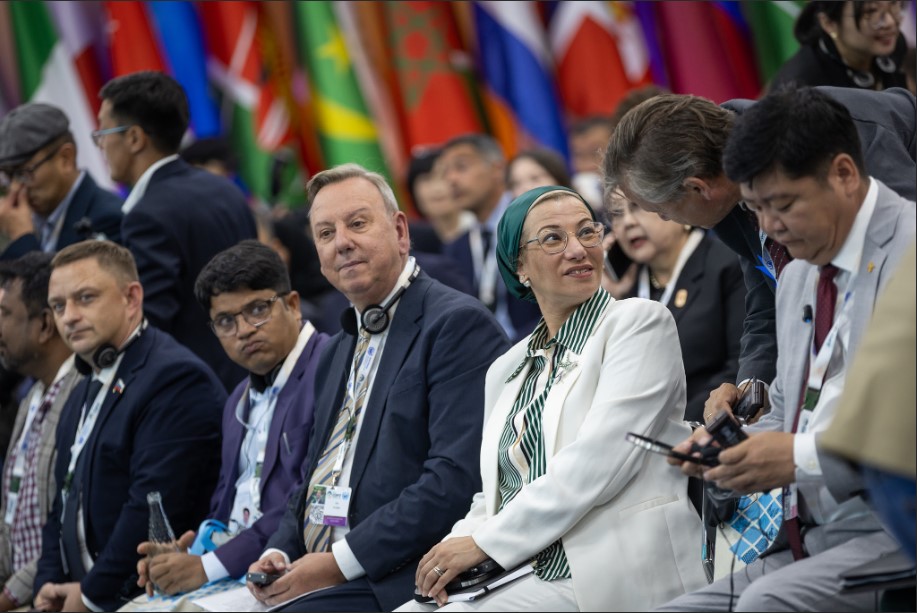
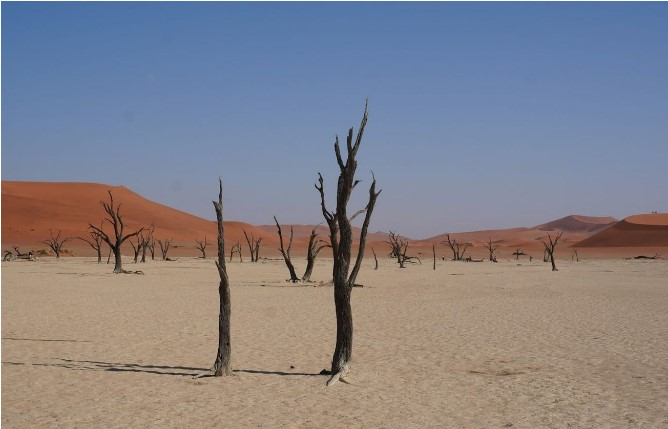
From shrinking water supplies and expanding deserts to extreme heat and rapidly growing cities, the battle to protect the world’s land is increasingly being fought at the local level. Recognising this, mayors and regional leaders from across the world have called for cities and communities to play a bigger role in shaping and delivering global action on land degradation and drought.Around 30 mayors, governors and local leaders meeting at the UNCCD COP17 Mayors’ Forum in Ulaanbaatar adopted the Ulaanbaatar Declaration, committing to stronger local action on sustainable land management and drought resilience.The three-day forum, held from August 20 to 22 in Mongolia’s capital, brought together more than 200 participants from over 30 countries, including local and regional governments, international organisations, financial institutions, researchers, city networks and private-sector representatives.
Five-point roadmap for local action
The declaration, titled Local Leadership for Land Resilience: Advancing Implementation across the Rio Conventions, seeks to move the discussion beyond global commitments towards implementation on the ground.It calls for integrated local action covering land management, drought resilience, biodiversity, climate adaptation, water security and sustainable urban development, while strengthening links between urban and rural areas.The leaders also called for a more structured role for local and regional governments in the United Nations Convention to Combat Desertification (UNCCD) process, including regular engagement between meetings of the Conference of the Parties.
Another key demand is greater coordination among the three Rio Conventions dealing with desertification, climate change and biodiversity, alongside the global water agenda.The declaration also highlights the need for easier and more predictable access to finance for local governments, as well as greater knowledge-sharing, innovation and cooperation, including the use of nature-based solutions.
The forum also saw the launch of the Ulaanbaatar Initiative, a voluntary effort led by the Capital City of Ulaanbaatar to develop a practical way for cities to measure and report land degradation.The results are expected to be shared with the UNCCD by COP18, potentially providing cities with a more consistent mechanism to demonstrate progress and identify areas requiring intervention.
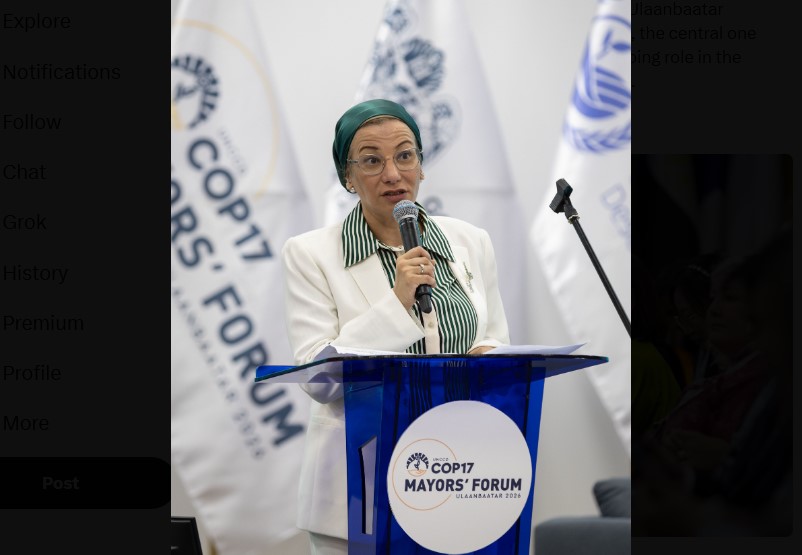
UNCCD Executive Secretary Yasmine Fouad said national commitments may set the direction, but implementation ultimately takes place in cities, regions and communities.She stressed that local governments make critical decisions affecting land and water management, drought preparedness, extreme heat, infrastructure and public services.“The Ulaanbaatar Declaration is an important step in moving from recognition of their role to sustained engagement and practical action,” Fouad said.
From desertification to urban resilience
For Ulaanbaatar, the issue is particularly immediate. Mongolia’s capital, home to nearly half of the country’s population, is dealing with challenges ranging from water security and land degradation to rapid urbanisation, air pollution and climate-related risks.B.Purevdagva, Governor of the Capital City and Mayor of Ulaanbaatar, said land resilience was not merely a global policy issue but directly affected safe water, clean air, green spaces and livelihoods.The city is seeking to position itself as a hub connecting governments from dryland and extreme-climate regions, allowing them to share practical solutions and improve how land degradation is measured.
A nearly three-decade-old conversation
The Ulaanbaatar meeting also marked another chapter in a local-government movement that began nearly three decades ago.The process dates back to the World Forum of Mayors on Cities and Desertification held in Bonn, Germany, in 1999. Subsequent forums were held in Rome, Ordos and Riyadh, with the 2024 Riyadh Mayors’ Forum reaffirming the importance of local and regional governments in combating land degradation, desertification and drought.This year's gathering comes at a significant moment for global environmental and development policy, with discussions around urbanisation, climate, biodiversity, land and water increasingly converging.Participants pointed to the World Urban Forum, reviews of the Sustainable Development Goals and the New Urban Agenda, the three Rio Conventions and the upcoming UN Water Conference in Abu Dhabi as opportunities to create greater policy coherence.The message from Ulaanbaatar was clear: global commitments will have limited impact unless they translate into action where people actually live.One of the strongest themes emerging from the forum was the need to bridge the gap between ambitious commitments and the money required to implement them.UN-Habitat Executive Director Anacláudia Rossbach called for more direct and predictable finance for local governments, arguing that urbanisation, land and water challenges are closely connected and require locally led solutions.
The declaration therefore places partnerships and financing alongside policy commitments, seeking to give cities and regions greater access to resources needed for land restoration, drought preparedness, resilient infrastructure and sustainable development.Oumar Ba, Mayor of Ndiob and President of UCLG Africa, said local and regional governments were essential partners in converting global commitments on land restoration and drought resilience into action.
The declaration seeks to reinforce the Riyadh Process as a platform for structured dialogue between the UNCCD, its member countries and organised local and regional governments.The signatories have committed to deepening cooperation among cities and regions and ensuring that local action remains inclusive, involving communities, young people, women and Indigenous Peoples.
From Ulaanbaatar to Abu Dhabi
The significance of the declaration extends beyond the UNCCD process. The organisers see it as part of a wider push to ensure that global environmental and development agendas are implemented locally.The initiative forms part of the Local2030 Coalition’s “Road to Abu Dhabi: The Local Way”, which aims to strengthen stakeholder engagement ahead of the 2026 UN Water Conference and the 2027 SDG Summit.

Related Posts
Unwarranted:India slams UN's remarks over remarks on Delhi protests
India’s defence exports hit record Rs38,424 crore in 2025-26: Rajnath
India targets 1 bn 5G users by 2030, up from 550 mn now: Scindia