 Newsinc24 Team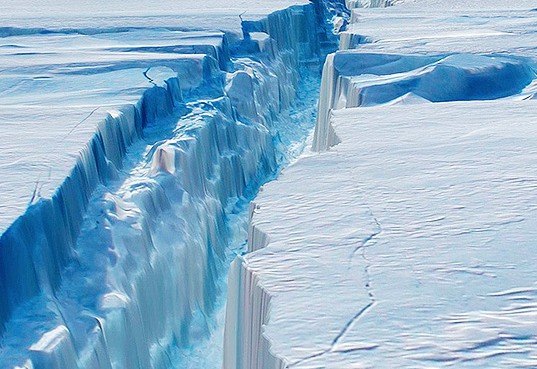
Over a third of the Antarctic's ice shelf area may be at risk of collapsing into the sea if global temperatures reach four degrees Celsius above pre-industrial levels, according to a study.The research, published in the Geophysical Research Letters journal, found that 34 per cent of the area of all Antarctic ice shelves -- around half a million square kilometers -- including 67 per cent of ice shelf area on the Antarctic Peninsula, would be at risk of destabilisation under such a warming scenario. The team also identified Larsen C -- the largest remaining ice shelf on the peninsula, which split to form the enormous A68 iceberg in 2017 -- as one of four ice shelves that would be particularly threatened in a warmer climate. The team said the ice shelf vulnerability from this fracturing process was forecast under 1.5, 2 and 4 degrees Celsius global warming scenarios, which are all possible this century.
"Ice shelves are important buffers preventing glaciers on land from flowing freely into the ocean and contributing to sea level rise," said Ella Gilbert from the University of Reading in the UK."When they collapse, it's like a giant cork being removed from a bottle, allowing unimaginable amounts of water from glaciers to pour into the sea," Gilbert said. They noted that when melted ice accumulates on the surface of ice shelves, it can make them fracture and collapse spectacularly. The new study uses the latest modelling techniques to fill in the finer detail and provide more precise projections. "The findings highlight the importance of limiting global temperature increases as set out in the Paris Agreement if we are to avoid the worst consequences of climate change, including sea level rise," said Gilbert.


Related Posts
Jaishankar discusses Global, Regional Issues with EU & V4 leaders
Bhupender Yadav calls for Global action on conservation
Guterres calls for global unity, peace ahead of ‘last UNGA’ as S.G.