 Ajay Chaturvedi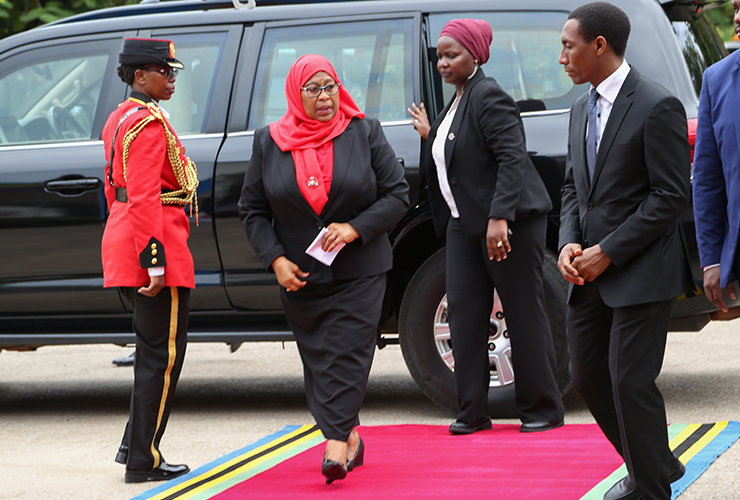
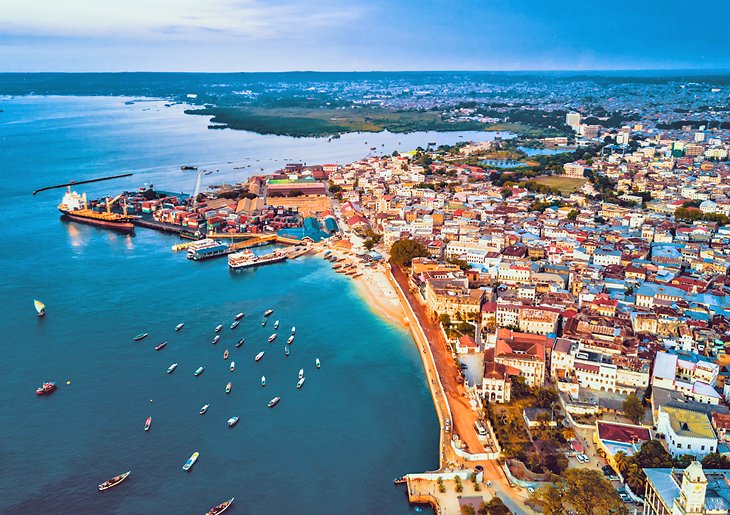
Tanzania is today known for its political stability and economic potential. On the social front, the focus has been on gender equality, education, health for all and youth empowerment. As per Baraka H Luvanda, former, High commissioner to India, Tanzania, as a country, is on the move. The country has a wonderful story to tell. The United Republic of Tanzania was formed out of the union of two sovereign states, namely Tanganyika and Zanzibar. Tanganyika became a sovereign state on December 9, 1961 and became a Republic in the following year. Zanzibar became independent on December 10, 1963 and the people’s Republic of Zanzibar was established after the revolution on 12th January 1964. The two sovereign republics formed the United Republic of Tanzania on April 26, 1964. Tanzania is located in Eastern Africa and is the biggest (land area wise) among the East African county. Tanzania has a spectacular landscape of three physiographic regions - the islands together with the coastal plains to the east, the inland saucer-shaped plateau and the highlands. The Great Rift Valley that runs from north east of Africa through central Tanzania is another landmark that adds to the scenic view of the country. Tanzania has the largest concentration of wild animals. It also has pristine sandy beaches and Africa’s highest and snowcapped mountain – Mt Kilimanjaro.
Country’s profile
The United Republic of Tanzania has 22 national parks, 7 World Heritage sites, 31 Game Reserves, 44 Game Controlled Areas, 33 Wildlife Management Areas, 4 Ramsar sites and 3 Marine Parks and natural beaches in Zanzibar. Dodoma is the capital and Dar-es-Salaam is the commercial capital and major seaport for Tanzania mainland. It serves neighbouring land-locked countries of Malawi, Zambia, Burundi, Rwanda, Uganda and Eastern DRC (Congo). Since attaining political independence, Tanzania has held without fail Presidential and Parliamentary elections after every five years period.
Economic Policy
The Tanzanian government believes in sound, consistent and predictable micro-economic policies with low inflation. One of the key areas of policy focus is the promotion of sustained and shared economic growth. The ruling government, under the leadership of President Ms Samia Suluhu Hassan, is busy pursuing pro-investment and pro-growth policies. The government is also committed to the promotion of public-private sector partnership. Academia, research institutions, NGOs, CSOs and others are also engaged to promote wider participation in policy discussions. The country welcomes investors and promises to make their business a success in the most lucrative investment. Tanzania has vast natural resources, geographical and locational advantage, a large domestic market and a labour force makes the country an ideal investment destination.
Exciting History
Tanzania has always played a pivotal role in African history. Some of the oldest human settlements have been unearthed in Tanzania. The oldest human fossils were found in and around Olduval (Oldupai) in the northern part of the country, an area referred to as “The Cradle of Mankind”. It is believed to be the birth place of humanity. Fossils found in this area include Parathropus bones thought to be over 2 million years old, and the oldest known footprints of the immediate ancestors of human, the Laetoli foot-prints, estimated to be about 3.6 million years old.
About ten thousand years ago, Tanzania was populated by hunter-gatherer communities who spoke Khoisan. They were joined by Cushitic-speaking people who came from the north about 5,000 years ago. They introduced basic technique of agriculture, food production and cattle farming. About 2,000 years ago, Bantu speaking people began to arrive from western Africa. They further developed iron working skills, introduced different ideas of social and political organization. Later, Nilotic pastoralists arrived and continued to immigrate into the area through the 18th century.
In the early first Millennium CE, trade with Arabia and Persia made the East African coast economically strong. As a result, Islam was introduced and some Arab centric doctrine of Islam, some Arab influences entered the language, resulting in the emergence of Kiswahili language. Today Kiswahili language is coloured with influence from Arabic, Indian and European languages, but a majority of it remains Bantu.
Development Vision 2025
The Tanzania Vision-2025 aims at achieving a high-quality livelihood for its people, attain good governance through the rule of law and develop a strong and competitive economy. It is also envisaged that fast growth will be pursued while effectively reversing current adverse trends in the loss of environmental resources such as forest, fisheries, fresh water, climate, soils, biodiversity- and in the accumulation of hazardous substances.
+++++++++++++=



Related Posts
India, Africa cannot remain underrepresented in UNSC: Jaishankar
India-Africa partnership built for generations, not just today:Jaishankar
Typhoon Saudel makes double landfall on China’s eastern coast