 Ajay Chaturvedi
In Australia, the Sydney Opera House is a great architectural work of the 20th century that brings together multiple strands of creativity and innovation in both architectural form and structural design. A great urban sculpture set in a remarkable waterscape, at the tip of a peninsula projecting into Sydney Harbour, the landmark has had an enduring influence on architecture.
Inaugurated in 1973, the Sydney Opera House comprises three groups of interlocking vaulted ‘shells’ which roof two main performance halls and a restaurant. These shell-structures are set upon a vast platform and are surrounded by terrace areas that function as pedestrian concourses. In 1957, when the project of the Sydney Opera House was awarded by an international jury to Danish architect Jørn Utzon, it marked a radically new approach to construction. Utzon's original design concept and his unique approach to this landmark gave impetus to a collective creativity of architects, engineers and builders.
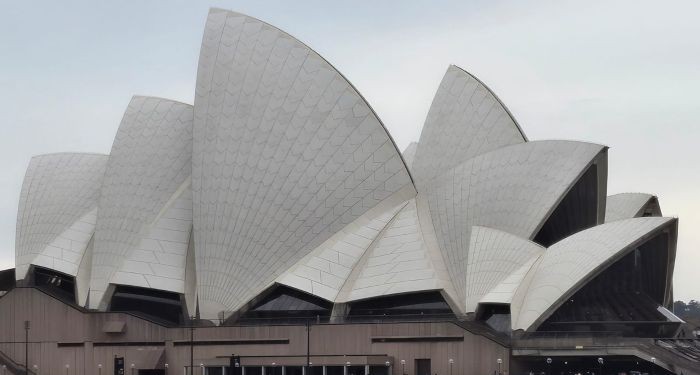
As per information, the Sydney Opera House was included in the National Heritage List in 2005 under the Environment Protection and Biodiversity Conservation Act 1999 and on the State Heritage Register of New South Wales in 2003 under the Heritage Act 1977. The Management Plan for the Sydney Opera House, the Conservation Plan and the Utzon Design Principles together provide the policy framework for the conservation and management of the Sydney Opera House.
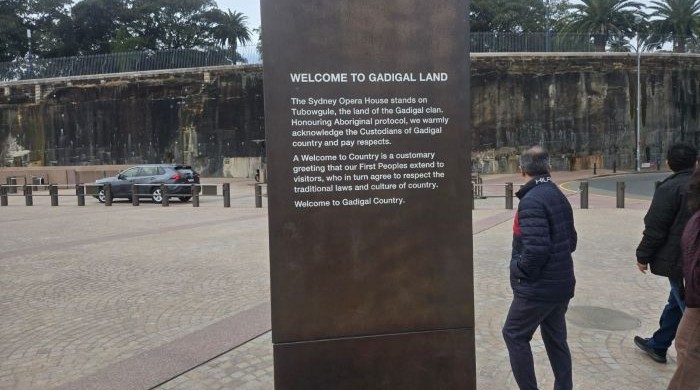
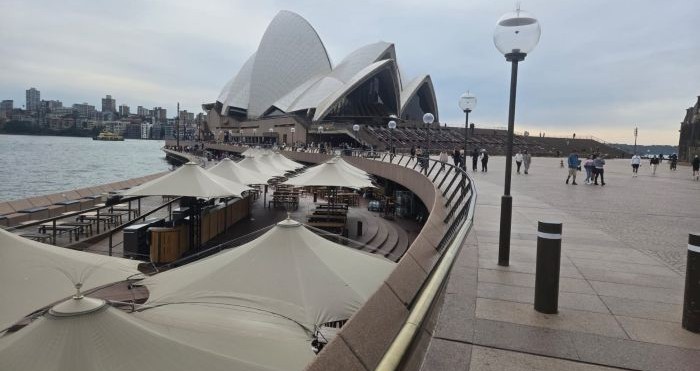
The Sydney Opera House is situated on Bennelong Point (originally called Cattle Point), a promontory on the south side of the harbour just east of the Sydney Harbour Bridge. The original budget was $7 Million, but it ended up costing over $100 million. The Sydney Opera House stands on Tubowgule, the land of Gadigal clan. The Aboriginal name for the Point was Tu-bow-gule meaning meeting of the waters.
It was named for Bennelong, one of two Aboriginal people (the other man was named Colebee) who served as liaisons between Australia’s first British settlers and the local population. The New South Wales government, wanted to make the city a world cultural capital, gave official approval and in 1954 convened an advisory group, the Opera House Committee, to choose a site. Early the following year the committee recommended Bennelong Point. Architects from some 30 countries submitted 233 entries. In January 1957 the judging committee announced the winning entry, that of Danish architect Jørn Utzon. After winning the bid, construction began in 1959. He faced a variety of problems and at one point of time and public opinion turned against it. Amid continuing disagreements with the government authorities overseeing the project, Utzon resigned in 1966. Construction continued until September 1973 under the supervision of the structural engineering firm Ove Arup and Partners and three Sydney architects—Peter Hall, David Littlemore, and Lionel Todd.
The World Heritage Committee on June 28,2007 inscribed four cultural sites on UNESCO's World Heritage List: Iwami Ginzan Silver Mine and its Cultural Landscape (Japan), Parthian Fortresses of Nisa (Turkmenistan), Sydney Opera House (Australia).
The Sydney Opera House is the nation’s leading tourism destination, one of the world’s busiest performing arts centres and a community meeting place and has a number of performance venues.
Concert Hall: With 2,679 seats, the home of the Sydney Symphony Orchestra and used by a large number of other concert presenters. It contains the Sydney Opera House Grand Organ, the largest mechanical tracker action organ in the world, with over 10,000 pipes.
Joan Sutherland Theatre: A proscenium theatre with 1,507 seats, the Sydney home of Opera Australia and The Australian Ballet. Until 17 October 2012 it was known as the Opera Theatre.
Drama Theatre: A proscenium theatre with 544 seats, used by the Sydney Theatre Company and other dance and theatrical presenters.
Playhouse: A non-proscenium end-stage theatre with 398 seats.
Studio: A flexible space with 280 permanent seats and a maximum capacity of 400.
Utzon Room: A small multi-purpose venue for parties, corporate functions and small productions.
Yallamundi Rooms: A function space hosting up to 400 people, often used for weddings or business conferences.
Outdoor Forecourt: A flexible open-air venue with a wide range of configuration options, including the possibility of utilising the Monumental Steps as audience seating, used for a range of community events and major outdoor performances.
The Sydney Opera House was formally opened by Queen Elizabeth II, on 20 October 1973. The Opera House was completed in 1973, having cost $102 million.The original cost and scheduling estimates in 1957 projected a cost of £3,500,000 ($7 million) and completion date of 26 January 1963 (Australia Day). The project was completed ten years late and 1,357% over budget in real terms.
Related Posts
'Threat to democracy' Trump slams White House media ban lawsuit
US House passes Russia sanctions bill, China, India on target
Gandhinagar construction site accident: 15 workers rescued