 Ajay Chaturvedi
 At a time when India is rapidly emerging as a global digital powerhouse, actor and UNFPA India Sexual and Reproductive Health and Rights (SRHR) Advocate Soha Ali Khan delivered a compelling call to action: build artificial intelligence that protects, empowers and includes women from the very beginning.UNFPA India Advocate urges gender-responsive technology as policymakers and global leaders chart India’s ethical AI roadmap
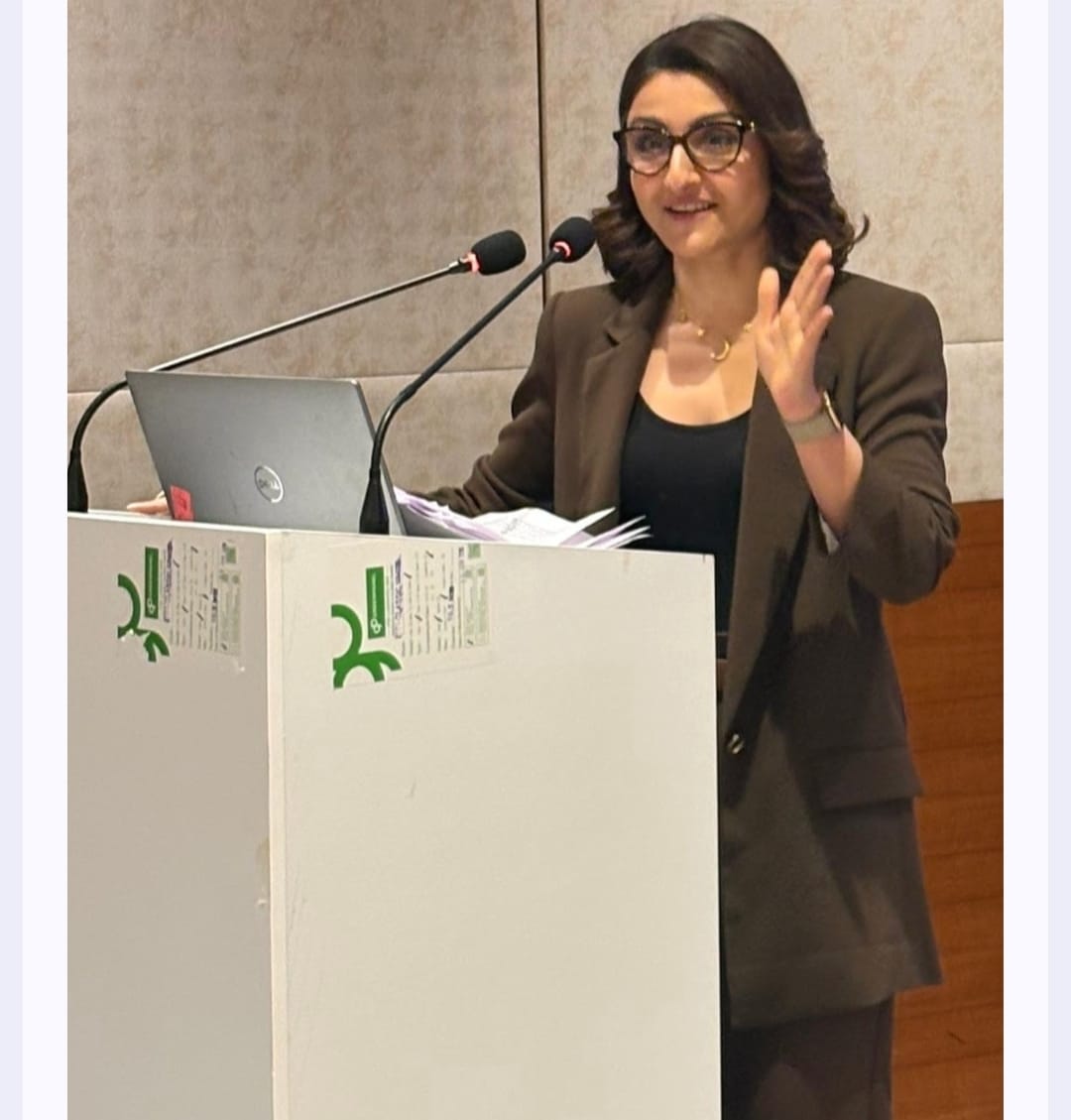
Speaking at the AI Impact Summit 2026 in New Delhi, Ms. Khan addressed a packed hall during the high-level session titled “Reimagining Gender in Technology: Designing Safer Digital Futures and Advancing Ethical AI for Inclusive Platforms” at Bharat Mandapam. Her message was clear — India stands at a defining moment in shaping the global standards for ethical AI.Drawing from her own experience as a public figure navigating digital platforms, Ms. Khan spoke candidly about the dual nature of technology.
“Technology has expanded opportunities for millions of Indian women—to learn, work, and be heard. But for that promise to truly hold, women must feel safe online. We have a real chance to shape AI so it actively protects women and helps more voices participate with confidence in digital spaces,” she said.
India at the Crossroads of Ethical AI
The session, organized by the United Nations Population Fund (UNFPA) in partnership with Ikigai Law and the University of Melbourne, brought together policymakers, diplomats, technology leaders and researchers to deliberate on gender-responsive AI governance and platform accountability.
With over 750 million internet users and millions of women accessing the digital world for the first time, India’s AI governance framework is expected to influence not just domestic digital safety norms but also global policy debates. Experts at the summit emphasized that algorithmic systems must be designed to recognize and mitigate online harassment, misinformation, deepfakes and gender bias embedded in data systems.
Setting the tone, Andrea M. Wojnar, Representative, UNFPA India and Country Director, UNFPA Bhutan, underscored that women’s rights cannot be an afterthought in technological innovation.“India’s leadership in AI gives us a unique opportunity to build systems that are safe, inclusive and grounded in human rights from the start. If we design and govern technology with women’s rights at the centre, we don’t just reduce harm—we unlock participation, innovation and shared progress for everyone,” she said.
From Policy to Practice: Making AI Work for Women
The keynote was followed by a high-powered panel moderated by tech commentator Rajiv Makhani, featuring:
•Her Excellency May-Elin Stener, Ambassador of Norway to India
•Carolyn Florey, Digital Development Specialist, Asian Development Bank
•Uthara Ganesh, Head of Public Policy, APAC, Snap Inc.
•Arpita Kanjilal, Head, Research and Communications Division, Digital Empowerment Foundation
The discussion moved beyond broad principles to concrete action. Panellists highlighted “safety-by-design” frameworks, the need for AI tools to function effectively across India’s diverse languages, and the economic imperative of closing the digital gender gap.Speakers argued that empowering women online is not merely a social goal but an economic strategy. Greater digital participation by women can expand entrepreneurship, workforce inclusion and innovation. However, persistent online abuse, privacy violations and algorithmic bias continue to discourage many women from fully engaging in digital spaces.A recurring theme was collaboration — between government, technology companies, academia and civil society — to ensure AI systems reflect women’s lived realities. Stronger accountability mechanisms for platforms and gender-sensitive data governance were also flagged as urgent priorities.
Showcasing Solutions from the Global South
The summit featured an Ethical Technology Solution Showcase featuring innovations from India and other countries in the Global South aimed at creating safer, more inclusive digital ecosystems. From AI tools that detect online harassment in regional languages to privacy-first design models, the showcase demonstrated that ethical technology is not theoretical — it is already being built.As India accelerates its AI ambitions, the message from the summit resonated with clarity: the future of artificial intelligence must not simply be smart — it must be just.
About UNFPA
The United Nations Population Fund (UNFPA) is the United Nations sexual and reproductive health agency. Its mission is to deliver a world where every pregnancy is wanted, every childbirth is safe and every young person’s potential is fulfilled. UNFPA advocates for the realization of reproductive rights for all and supports access to comprehensive sexual and reproductive health services, including voluntary family planning, quality maternal health care and comprehensive sexuality education.
















Related Items
Can Chinese investment revive India's manufacturing?
India's forex reserves rise $6.1 bn to 2 month high of $682.35 bn
How India’s Gen Z weaponised silence against feudal decorum