 Ajay Chaturvedi
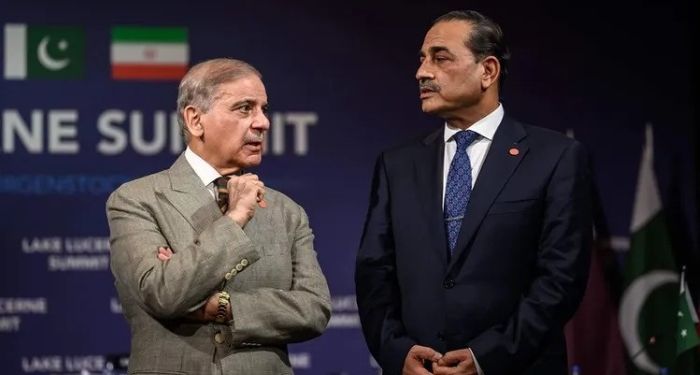
The Pakistan's parliament has made Field Marshal Asim Munir, the Chief of the Defence Forces (CDF), the most powerful military figure in Pakistan’s modern history, handing him sole control of the three forces, the army, navy and air force, as well as the country’s strategic and nuclear decision-making center. On 20th August, both Houses of Parliament rapidly passes two pieces of legislation — the Defence Forces of Pakistan Act 2026 and amendments to the National Command Authority Act 2010. As if on cue, President Asif Ali Zardari promptly signs the two Bills into law. These laws were bulldozed through Parliament with astonishing haste. There was no public debate, no legislative scrutiny.
Fundamental shift in Pakistan’s governance structure
The new Defence Act 2026 and the amendment to the National Command Authority Act 2010 have elevated the organizational role of the Defence Forces, which was established just a year ago, to a commanding super-institution. Under these provisions, Asim Munir is now the ultimate authority for multi-sectoral integration, operational coordination and oversight of all common matters that have strategic implications for Pakistan’s national security. In addition, he has been given full authority to decide on the retirement, resignation, removal or extension of service of all military personnel, except in cases such as direct presidential appointments such as the top commanders of the three services, and even to impose age and service restrictions.
The passage of these laws represents a fundamental shift in Pakistan’s governance structure and a gradual shift from a system based on political and cabinet-based power to a deepening militarization of the state.
Military rule not new to Pakistan
The Military rule is not new to Pakistan. In reality, it is woven directly into the fabric of Pakistan’s history. Civil-military imbalance is not new. For nearly half of its existence since independence in 1947, the country has been governed by direct military dictatorships. Field Marshal Ayub Khan seized power in 1958. Gen. Yahya Khan succeeded him amid widespread civil unrest in 1969, presiding over the dissolution of East Pakistan and the creation of modern-day Bangladesh. Gen. Zia-ul-Haq followed with a brutal crackdown in 1977. And Gen. Pervez Musharraf seized power via a televised coup in 1999.Munir has legally seized every lever a general normally has to seize by force.
Asim Munir is institutionalizing Military dominance: US report
A new report from the US-based Middle East Media Research Institute analyzes how Pakistan's military under Army Chief Asim Munir is institutionalizing its dominance rather than staging a coup. The Defence Forces Act 2026 concentrates authority over all three armed services in Munir's office, who also holds the five-star rank of Field Marshal. The report highlights growing repression of dissent, journalists, and civil society, citing findings from Human Rights Watch and Freedom House.Referring to American think tank Freedom House's 2026 findings, the report further noted the "military intimidates the media and enjoys substantial impunity, while its internet-freedom assessment classifies Pakistan's online environment as 'Not Free'."
Munir is now more secure
Pakistan's history of ousting military rulers has always depended on the illegitimacy of the original seizure eventually becoming impossible to defend. Munir has removed that vulnerability at the legal level, even as he's amassed more raw power than any of his predecessors held on day one.Pakistan has fundamentally transitioned into a military-led State under a legal, civilian seal. And Munir now sits at the centre of it all — more secure, and more powerful, than any of his predecessors. Ultimately, such a concentration of power paves the way for a practical shift towards paramilitary rule and informal dictatorship, in which the principle of separation of powers and democracy will be weakened under the powerful shadow of the military establishment.



Related Posts
Pakistan: Defence Minister flags exodus of top officials in country
When power moves dissent to the argins
Conspiracy to grab power, Rajnath lists Cong's unforgivable crime