 Krishan Gopal Sharma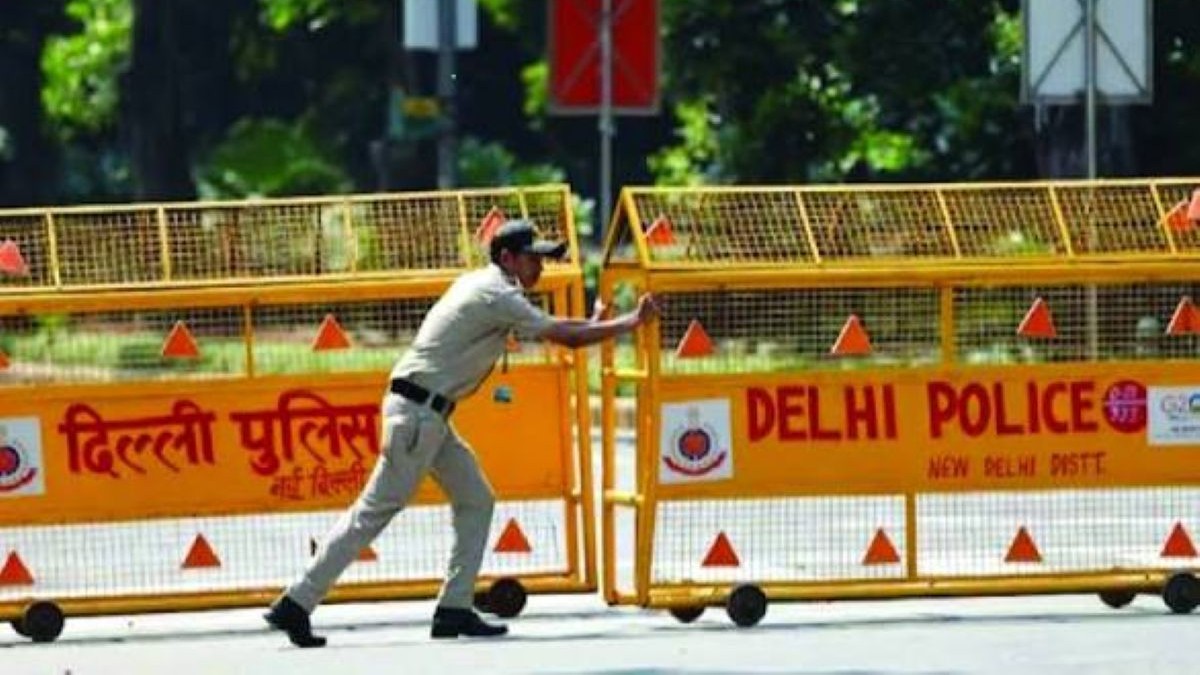
The Trigger: A city can accommodate a protest without agreeing with its demands. But when the geography of dissent is altered, a more consequential question arises: is the state managing public inconvenience, or making itself less accessible to public scrutiny?
Recently, the Delhi Police issued a standing order removing Jantar Mantar from the list of designated protest sites and naming Ramlila Maidan, Burari Ground and CBD Ground in East Delhi as alternatives. The decision, announced the following day, ended Jantar Mantar’s long-standing status as a recognised venue for demonstrations in the capital. The change came amid an ongoing dispute over the regulation of protests, public order and the location of demonstrations near the centres of government.
The administrative explanation is familiar. A modern capital must manage traffic, protect sensitive installations, accommodate official movements and prevent public disorder. These are legitimate responsibilities, not excuses to be dismissed out of hand. Yet the question is whether the arrangements made to discharge those responsibilities preserve the practical ability of citizens to make themselves heard. A protest ground may remain available on a government list and still become less effective as an instrument of democratic participation. The distinction between permitting dissent and enabling it deserves closer attention.
The convenience of governing without interruption
Central Delhi has always carried a peculiar symbolism. Its broad avenues, imposing buildings and carefully ordered spaces convey the authority and continuity of the Indian state. But the Republic was not established to make the exercise of authority comfortable for those who occupy its offices. These institutions derive their legitimacy from a Constitution that recognises citizens not as spectators of government but as participants in public life.
That relationship is easily obscured by the routines of administration. A procession becomes a traffic problem; a gathering becomes a security assessment; a demand for accountability becomes an operational inconvenience. Each description may contain an element of truth. The difficulty begins when the administrative description becomes the entire argument, leaving no room to ask what the inconvenience is for, whom it serves and what democratic cost is being incurred.
There is no constitutional requirement that every demonstration take place outside a minister’s window or that the daily life of a capital be subordinated to every protest. Equally, there is no sound democratic principle by which the ordinary functioning of government must be insulated from the visible presence of public disagreement. The challenge is to negotiate between the two, rather than allowing one to extinguish the other.
This is where the idea of a ruler mentality becomes relevant. It need not announce itself through royal language or openly authoritarian declarations. It may emerge more quietly, in the assumption that the public should approach power only where, when and in ways determined by the authorities themselves. The state continues to speak of citizens as its ultimate sovereigns, while its physical arrangements increasingly encourage them to remain at a distance.
The question, therefore, is not whether officials deserve secure workplaces. They do. It is whether security and convenience have gradually become principles by which the public is expected to organise its democratic rights around the needs of those who govern.
The constitutional geography of dissent
The Supreme Court’s jurisprudence offers a useful starting point for examining this question. In Himat Lal K. Shah v. Commissioner of Police, Ahmedabad (1972), the Court recognised the importance of public meetings in open spaces and public streets as part of the country’s democratic tradition. It also made clear that the right to assemble does not confer an unconditional entitlement to hold a meeting at every public place. Regulation is permissible, but it must operate within constitutional limits and cannot leave the exercise of the right at the arbitrary discretion of the authorities.
The distinction is important. A constitutional right need not translate into unrestricted access to every location. But neither can a government claim to respect a right merely because it has left some theoretical avenue for its exercise. The availability of that avenue, the conditions attached to it and the practical consequences for citizens must also be considered.
In Sodan Singh vs. New Delhi Municipal Committee (1989), the Supreme Court described the state as trustee of public streets, with members of the public entitled to use them as beneficiaries, subject to the corresponding rights of others and necessary limitations on their use. The case concerned street trading rather than the specific right to demonstrate, so its principle should not be stretched beyond its context. Nevertheless, it reinforces an important idea: public space is not simply an asset administered for the convenience of government. It exists to serve public purposes, and its regulation must take account of the citizens for whose benefit it is held.
The judgment most directly relevant to Jantar Mantar is Mazdoor Kisan Shakti Sangathan vs. Union of India (2018). The Supreme Court addressed restrictions on protests in central Delhi and the problems caused by demonstrations at Jantar Mantar Road. It recognised peaceful protest as a fundamental right under Articles 19(1)(a) and 19(1)(b), while acknowledging the legitimate interests of residents and the need to prevent public nuisance. Rather than treating either concern as absolute, the Court called for an arrangement that would regulate demonstrations and permit their continuation in a limited part of the area.
This is not a judicial endorsement of unrestricted protest at Jantar Mantar for all time. Nor is it a licence for the state to make peaceful assembly ineffective by relocating it without adequate consideration of its consequences. The underlying constitutional task remains one of balance.
The latest developments make that balance particularly significant. Recently, the Supreme Court, in a separate proceeding, stressed the need to identify and designate suitable alternative sites for protests. The Delhi Police subsequently removed Jantar Mantar from its designated list. The decision has since been challenged, and the Supreme Court has sought responses from the Centre and Delhi Police. The legality and implications of the change must therefore be distinguished from the wider constitutional questions it raises.
The issue is not resolved by citing an earlier judgment against the authorities, any more than it is resolved by citing an administrative order in their favour. It requires scrutiny of the actual arrangements: whether the alternatives are accessible, whether permissions are administered fairly, whether restrictions are proportionate and whether citizens retain a meaningful opportunity to bring their grievances into public view.
Distance is not merely a matter of kilometres
The relocation debate is often presented as a choice between one protest ground and another. But places are not interchangeable simply because both can accommodate a crowd.
Jantar Mantar acquired significance through its proximity to the capital’s political and administrative institutions and through years of public use. Its value was not confined to the land available for a gathering. It lay also in the relationship between the demonstrators, the institutions they sought to address and the public that might encounter their demands.
The three replacement venues offer different geographical circumstances. Ramlila Maidan remains in central Delhi, whereas Burari Ground and CBD Ground are situated in other parts of the city. It would therefore be inaccurate to describe all three as remote outposts or to assume that relocation has the same practical effect on every protest.
But geographical distance is only one part of the question. Accessibility by public transport, the cost of travel, the availability of facilities, the ability of journalists and members of the public to reach a gathering, and the visibility of a demonstration all influence whether a protest can perform its intended function. For citizens travelling from outside Delhi, or for people who cannot afford to lose a day's wages, these practical considerations can be decisive.
A protest is not simply a collection of people occupying a designated plot. It is a public act of communication. Its intended audience may include ministers, legislators, officials, journalists and fellow citizens. Move it to a location where fewer of those people are likely to encounter it, and the act may remain legally permissible while its influence diminishes.
This is the central concern behind what might be called the spatial denial of dissent. It does not require a formal prohibition on protest. It can occur when a series of administrative decisions makes protest progressively more difficult, expensive or inconsequential. The test is not merely whether people are allowed to assemble somewhere, but whether the arrangements preserve a reasonable opportunity for their voices to reach those they seek to influence.
The history of protest locations in Delhi gives the issue a longer perspective. Demonstrations once associated with the Boat Club area moved towards Jantar Mantar, which became an established venue over the decades. The Supreme Court itself discussed this evolution in its 2018 judgment. The significance of that history is not that one location must remain permanently immune to regulation. It is that the relationship between protest and political space has developed through public practice, administrative choices and constitutional contestation.
A change to that relationship deserves more than a traffic-management explanation. It deserves a public account of why the change is necessary, what alternatives have been assessed and how the democratic purpose of peaceful assembly will be protected.
The international comparison: proximity with qualifications
Other democracies offer useful comparisons, although none provides a simple template. In the United Kingdom, Parliament Square stands beside Westminster, making the relationship between protest and political authority immediately visible. Yet demonstrations there are subject to permissions, by-laws and public-order restrictions. The United States has its own rules governing demonstrations near the White House and other sensitive locations. The mere existence of a prominent protest site does not mean that every assembly, at every time, must be allowed without conditions.
The relevant lesson is more modest, but no less important. Security measures and the right to protest need not be treated as mutually exclusive. Democratic systems must devise arrangements that protect sensitive institutions while retaining meaningful opportunities for citizens to express opposition close enough to the seat of power for that opposition to be understood.
The comparison also exposes the limits of a purely logistical approach. A city can provide a large, well-equipped ground and still fail to provide an adequate democratic space if the location makes a demonstration less accessible to its intended audience. Conversely, a centrally located site cannot be exempt from reasonable restrictions merely because of its symbolic value.
The proper question is therefore not whether a protest ground is central or peripheral in the abstract. It is whether the total arrangement strikes a defensible balance between public order and public participation. That requires evidence, not assumptions; transparent criteria, not administrative convenience alone.
The republic must remain accessible
The temptation to interpret every restriction as authoritarianism should be resisted. Cities must function, residents have rights, and the police have responsibilities that cannot be wished away. Demonstrations can create genuine difficulties, and the state is entitled to address them. A credible defence of civil liberties must acknowledge these realities.
But the opposite temptation is equally dangerous: to treat every decision made in the name of security as self-justifying. A democratic government must explain not only why a restriction is administratively convenient, but why it is necessary, proportionate and consistent with the rights it is obliged to protect.
There are practical questions the authorities should be able to answer. What evidence made the withdrawal of Jantar Mantar necessary? Were less restrictive arrangements considered? Will the alternative sites be accessible to people with limited means and mobility? What safeguards will ensure that permissions are not used to discriminate between causes or political affiliations? And how will the administration assess whether citizens can still communicate their grievances effectively?
These are not questions of hostility towards government. They are questions that responsible government should welcome. Transparent rules and workable arrangements protect the public, assist the police and lend legitimacy to administrative decisions. They also prevent a dispute over a particular location from becoming a larger argument about whether the state wishes to hear dissent at all.
The phrase ruler mentality should not be treated as a verdict on the motives of every official involved. It is better understood as a warning about the direction in which institutions can drift when those who govern begin to regard public disagreement chiefly as a disturbance to be managed. That drift can take place without anyone declaring opposition illegitimate. It can be accomplished through permissions, distances, barriers and procedures, each defensible in isolation but troubling in their cumulative effect.
Jantar Mantar was never merely a stretch of road. Over time, it became part of the capital's civic vocabulary: a place where citizens could bring a grievance into public view and remind those in authority that governance does not end with elections. Its removal from the list of designated protest sites does not, by itself, establish that the Constitution has been violated. But it raises a question the administration cannot answer simply by pointing to three alternative grounds.
A democracy is measured not only by whether citizens are permitted to speak, but also by whether the institutions they address remain within meaningful reach.
The ultimate test of the new arrangements will lie in their practical operation. If they preserve peaceful assembly, reasonable access and the public visibility of dissent, the administration will have made a case for its decision. If they turn protest into an activity that is technically permitted but increasingly difficult to see or hear, the country will have reason to ask whether administrative order is being purchased at the expense of democratic purpose.
A republic does not have to surrender its security to accommodate dissent. But it must take care not to build so much distance between its citizens and its institutions that the right to protest survives in law while losing much of its life in practice.
Author’s Note
This essay examines the constitutional and democratic implications of Delhi's decision to remove Jantar Mantar from its list of designated protest sites. It recognises the legitimate requirements of public order, urban management and security, while arguing that alternative arrangements should be assessed not merely by their capacity to accommodate crowds but also by their accessibility, fairness and ability to preserve the practical value of peaceful dissent. The legal challenge to the decision remains a matter for the courts.
<><><>
(Author: kgsharma1@gmail.com; The writer is a retired officer of the Indian Information Service and a freelance writer. Also worked as an international media consultant with UNICEF Nigeria and contributes regularly to various publications.)

Related Posts
Police detained CJP leaders as they attempt to breach Jantar Mantar
Delhi Police de-notify Jantar Mantar as protest venue, name three sites
62nd IHGF Delhi Fair to display more than 23,000 products