 Nipun Dutta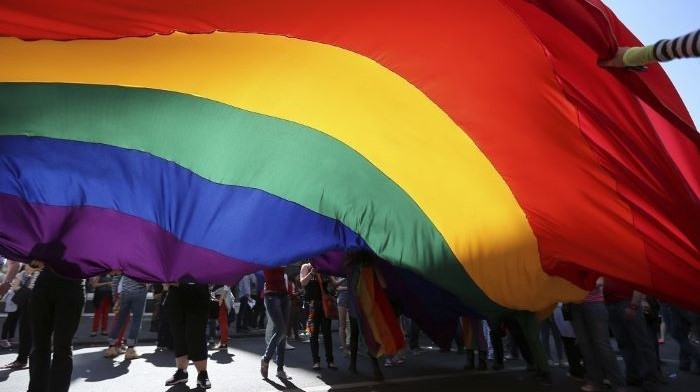
A five-Judge Constitutional bench of the apex court. A question of seminal importance. Petitions filed by several same-sex couples, some of them raising children together. Legal Stalwarts. Laws, legislations, Rules, Rights, Constitution, Case studies, social issues, Religious and cultural considerations, and the changing times in the 21st Century. Put all of these together and you will get a perfect recipe for a courtroom drama that is playing out right now, and the hearings are live-streamed in public interest.
The ongoing debate in the Supreme Court is a reminder of the looming societal issue that most people want to sweep away under the carpet. Lesbians, Gays, Bisexuals, Transgenders, Queer, and Others…. They are among us, they are increasing in numbers, or rather, they are coming out of their closets and claiming their rightful place and position in society. Behaving like an ostrich burying its head in the sand all along, now society, law enforcement agencies, moral watchdogs, and each and every stratum of society are the audience to this courtroom debate playing on a daily basis, which will yield results soon. They are waiting with bated breath; they are hoping and their hopes and aspirations differ from each other based on multiple factors. They are praying, some from inside the closets and some from their drawing rooms… Let us have an overview of the situation, based loosely on the court discussions from 19th to 27th April 2023 in the apex court of India.
Now, LGBTQ+ couples want to marry and they want inheritance, property, and parental rights. They want the rights never granted - the rights of signing the permission for their spouse to get operated upon, claiming pension and terminal benefits of their spouse, amongst others. Inclusion, validation, respect, rights, and recognition… that is what LGBTQ+ collectively want. While respect is their birthright, they will get validation and recognition sooner than later, looking at the way society is progressing and mindsets are changing. However, granting them legal and Constitutional rights is tricky as well as nearly the biggest ever challenge faced by the Indian Judiciary. To begin with, any society is regulated on the basis of some laws and legislations. These laws and legislations have been defined in words of smaller amplitude (he, she). These words lend a certain intent to the legislation. Changing it to words of larger amplitude like ‘the person’ might change the very intent and character of the law. More so, when we talk about acts like the Special Marriage Act that talks about men and women in very specific terms and confers different types of rights on them. These laws cannot be interpreted in the correct manner when we read them in the sense of being applicable to a ‘person’ rather than a male or female.
Secondly, including LGBTQ+ in our laws and legislation will require a massive overhaul of many Indian laws governing parenthood, inheritance, alimony, and divorce, among others. According to one of the arguing Counsel, there are about 160 legislation and provisions of law (other than the Special Marriage Act) which cannot be reconciled with if same-sex marriage is allowed. Thirdly, in a non-heterosexual marriage, conferring some rights upon both parties (since both belong to the same sex) might amount to limiting the rights of partners in heterosexual marriages. For example, logically in a gay marriage, the right to apply for divorce on grounds of sodomy, bestiality, and rape must be conferred upon both parties, while in a heterosexual marriage, this right is given only to the wife. Law enforcement agencies will be in a tight spot regarding many such discrepancies and situations that are likely to crop up. While decriminalization of Section 377 in the year 2009 did not give recognition to same-sex relationships, it did elicit a nod from the authorities that such alliances do exist. With an estimated population of 2.5 million gays, this is not an issue that can be swept under the carpet anymore.
A normal family order – man, woman, and child might not be the only union you see in the near future. This will spark debates about the cultural and religious implications and the destruction of the moral fabric of society. Already, research has proven that a single-parent child is better than a child who does not see both a mother and a father as its parent. As of now, the Supreme Court has asked the Centre to come back on May 3 with its response on the social benefits that same-sex couples can be granted even without legal recognition of their marital status. The five-judge bench also said it will look at whether LGBTQ+ can be included in the Special Marriage Act of 1954. For each and every one of us – the question is not whether you want change. The question is to what extent you want things to change, and whether you are competent to handle the change. Imagine a setup where a child born to a gay/lesbian couple grows up seeing and believing that this is the natural and general order of things, and continues to procreate in the same manner. So do his progeny… In nature, everything goes according to plan.
However, there are exceptions that are recognized and allowed. A male seahorse who gives birth, a Rafflesia Arnoldii that stinks and survives without roots, stems, or leaves… in nature’s kingdom there are things that are unusual, still acceptable. In the human kingdom too, such deviations are bound to be there. Abide with them, co-exist with them, and accept them with grace. Why should a new class be created? Is there an obligation for the state to recognize all personal relationships? The answer is – no. From the Vedic timers, many characters in our religious books have been shown to be gender fluid, and proudly so! The ever-so-popular Kamasutra too affirms and recognizes same-sex relations.
Going in the same flow, LGBTQ+ deserve the freedom of choice, a fair chance in everything, and all basic rights as citizens of India. However, it is our duty to hold, protect, and preserve the basic order of nature, for when the regular is gone and only the exceptions remain, it will be time for all regularity to end. Whereas the new society we are seeking to create should be based on equality, this new creation should also not be a Frankenstein of our own making.
(Writer is Delhi based)
Related Posts
NSE gets SEBI nod for Rs 30,000-Cr IPO, India's largest public issue
Set goal for society, not yourself: HM to Gujarat Vidyapith graduates
India-China agree to seek 'political settlement' of boundary issue: MEA