 Newsinc24 Team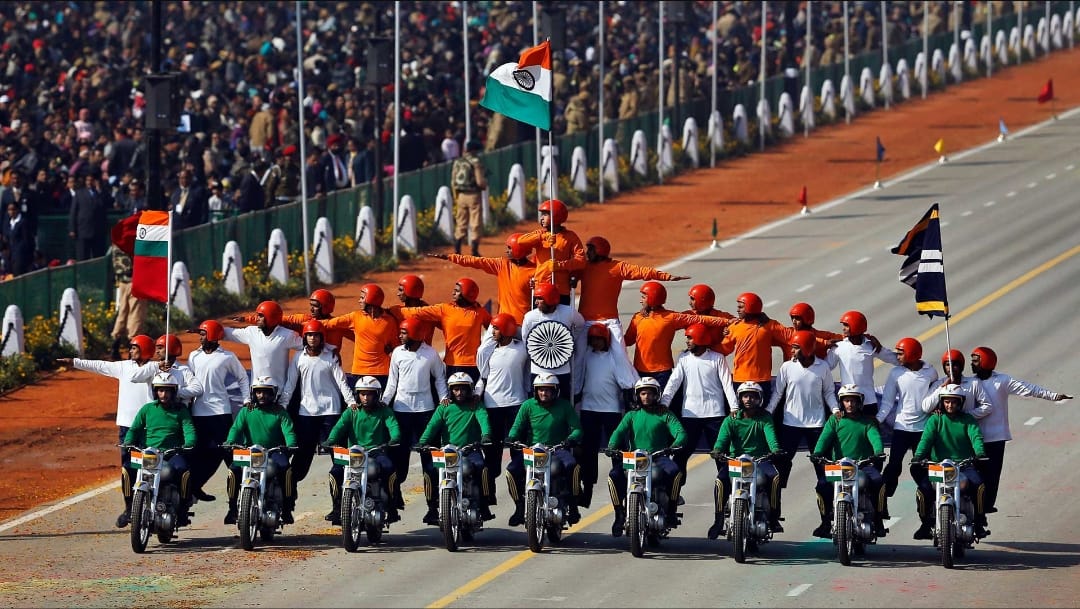
India’s rich cultural heritage was also highlighted in the 77th Republic Day celebrations, alongside a spectacular display of military might and national pride at Kartavya Path in New Delhi on January 26, 2026. A total of 30 tableaux — 17 from States and Union Territories and 13 from Union ministries and departments — rolled down the ceremonial route under the themes “Swatantrata ka Mantra: Vande Mataram” and “Samriddhi ka Mantra: Aatmanirbhar Bharat,” celebrating 150 years of Vande Mataram and India’s journey toward self-reliance and prosperity.
The vibrant state tableaux brought to life the diverse cultural traditions, artistic legacies and development narratives from across the country. Assam’s float showcased the famed Asharikandi terracotta craft village with artisans at work, symbolising centuries-old clay craftsmanship and indigenous livelihood traditions. Himachal Pradesh’s tableau celebrated the hill state as both ‘Dev Bhoomi’ and ‘Veer Bhoomi,’ blending spiritual heritage with stories of valor and sacrifice.

West Bengal’s display honoured Bankim Chandra Chatterjee and his seminal work Vande Mataram, while also portraying other freedom movement icons, reinforcing the state’s role in India’s struggle for independence. Maharashtra’s tableau illustrated the cultural significance of Ganeshotsav as a symbol of community strength and self-reliance, and Nagaland celebrated the vibrancy of the Hornbill Festival, reflecting tribal culture and tourism.
Rajasthan’s float brought forward the intricate Usta art of Bikaner, featuring its traditional gold-inlay craftsmanship, and Kerala highlighted its achievements in Water Metro connectivity and 100 per cent digital literacy, showcasing innovation rooted in cultural ethos. Puducherry’s tableau celebrated craft heritage and the vision of Auroville, while Manipur traced its journey from agricultural traditions to global markets, and Uttar Pradesh highlighted the cultural heritage of Bundelkhand.

Madhya Pradesh highlighted the legacy of Ahilyabai Holkar and its cultural stewardship, and Odisha’s tableau blended tradition with innovation by showcasing tribal agriculture, handloom arts and cultural motifs.

Kerala’s tableau reflected inclusive development through its Water Metro project and achievement of 100 per cent digital literacy, marrying cultural heritage with technological progress.Other cultural tableaux included those honouring the 350th martyrdom anniversary of Guru Tegh Bahadur (Punjab) and Odisha’s ‘Soil to Silicon’ narrative blending tradition with modern achievement, collectively illustrating the unity in India’s diversity and the nation’s vibrant cultural mosaic as a defining part of Republic Day festivities.These cultural presentations, complemented by performances and marching contingents, underscored India’s unity in diversity and its journey from tradition to modernity, stitching together the past and present in a grand patriotic panorama on the Republic Day stage
The Republic Day celebrations concluded on Kartavya Path with a spectacular air show flypast that captivated the crowds and underscored India’s aerial prowess, featuring precision formations of Rafale, Su-30, MiG-29 and other Indian Air Force aircraft in dynamic displays over New Delhi. Prime Minister Narendra Modi greeted cheering spectators along the parade route as the event drew to a close, while President Droupadi Murmu and visiting dignitaries, including the Presidents of the European Commission and the European Council, were escorted by the President’s Bodyguard to Rashtrapati Bhavan, bringing the nation’s 77th Republic Day festivities to a memorable finish.a



Related Items
India always spread peace in world: President Murmu
Northeast holds key to India’s next growth engine: Sitharaman
India will eradicate Sickle Cell disease ahead of 2047 target through collective efforts: President