 Newsinc24 Team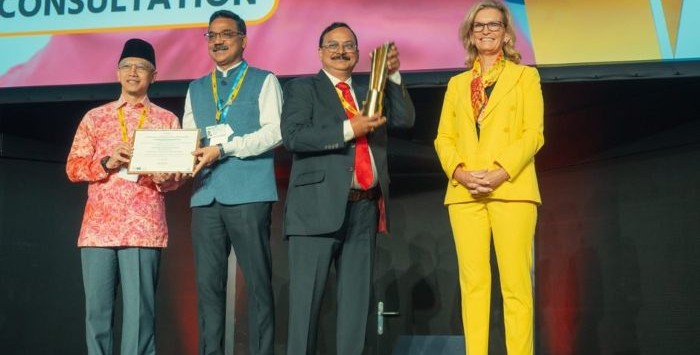
India's lagship rural digital transformation initiative, Samriddh Gram: Integrated Phygital Service Delivery Model Enabled by BharatNet, has won the World Summit on the Information Society (WSIS) Prizes 2026 under Action Line C6 – Enabling Environment.The initiative is being run by the Department of Telecommunications’ (DoT). The award was presented during the WSIS Forum 2026 in Geneva, recognising India’s model of using digital public infrastructure and telecom connectivity to deliver integrated services in rural areas.
Another feather in the cap for Bharat on the global stage…
— Jyotiraditya M. Scindia (@JM_Scindia) July 9, 2026
An absolute delight to share that @DoT_India’s Samriddh Gram Integrated Phygital Services Project has been declared Global Winner of the #WSISPrizes2026 under the Enabling Environment category by @ITU.
This is also a… pic.twitter.com/tOEAlelQyr
Instituted under the World Summit on the Information Society process led by the International Telecommunication Union (ITU), the WSIS Prizes honour projects that use Information and Communication Technologies (ICTs) to advance sustainable development. Union Minister for Communications Jyotiraditya M. Scindia described the award as “another feather in the cap for Bharat on the global stage.” He said the recognition reflects global acknowledgement of Prime Minister Narendra Modi’s vision of an inclusive Digital India, where the benefits of technology reach even the remotest villages.
Samriddh Gram is an integrated rural digital transformation initiative built on the BharatNet network. At its core are Samriddhi Kendras, which function as one-stop village-level centres providing digital as well as assisted physical services. The centres offer a wide range of citizen-centric services, including healthcare, education, agriculture, financial inclusion, skilling, e-governance and e-commerce.Healthcare services include tele-consultation, diagnostic facilities through Health ATMs and access to medicines through PM Jan Aushadhi Kendras. The initiative also provides smart classrooms, AR/VR-based skill development, IoT-enabled soil testing, drone-assisted fertiliser and pesticide spraying, app-based smart irrigation, Common Service Centre (CSC) services, Banking Correspondent services, e-commerce support for local products, FTTH and PM-WANI connectivity, CCTV-based village surveillance and community-level digital facilitation.
According to the DoT, the project demonstrates how BharatNet and last-mile telecom infrastructure can be leveraged to generate measurable socio-economic outcomes by combining digital connectivity with local facilitation and community participation. The DoT said BharatNet, one of the world’s largest rural broadband initiatives, has made more than 2.17 lakh Gram Panchayats service-ready and online, expanding digital access across rural India.







Related Items
India calls for fundamental shift in global approach to drought at CoP17
India calls for sustained global finance for land restoration
India’s FTAs to unlock $15tn export potential,at 75% global trade