 Newsinc24 Team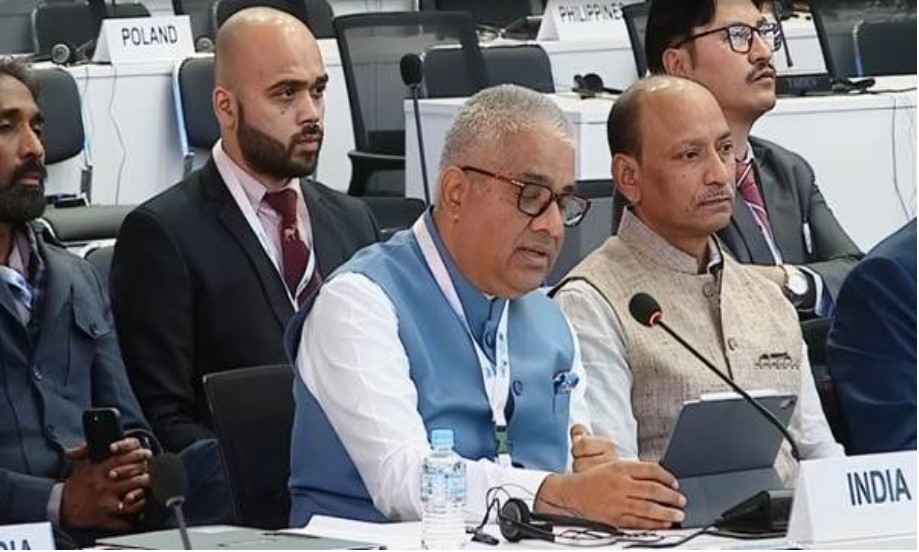
India has called for a fundamental shift in the global approach to drought, with Union Environment, Forest and Climate Change Minister Bhupender Yadav urging countries to move from reactive relief measures to proactive, technology-enabled resilience.Yadav made the remarks at the Ministerial Dialogue on ‘Accelerating Drought Resilience’ during the 17th Conference of the Parties (CoP17) of the UN Convention to Combat Desertification (UNCCD) in Mongolia, according to media reports.
The minister said drought was “no longer an occasional event, but a defining development challenge”, with far-reaching implications for water security, food systems, biodiversity and economic stability.
He called for a shift in the way drought is addressed globally, stressing the need to focus on preparedness, prevention and resilience rather than emergency response after a crisis has emerged.Yadav highlighted India's coordinated, multi-institutional approach, which integrates early warning systems, mitigation, relief measures and community resilience.“Rainfall monitoring and satellite-based drought assessments trigger preparedness at the inter-ministerial and State levels, ensuring that a dry spell does not escalate into a crisis,” the Ministry of Environment, Forest and Climate Change said.
Highlighting the close link between land and water management, Yadav said, “restore the forest, before the flow”, underscoring India's focus on catchment and riverscape forestry to reduce erosion, improve water retention and recharge groundwater.He also pointed to river rejuvenation and the revival of traditional water bodies as important measures to strengthen water security and rural resilience against drought.
The minister highlighted community-led restoration of springs and recharge zones in India's hill regions. In the plains, a pan-India watershed programme addresses degraded rainfed lands through a ridge-to-valley approach, supported by community institutions and convergence with rural employment programmes.Yadav said India's approach is based on the belief that “drought must be managed as a predictable, preventable risk, and not a recurring disaster demanding emergency response”.
Held an engaging discussion with H.E. Tsend Sandag-Ochir, Minister of Environment and Climate Change, Mongolia on the sidelines of @UNCCD COP17.
— Bhupender Yadav (@byadavbjp) August 26, 2026
We had productive deliberations on various matters including snow leopard protection and the broader conservation of their ecosystem… pic.twitter.com/S4wxZ4lgkj
He highlighted prevention measures such as watershed development, water harvesting, afforestation, groundwater recharge and the promotion of climate-resilient crops. These measures are complemented by disaster-related funds, employment guarantees, fodder support and emergency water supplies when required.Calling for stronger international action, Yadav advocated greater investment in ecosystem restoration, stronger early warning systems and better coordination among countries and institutions to address drought risks.
“Preparedness over response, prevention over crisis management, resilience over recovery should be the goal,” he said.Yadav said building drought resilience was not optional for the world's most vulnerable populations but a matter of survival. He also reaffirmed India's willingness to share its knowledge and capabilities, including its experience with early warning systems, to support global efforts towards a drought-resilient future.
Met the Executive Secretary of the United Nations Convention to Combat Desertification, Ms Yasmine Fouad, on the sidelines of @UNCCD COP 17 today in Mongolia.
— Bhupender Yadav (@byadavbjp) August 26, 2026
Our discussions touched upon critical matters related to the ongoing UNCCD COP negotiations, with particular focus on… pic.twitter.com/ZLBY4uYMLs













Related Items
India-China agree to seek 'political settlement' of boundary issue: MEA
India lifts four year wheat export ban to boost farmers’ earnings
'10 Years of UPI': PM Modi hails India’s Digital Revolution